



Comparatives and superlatives: comparing animals
A comparative compares two things: a giraffe is taller than a zebra. A superlative identifies one extreme in a stated group: this is the tallest animal in the picture. In English 2AC, choose the adjective form carefully, use than with a comparison and define the group when using the + superlative.

English 2AC · S2
The lesson as a PDF
The illustrated lesson and corrected exercises to print. The quiz stays online.
By the end of this lesson, you can
- Distinguish a comparison from a group extreme
- Form common comparative and superlative adjectives
- Use than and the in complete sentences
Before you startRead short English sentences and familiar school vocabulary
Un bon cours, ça se partage.
Start with the situation
Distinguish a comparison from a group extreme. Form common comparative and superlative adjectives. Use than and the in complete sentences.
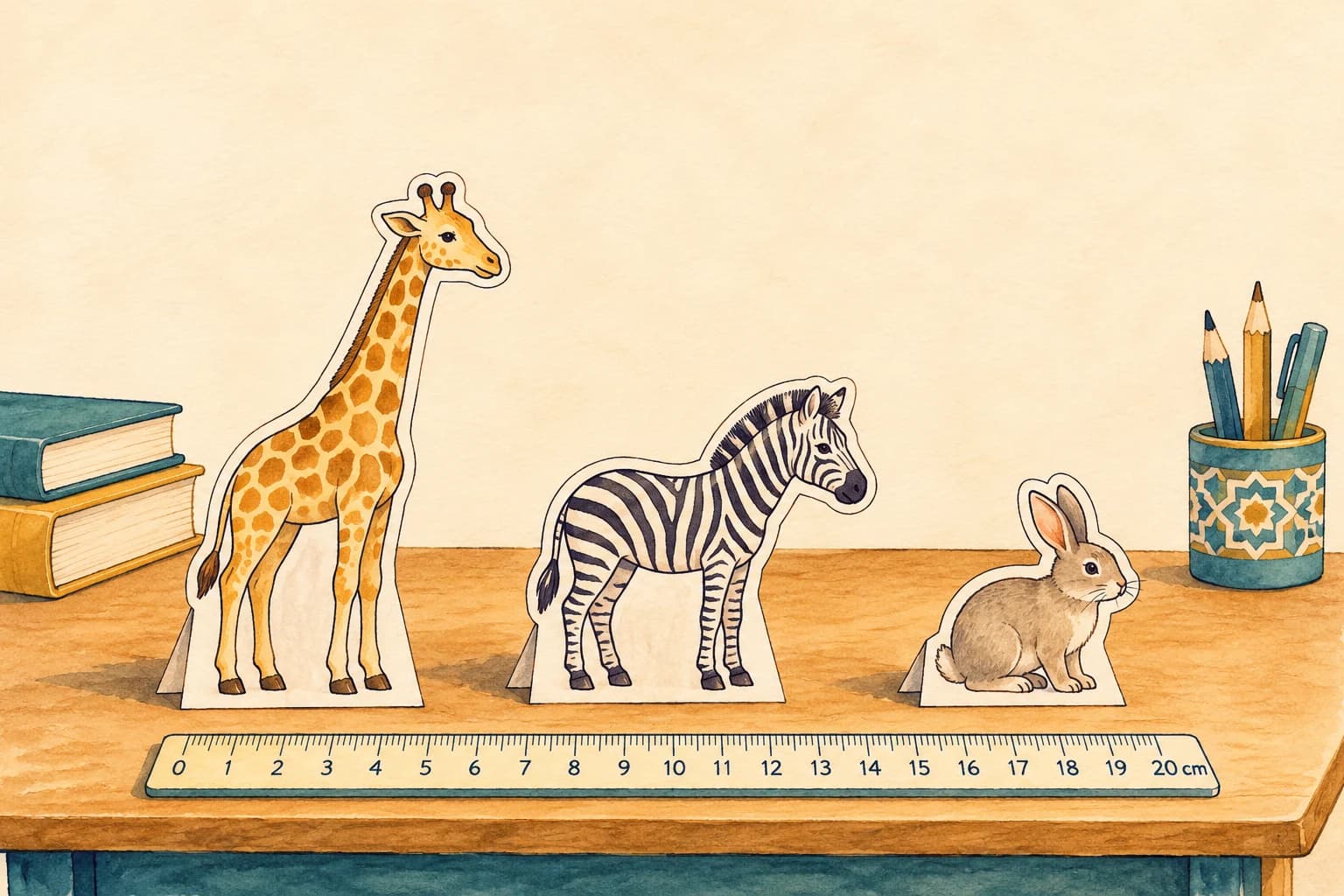
How do short adjectives change?
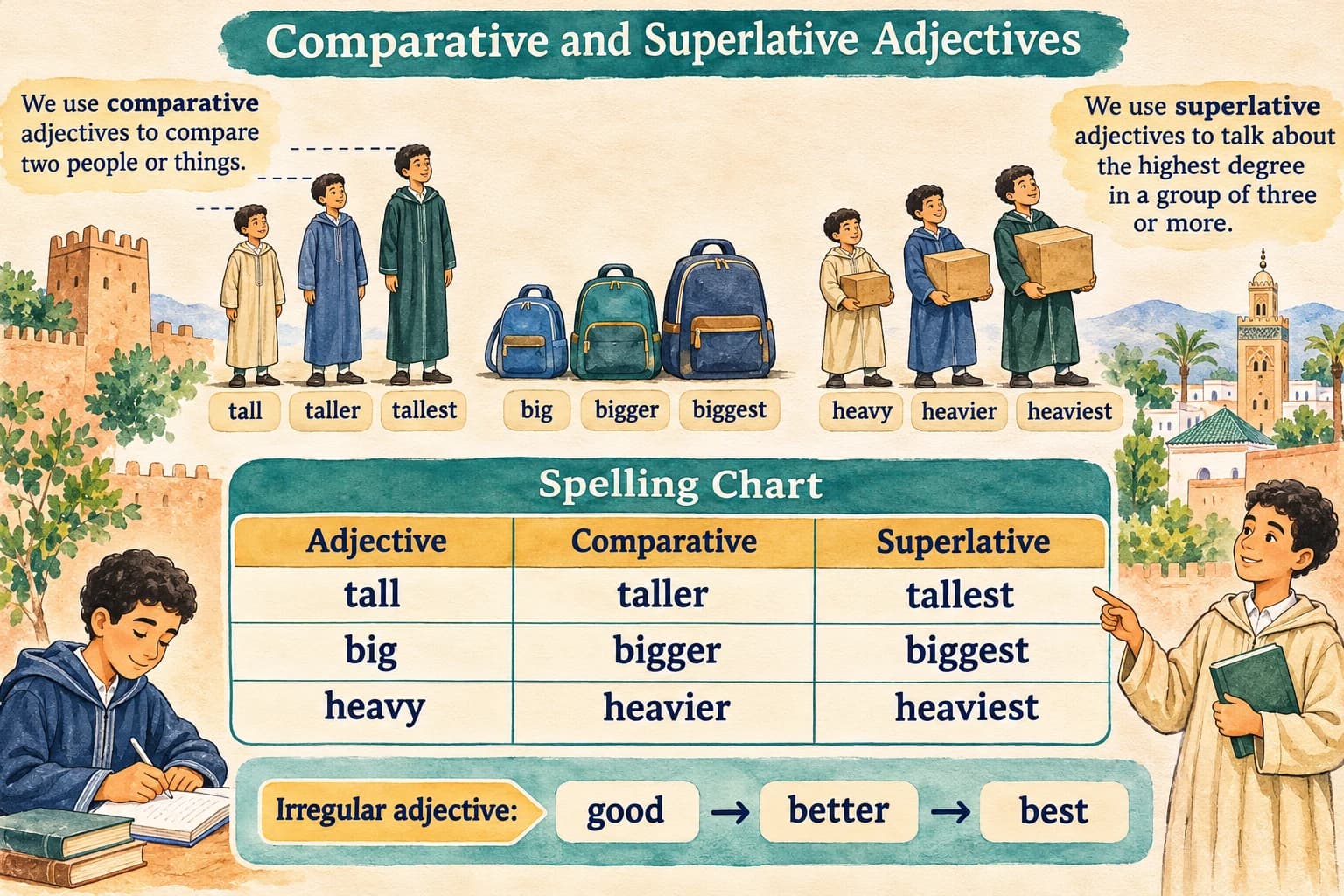
Many short adjectives take er for a comparative and est for a superlative: tall, taller, tallest. Add only r or st after a final e: large, larger, largest. For a short stressed consonant-vowel-consonant pattern, double the last consonant: big, bigger, biggest. A word ending in consonant + y usually changes y to i: heavy, heavier, heaviest.
Use than to introduce the second part of a comparison: A giraffe is taller than a zebra. Use the before a superlative in these examples: the tallest animal in the picture. Do not confuse than with then, which often connects events. A comparison can be true in one picture or dataset without making a claim about every individual animal.
When do you use more and most?
Longer adjectives commonly use more and most: more dangerous, the most dangerous. Some two-syllable adjectives vary, so learn familiar examples rather than applying a single rule to every word. In this lesson, practise shorter, bigger and heavier with the er pattern, and more dangerous with more. Do not combine both patterns: more bigger and the most biggest are incorrect.
Some forms are irregular: good becomes better and best; bad becomes worse and worst. The adjective itself changes, so gooder is incorrect. Choose an adjective that fits the information you have. A table of heights supports taller and shorter; it does not prove faster, heavier or more dangerous. Good grammar still needs a sensible comparison.
| Adjective | Comparative | Superlative |
|---|---|---|
| tall | taller | the tallest |
| big | bigger | the biggest |
| heavy | heavier | the heaviest |
| dangerous | more dangerous | the most dangerous |
| good | better | the best |
Compare drawings, using only the data
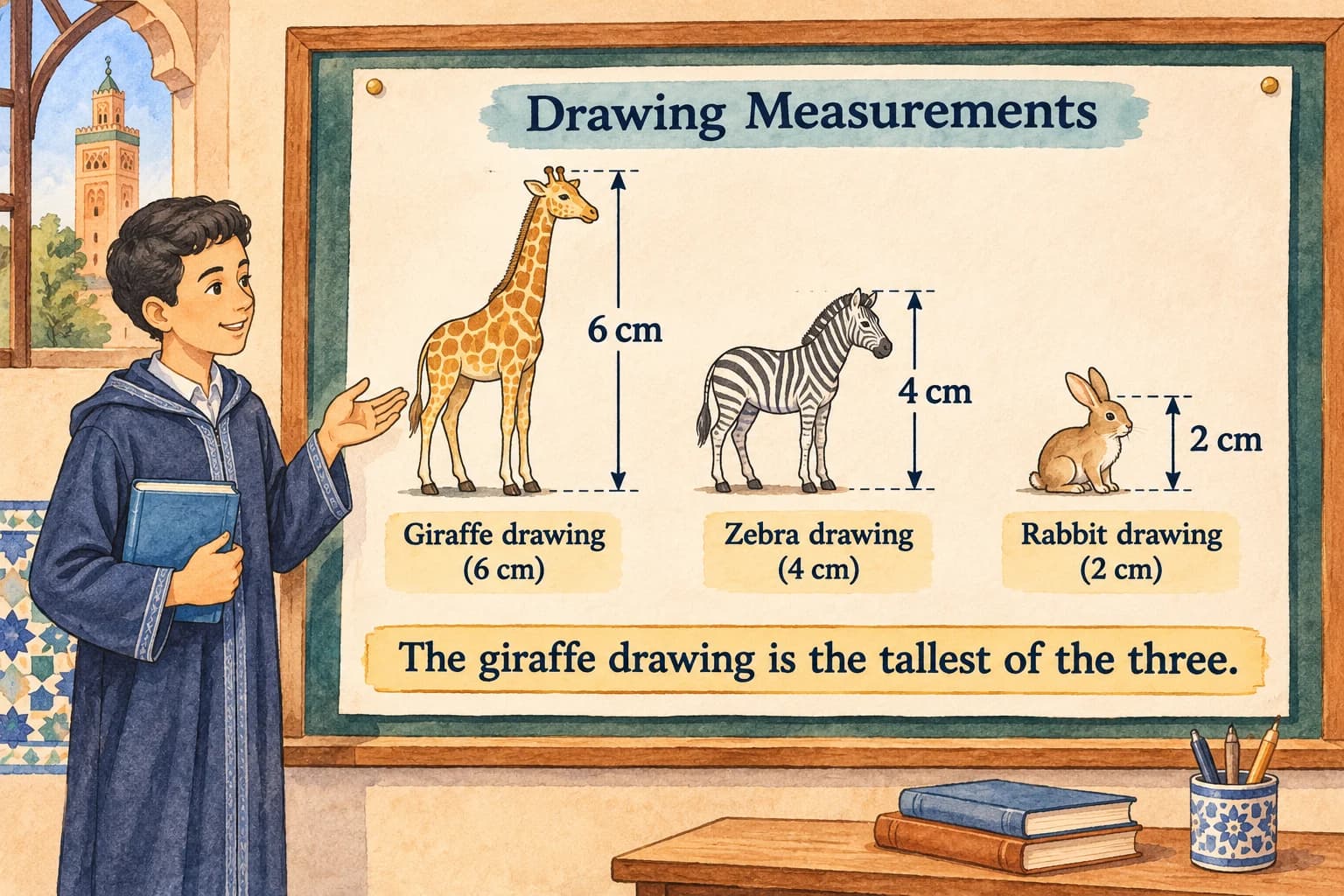
Giraffe drawing: 6 cm. Zebra drawing: 4 cm. Rabbit drawing: 2 cm. The giraffe drawing is taller than the zebra drawing. The rabbit drawing is the shortest of the three.
- All measurements describe the drawings. No real animal height or speed can be inferred from them.
How do you compare a stated group accurately?
The practice chart gives invented drawing heights for three animal figures: a giraffe at 6 cm, a zebra at 4 cm and a rabbit at 2 cm. These are measurements of drawings, not real animal heights. The giraffe drawing is taller than the zebra drawing. It is the tallest of the three. The rabbit drawing is the shortest.
A superlative needs a group. Write the tallest of these three drawings, rather than the tallest animal in the world when your only evidence is a classroom chart. Read the labels, compare the same kind of measurement and include a unit if giving numbers. This habit helps you make comparisons that are both grammatically correct and supported by the task.
A method you can reuse
Step by step
Work step by step
- Identify the two things or the whole group.
- Choose an adjective supported by the data.
- Form er/est or more/most correctly.
- Use than for the comparison and name the group for the superlative.
Remember
Write bigger, not more bigger. A picture’s measurements support comparisons of that picture; they do not establish world records or real animal measurements.
Frequently asked questions
What is the difference between comparative and superlative?
Why is bigger written with two g letters?
Can I write more taller?
Quiz: 2 questions
2 questions are randomly selected from this lesson’s 2-question bank. Choose one answer for each question and get an immediate explanation.
Q1The correct form is …
Incorrect answer
Big doubles its final g and takes er.
Correct answer: bigger
Big doubles its final g and takes er.
Q2A comparison uses …
Incorrect answer
Than introduces the second part of a comparison.
Correct answer: than
Than introduces the second part of a comparison.
Your score
0/2
Start with the worked examples
Read the lesson in small sections. Write your own example for each rule and try the Easy exercises before returning to the quiz.
Review: 2 missed questions
The correct form is …
Correct answerbigger
Big doubles its final g and takes er.
A comparison uses …
Correct answerthan
Than introduces the second part of a comparison.
Exercises with answers
6 exercises, from easy practice to challenges. Try each one yourself, then reveal the answer and explanation.
Exercise 1
EasyGive comparative and superlative forms of tall, big and heavy.
Answer and explanation
Taller, the tallest; bigger, the biggest; heavier, the heaviest. Notice the doubled g and the y changing to i.
Exercise 2
EasyComplete with dangerous: This situation is … than that one.
Answer and explanation
More dangerous. Use more with this longer adjective, followed by than.
Exercise 3
IntermediateThe drawings measure 6 cm, 4 cm and 2 cm. Compare the giraffe and zebra drawings.
Answer and explanation
The giraffe drawing is taller than the zebra drawing. Its 6 cm height is greater than 4 cm.
Exercise 4
IntermediateWhich drawing is the shortest of the three?
Answer and explanation
The rabbit drawing is the shortest, at 2 cm. The group is the three drawings.
Exercise 5
IntermediateCorrect: The giraffe drawing is more taller then the zebra drawing.
Answer and explanation
The giraffe drawing is taller than the zebra drawing. Remove more and replace then with than.
Exercise 6
ChallengeCan a table giving only drawing heights tell you which animal runs fastest?
Answer and explanation
No. Height measurements do not give running speeds. You need information about speed to support fastest.