



Writing: my favourite animal
To describe a favourite animal, name it, give a few accurate appearance and behaviour details, then explain your preference. Use the present simple, has got and can where they fit. This English 2AC writing lesson includes a complete original notebook example about a cat, a plan and revision exercises for your own paragraph.

English 2AC · S2
Your illustrated PDF
The plan, the complete model and corrected exercises to print. The quiz stays online.
By the end of this lesson, you can
- Group a description by topic
- Use is, has got and can accurately
- Support a preference with a personal reason
Before you startRead short English sentences and familiar school vocabulary
Un bon cours, ça se partage.
Understand the writing task
Group a description by topic. Use is, has got and can accurately. Support a preference with a personal reason.
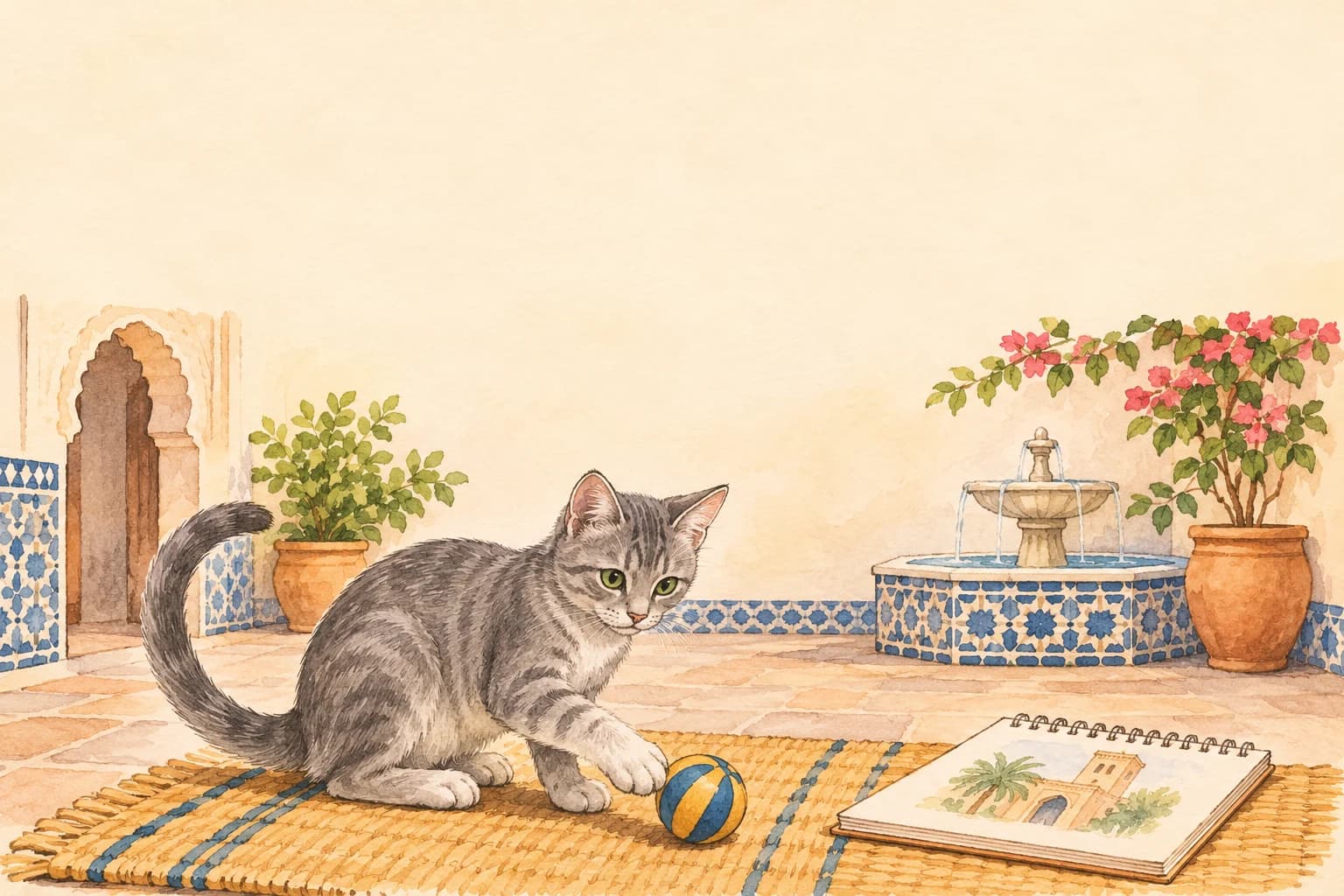
My favourite animal
My favourite animal is the cat. My uncle has a cat called Mimo. It has got grey fur, green eyes and a long tail. It usually sleeps in a quiet corner of the house. In the afternoon, it plays with a small ball. It can jump onto a low wall and move very quietly. I like watching it because it is curious and playful. When I visit my uncle, I sit nearby and draw it in my notebook. Mimo often moves before I finish my picture.
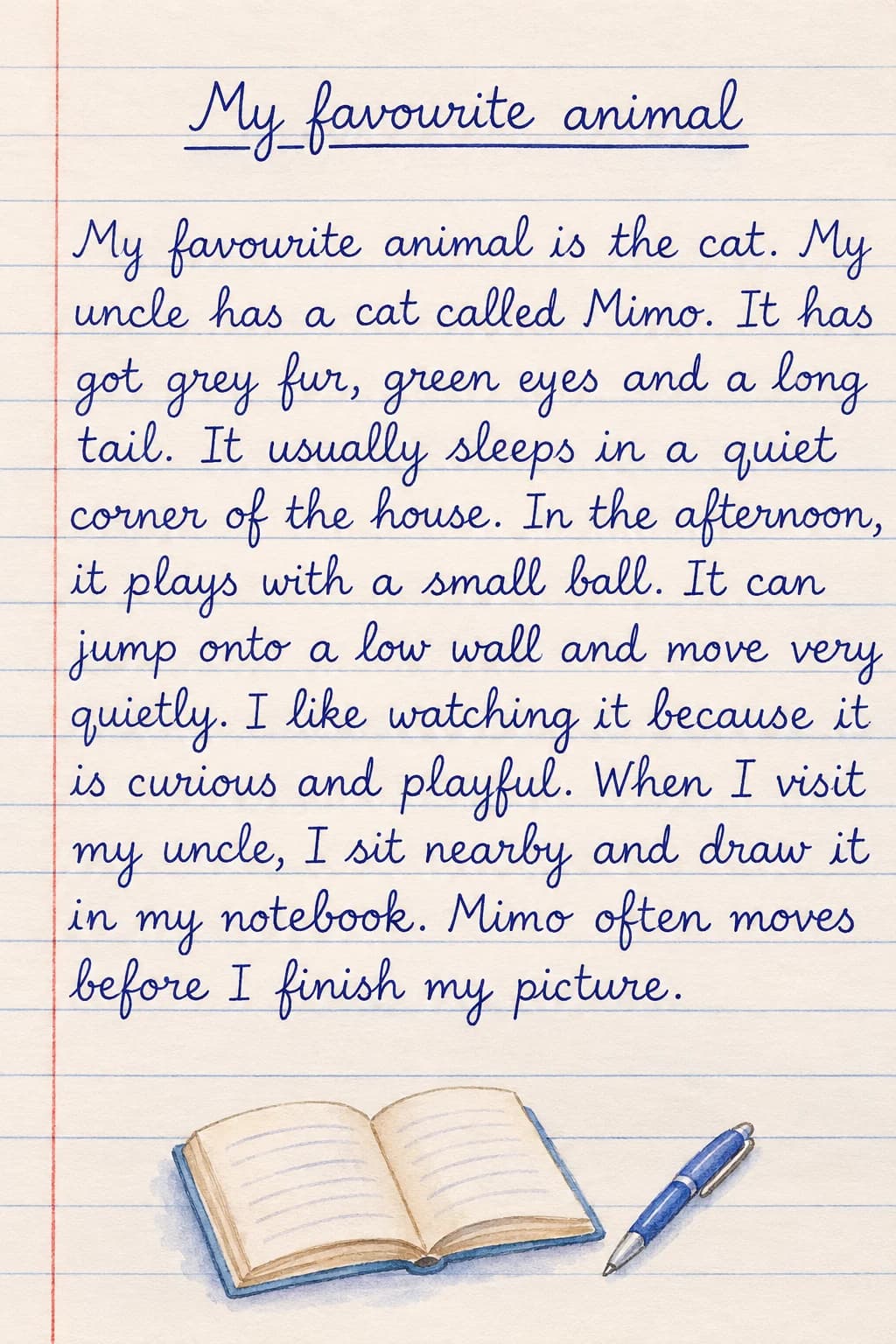
This notebook contains the complete example written above. It is one possible original answer. Use its structure to plan your own text and change the details to match the task.
What should an animal paragraph contain?
For this task, write about an animal you know or an invented animal character. Aim for about 70–100 words unless your teacher gives a different length. Identify the animal, describe two or three visible features, explain a habit or ability and give a reason for your preference. A small number of accurate details is more useful than a long list of uncertain facts.
The model describes one cat called Mimo. It is an original fictional example, so its grey fur, green eyes and habits are details of that character. Do not turn them into statements about every cat. If you choose a wild animal, check any factual claims about habitat or diet rather than inventing a number for its speed, size or lifespan.
Which language choices make the description clear?
Use be for identity or an adjective: It is a cat. It is playful. Use has got for a feature: It has got a long tail. Use can + base verb for an ability: It can jump. Keep these patterns separate. It is got a tail and It can jumps mix forms and need correction.
The model moves from appearance to routine, then ability and preference. Usually and often show frequency. Because explains why the writer likes watching Mimo. The final sentence adds a small personal observation instead of repeating I like cats. This detail makes the paragraph specific while remaining easy for a 2AC learner to understand and adapt.
| Purpose | Pattern | Example |
|---|---|---|
| Identity | It is … | It is a cat. |
| Feature | It has got … | It has got a long tail. |
| Ability | It can + base verb | It can jump. |
| Preference | I like … because … | I like it because it is playful. |
Make a detail specific
It is nice. → I like watching it because it plays with a small ball.
- The second sentence gives a reason a reader can picture, instead of relying on a vague adjective.
How do you plan and revise your own description?
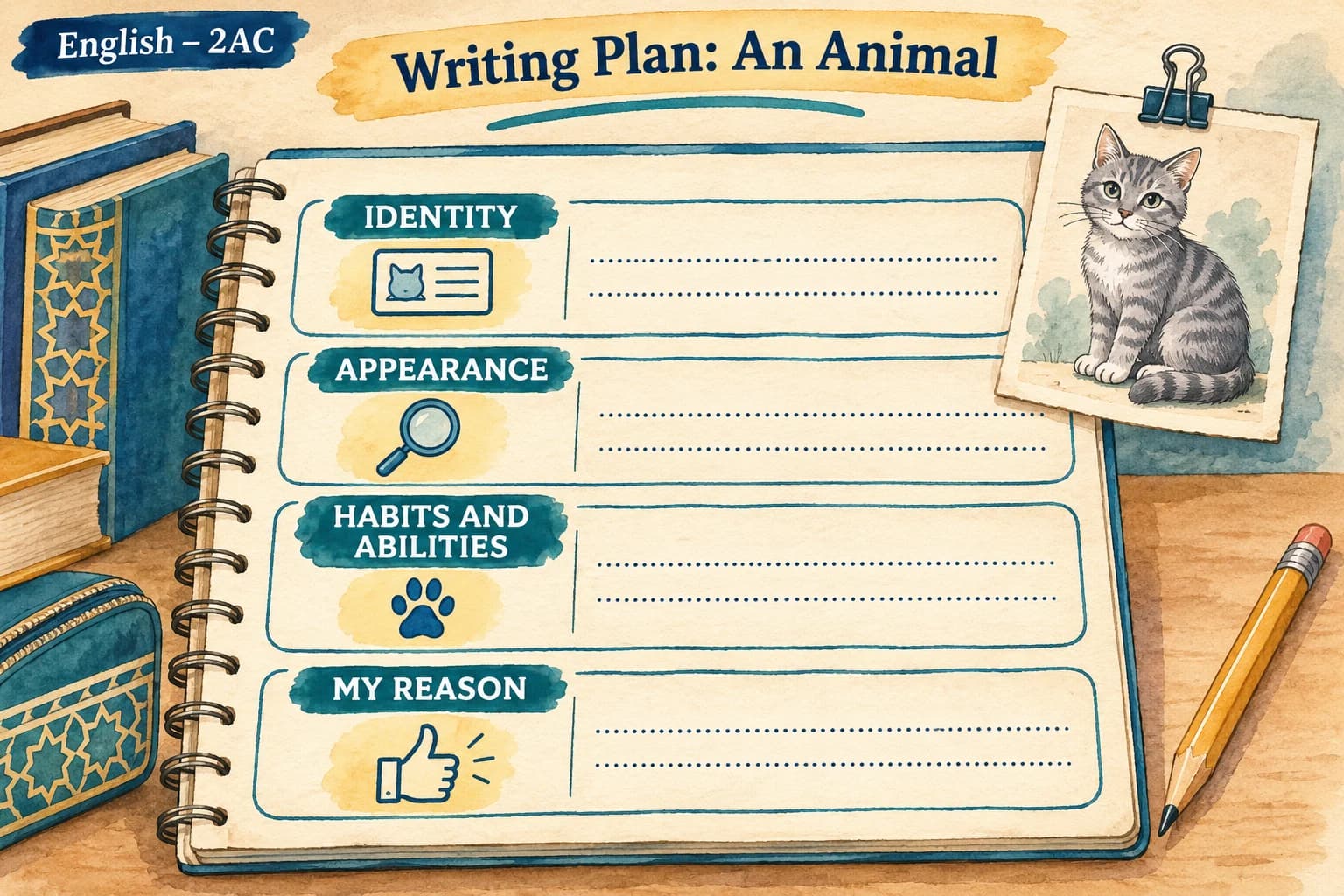
Make four note headings: identity, appearance, habits or abilities, and my reason. Choose a detail for each. Write full sentences, then check that every pronoun refers clearly to the same animal. It is a useful neutral pronoun here; a named animal can also be referred to as he or she when that is known and used consistently.
Read the text for unsupported generalisations. My uncle’s cat sleeps in this corner is a description of one animal; all cats sleep in this corner is not sensible. Check third-person verbs, adjective order, capital I and full stops. When you compare your text with the model, keep its organisation but change the content to match your own subject. Copying the model word for word does not practise planning a new description.
A method you can reuse
Step by step
Work step by step
- Choose one animal and record reliable details.
- Order identity, appearance, behaviour and preference.
- Write with is, has got, can and present-simple verbs.
- Check facts, pronouns, verbs and punctuation.
Remember
Write It has got a tail and It can jump. Do not write It is got or It can jumps. The model’s character details are not facts about every cat.
Frequently asked questions
How do I write My favourite animal in 2AC?
Should I use is or has got?
Is a complete handwritten example included?
Quiz: 2 questions
2 questions are randomly selected from this lesson’s 2-question bank. Choose one answer for each question and get an immediate explanation.
Q1Which sentence describes an ability?
Incorrect answer
Can + base verb describes ability.
Correct answer: It can jump.
Can + base verb describes ability.
Q2Which form is correct?
Incorrect answer
Has got introduces a feature.
Correct answer: It has got a tail.
Has got introduces a feature.
Your score
0/2
Start with the worked examples
Read the lesson in small sections. Write your own example for each rule and try the Easy exercises before returning to the quiz.
Review: 2 missed questions
Which sentence describes an ability?
Correct answerIt can jump.
Can + base verb describes ability.
Which form is correct?
Correct answerIt has got a tail.
Has got introduces a feature.
Exercises with answers
6 exercises, from easy practice to challenges. Try each one yourself, then reveal the answer and explanation.
Exercise 1
EasyName one appearance detail, one habit and one ability from the model.
Answer and explanation
Appearance: grey fur. Habit: it usually sleeps in a quiet corner. Ability: it can jump onto a low wall. Other explicitly stated details are acceptable.
Exercise 2
EasyWhy does the writer like watching Mimo?
Answer and explanation
It is curious and playful. The sentence uses because to connect the preference with the reason.
Exercise 3
IntermediateComplete: It … got green eyes. It can … quietly. (has / is; move / moves)
Answer and explanation
It has got green eyes. It can move quietly. Has got expresses a feature; can takes a base verb.
Exercise 4
IntermediateReplace I like it because it is nice with a more specific reason.
Answer and explanation
One possible answer: I like it because it plays with a ball and makes me smile. Use a detail relevant to your chosen animal.
Exercise 5
IntermediateChoose a different animal and write one note for each of the four plan headings.
Answer and explanation
Example notes for a fictional rabbit: pet rabbit; white fur and long ears; eats hay and hops; enjoyable to watch. Check real care or diet facts if making factual claims.
Exercise 6
ChallengeWrite 70–100 words with two appearance details, one habit or ability and a personal reason.
Answer and explanation
Use the model’s sequence, but write about your own chosen subject. Check content, clear order, is/has got/can forms, third-person verbs and punctuation. Several different accurate paragraphs can meet the task.