



Spotlight 3 Unit 3: invitations and celebrations
Study Spotlight 3 Unit 3 in English 3AC with invitations, school celebrations, past be, new teaching illustrations and exercises with explained answers.

Download and study offline
By the end of this lesson, you can
- Invite someone to a suitable school activity.
- Accept or decline with a clear polite reply.
- Describe a finished event with was, were and there was/were.
Before you startRead short English sentences and identify the subject and verb.
Un bon cours, ça se partage.
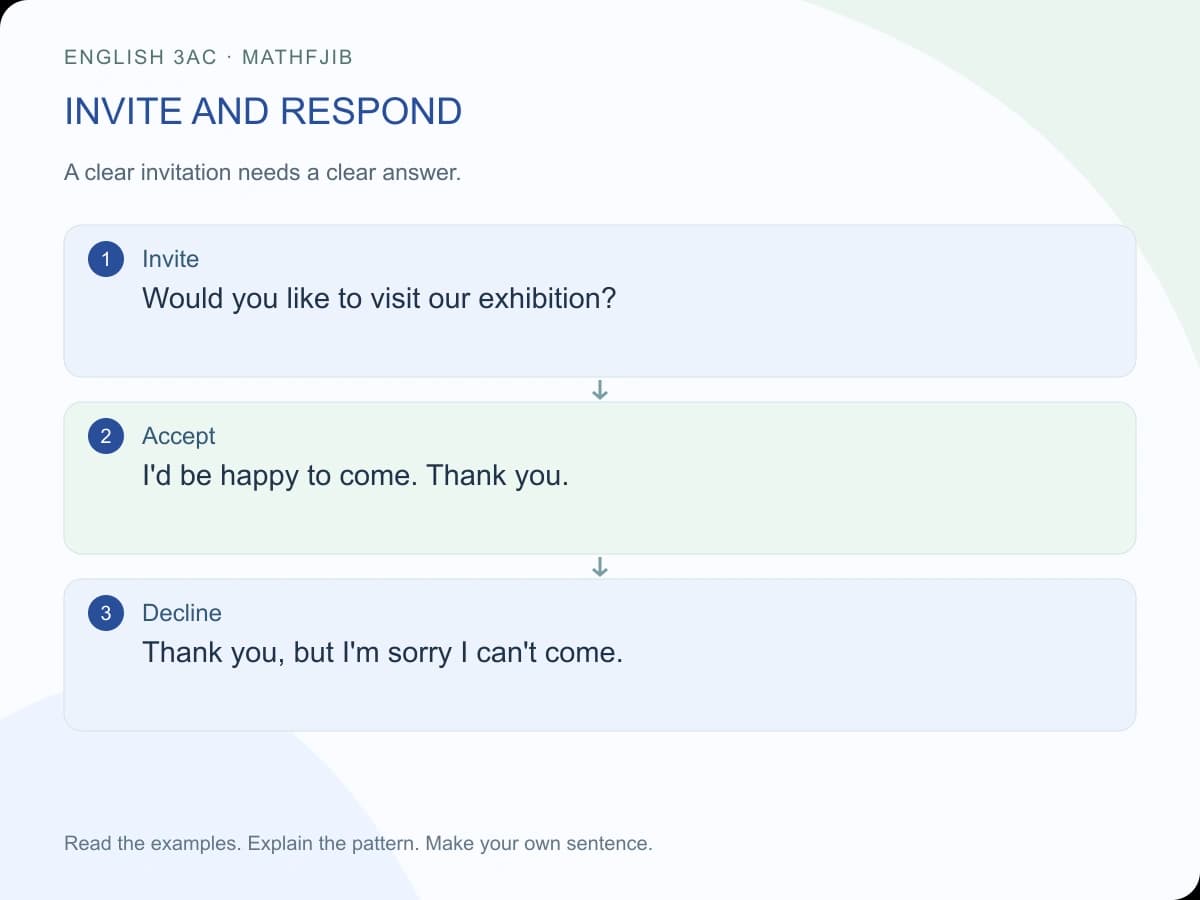
How do I make an invitation clear?
Use Would you like to come to our school celebration? Then give the day, time and place. A guest needs these details to decide whether to come. You can add what will happen or what to bring. Keep the event suitable for the classroom task.
A polite acceptance thanks the sender: Yes, I'd be happy to come. Thank you. A polite refusal can say Thank you, but I'm sorry I can't come. Add a short reason if helpful. Neither reply needs a long invented explanation.
How do I use was and were?
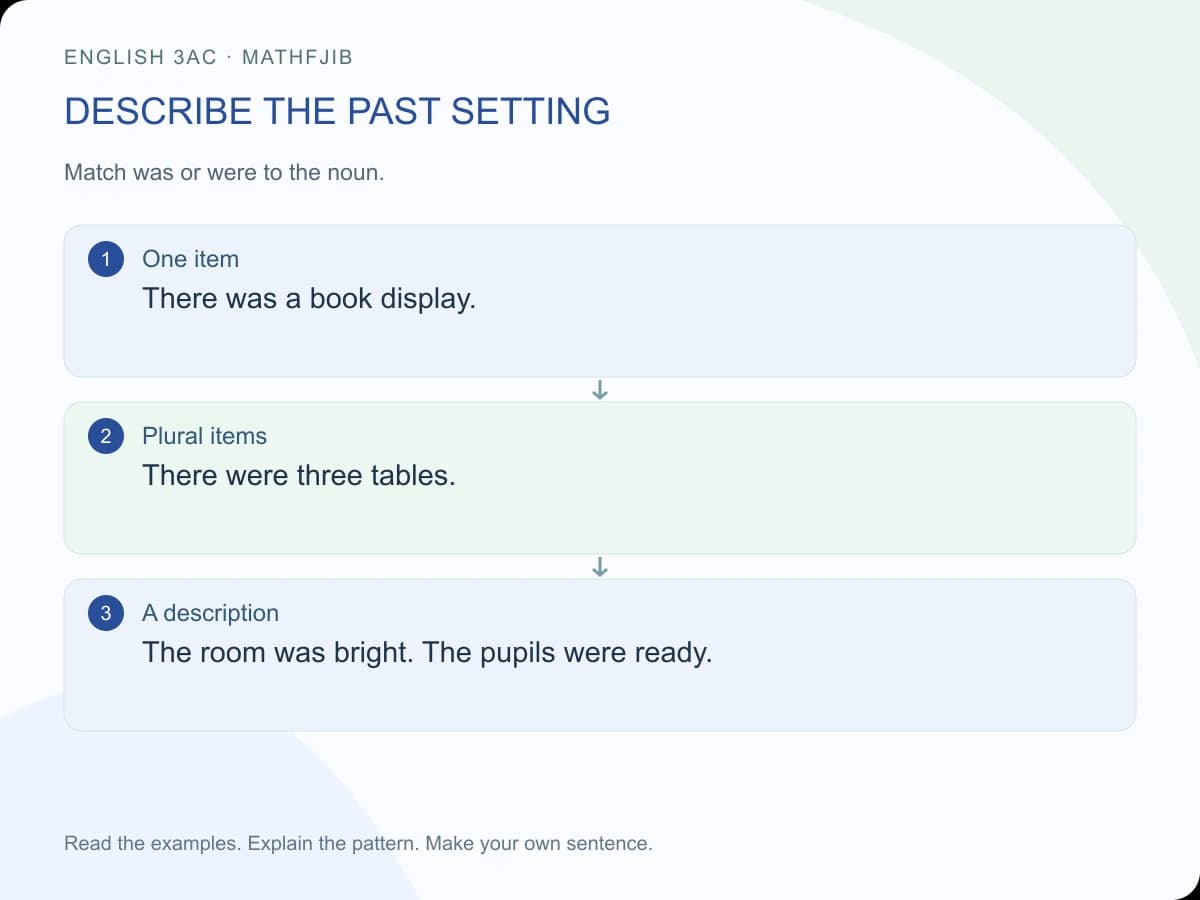
Was and were are the past forms of be. Use was with I, he, she and it; were with you, we and they. The room was bright. The pupils were proud. A negative adds not: The room wasn't noisy. A question puts be before the subject: Were the pupils ready?
Use there was for one item or an uncountable amount and there were for plural items. There was a book display. There were three reading tables. These structures describe the setting of a completed event.
How can I describe a school celebration?
Set the time and place, describe a few main activities and finish with a personal comment. Last Thursday, we held a reading celebration in the library sets the scene. Later, we read short passages moves the story forward. Use past simple for the finished actions and check was/were in descriptions.
Choose concrete details, such as posters, books, short readings or pupils helping tidy the room. A clear account explains what happened without adding unrelated claims. This is original topic practice, so follow the task and sequence used by your own teacher.
A worked example
A reading celebration and its setting
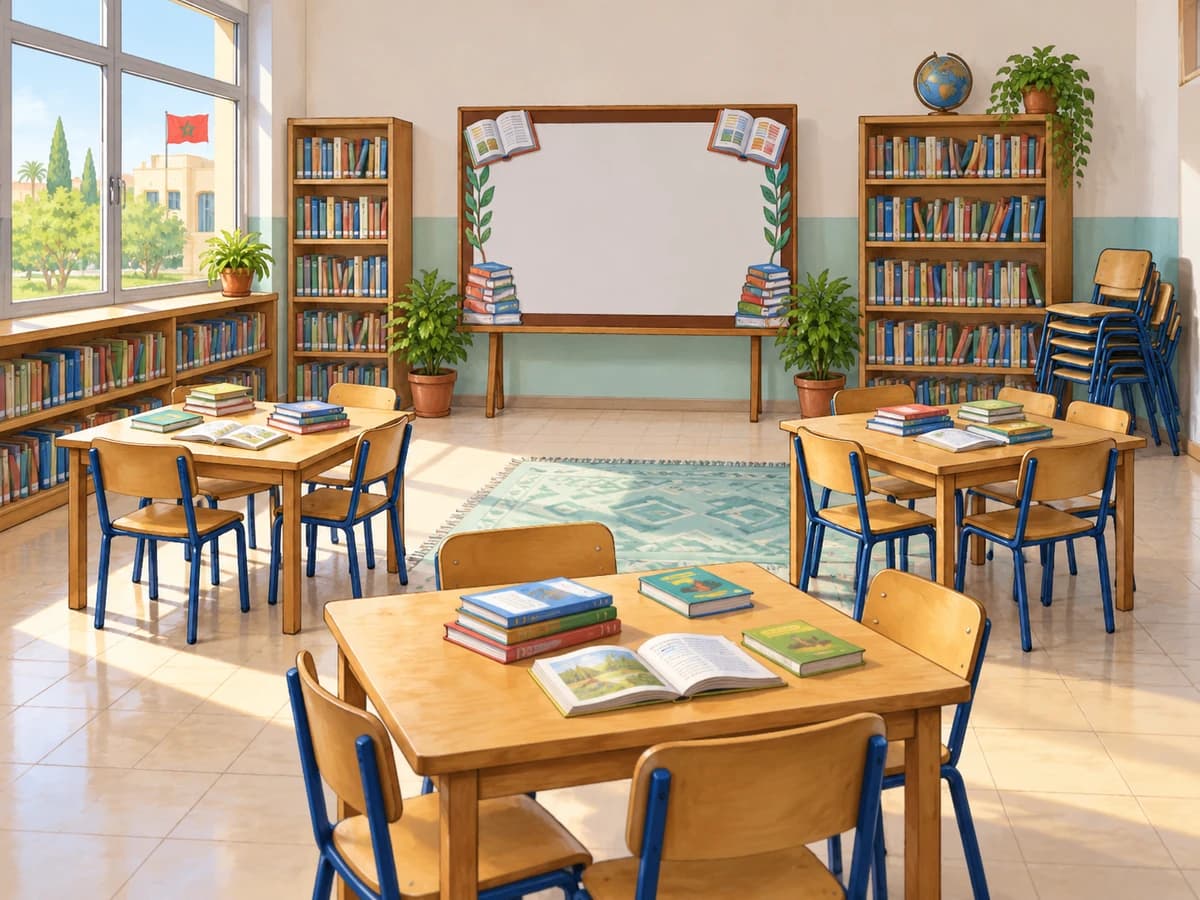
Last Thursday, there was a reading celebration in our school library. There were three tables of books. The room was bright and the pupils were ready. We read short passages and discussed our favourite stories. At the end, we helped tidy the room.
- There was introduces one celebration.
- There were introduces three tables.
- Was and were describe the past setting; read and helped tell actions.
How should I use this English 3AC lesson?
- Try the exercises before reading the answers.
- Explain a correction in your own words.
- Return to the examples when two structures look similar.
The semester grouping is an editorial revision order. Follow the units, tasks and pace used by your own teacher and textbook.
Frequently asked questions
What does this Spotlight 3 Unit 3 lesson practise?
When do I use there was and there were?
How can I decline an invitation politely?
Quiz: 6 questions
6 questions are randomly selected from this lesson’s 6-question bank. Choose one answer for each question and get an immediate explanation.
Q1There ___ three tables.
Incorrect answer
Three tables is plural.
Correct answer: were
Three tables is plural.
Q2The room ___ bright yesterday.
Incorrect answer
The room is singular and the time is past.
Correct answer: was
The room is singular and the time is past.
Q3Would you like ___ our exhibition?
Incorrect answer
The pattern is would you like to + base verb.
Correct answer: to visit
The pattern is would you like to + base verb.
Q4Which reply declines politely?
Incorrect answer
It thanks the sender and says that attendance is not possible.
Correct answer: Thank you, but I'm sorry I can't come.
It thanks the sender and says that attendance is not possible.
Q5Which question is correct?
Incorrect answer
Use were before a plural subject, with no did.
Correct answer: Were the pupils ready?
Use were before a plural subject, with no did.
Q6A finished event account should include...
Incorrect answer
These details let the reader understand what happened.
Correct answer: a time, place and main activities
These details let the reader understand what happened.
Your score
0/6
Start with the worked examples
Read the lesson in small sections. Write your own example for each rule and try the Easy exercises before returning to the quiz.
Review: 6 missed questions
There ___ three tables.
Correct answerwere
Three tables is plural.
The room ___ bright yesterday.
Correct answerwas
The room is singular and the time is past.
Would you like ___ our exhibition?
Correct answerto visit
The pattern is would you like to + base verb.
Which reply declines politely?
Correct answerThank you, but I'm sorry I can't come.
It thanks the sender and says that attendance is not possible.
Which question is correct?
Correct answerWere the pupils ready?
Use were before a plural subject, with no did.
A finished event account should include...
Correct answera time, place and main activities
These details let the reader understand what happened.
Exercises with answers
6 exercises, from easy practice to challenges. Try each one yourself, then reveal the answer and explanation.
Exercise 1
EasyComplete: Would you like ___ come to our exhibition?
Answer and explanation
To. Use would you like to + base verb.
Exercise 2
EasyWrite a polite acceptance.
Answer and explanation
Yes, I'd be happy to come. Thank you for inviting me.
Exercise 3
IntermediateComplete: The room ___ quiet. The pupils ___ ready.
Answer and explanation
The room was quiet. The pupils were ready.
Exercise 4
IntermediateComplete: There ___ one display and there ___ three tables.
Answer and explanation
There was one display and there were three tables.
Exercise 5
ChallengeMake a question: The pupils were proud.
Answer and explanation
Were the pupils proud? Move were before the subject.
Exercise 6
ChallengeWrite three past sentences about an imagined school celebration.
Answer and explanation
Possible answer: There was a reading celebration last week. The pupils were happy. We read stories and tidied the room. Other coherent past descriptions are possible.