



Can and can't: abilities, questions, a and an
I can swim, but I can't ride a bike. Can expresses an ability. It stays the same with I, she, he and they. Practise outdoor activities and use a or an when naming one object.

Ta fiche PDF illustrée
Le support, la méthode et les exercices corrigés à imprimer.
By the end of this lesson, you can
- Talk about what someone can do
- Statements, questions and a/an
- Separate an ability from an object
Before you startRead simple English sentences; use the starter lesson if you need help with names or numbers.
Un bon cours, ça se partage.
How do I use can and can't to talk about abilities?
Use can or can't followed by the base verb: I can ride a bike; She can't skate. The form stays the same with every subject. Ask Can he swim? and answer Yes, he can or No, he can't. Do not add to or an s after can.

Talk about what someone can do
After can or can't, use the base verb without to: She can skate. He can't swim. For a question, put can first: Can she ride a bike? Give a short answer with can: Yes, she can. No, she can't.
Learn whole activity phrases: ride a bike, climb a tree, fly a kite, play football and skate. Choose a before a consonant sound and an before a vowel sound: a bike, an orange kite. The sound, rather than the first written letter alone, determines the article.
Statements, questions and a/an
| Subject or object | Positive or example | Negative or example |
|---|---|---|
| I / she / they | can ride | can't ride |
| Can he swim? | Yes, he can. | No, he can't. |
| a kite | an orange kite | an umbrella |
Read an activity-club profile
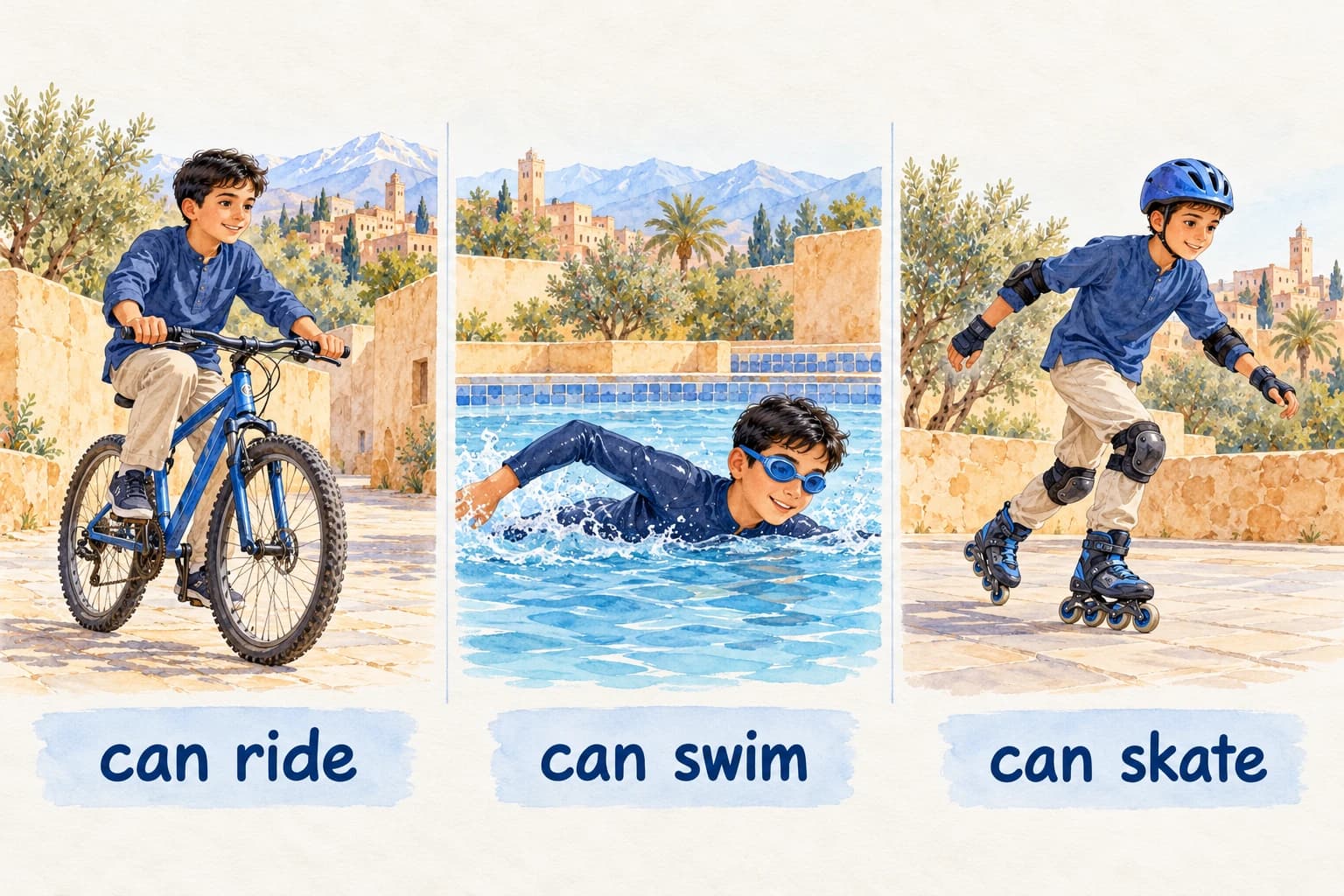
Read and explain this example
At the activity club, Ines can skate. She can't climb a tree yet. Omar can ride a bike and fly a kite. Can they swim? Yes, they can.
Separate an ability from an object
Compare I can ride with I have a bike. The first sentence tells us about a skill; the second tells us about a possession. A learner might have a bicycle but still be learning to ride it. When you describe an activity, keep the whole phrase together: ride a bike, fly a kite or play football. The article belongs to the noun phrase, while can controls the verb.
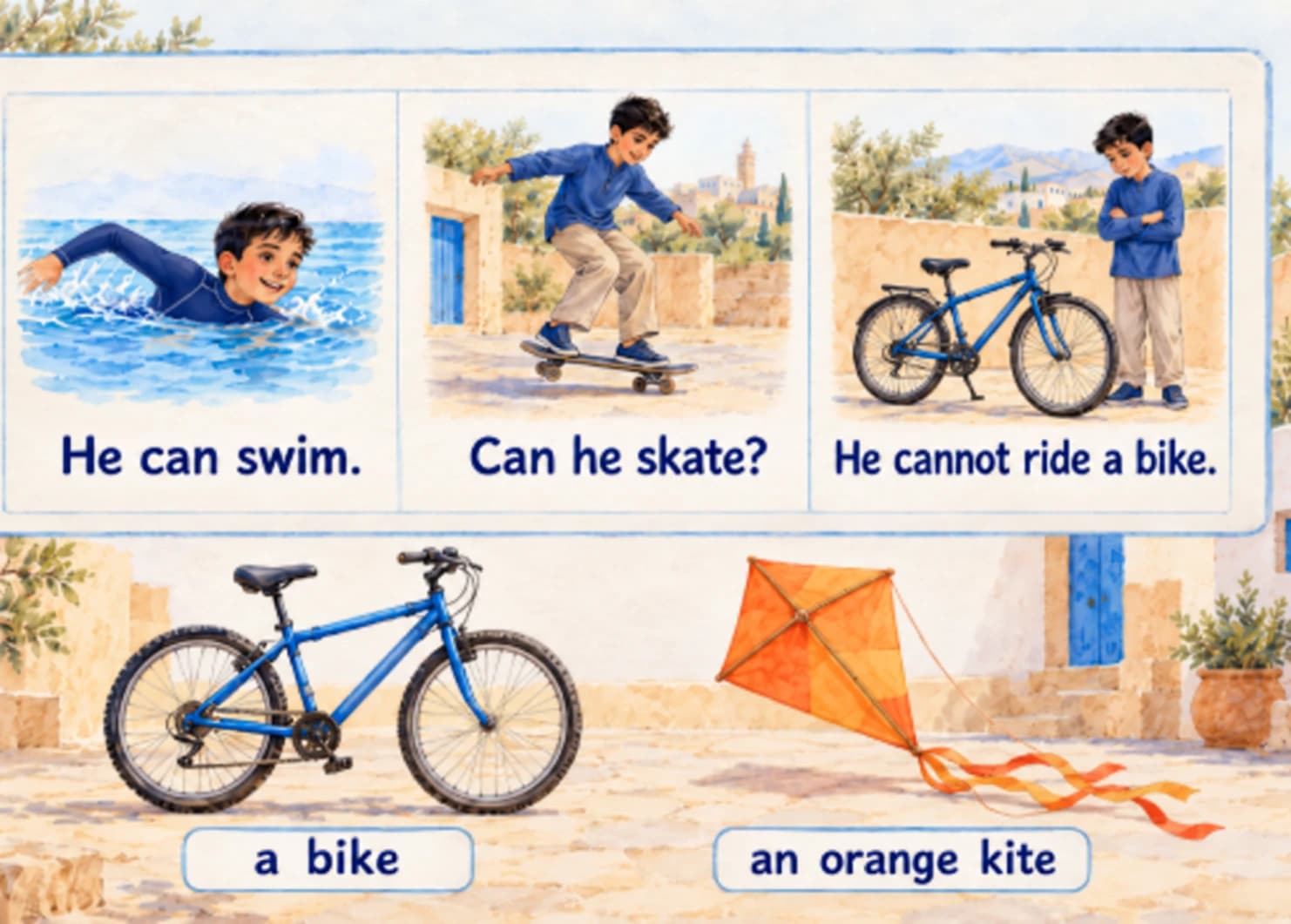
Remember
Do not add s after can: She can swim, not She can swims. Use Can he…? rather than Does he can…? Keep an before a vowel sound: an orange ball.
Step by step
Put the idea into practice
- Choose an activity you can explain with a simple verb phrase.
- Place can or can't before the base verb without changing it for he or she.
- Make a question by moving can before the person, then practise a short answer.
Frequently asked questions
How do I use can and can't to talk about abilities?
Why is Can she swims? incorrect?
Does can change with he or she?
Quiz: 1 questions
1 questions are randomly selected from this lesson’s 1-question bank. Choose one answer for each question and get an immediate explanation.
Q1Which question is correct?
Incorrect answer
Can goes before the subject and takes swim without s.
Correct answer: Can she swim?
Can goes before the subject and takes swim without s.
Your score
0/1
Start with the worked examples
Read the lesson in small sections. Write your own example for each rule and try the Easy exercises before returning to the quiz.
Review: 1 missed question
Which question is correct?
Correct answerCan she swim?
Can goes before the subject and takes swim without s.
Exercises with answers
4 exercises, from easy practice to challenges. Try each one yourself, then reveal the answer and explanation.
Exercise 1
EasyComplete: She can (rides / ride) a bike. They can't (swim / to swim).
Answer and explanation
Ride; swim. Can and can't take the base verb.
Exercise 2
IntermediateMake a question from He can skate, then answer no.
Answer and explanation
Can he skate? No, he can't. Move can before he and repeat can in the answer.
Exercise 3
ChallengeWrite four sentences with can, can't, a and an.
Answer and explanation
Example: I can ride a bike. I can't skate. I have a kite. It is an orange kite. Your abilities may differ; keep the base verb after can.
Exercise 4
IntermediateA pupil owns a bike but cannot ride yet. Write one possession sentence, one ability sentence and one question.
Answer and explanation
Example: He has a bike. He can't ride it yet. Can he practise with a teacher? Ownership and ability are different pieces of information.