



Present simple: do, does, don't, doesn't and frequency
I walk to school. She walks to school. The present simple describes routines and repeated actions. Use do or does to ask questions and don't or doesn't to make negatives with ordinary action verbs.

Ta fiche PDF illustrée
Le support, la méthode et les exercices corrigés à imprimer.
By the end of this lesson, you can
- Describe a routine with the present simple
- Compare positive, negative and question forms
- Place frequency words where they belong
Before you startRead simple English sentences; use the starter lesson if you need help with names or numbers.
Un bon cours, ça se partage.
How do do and does work in the present simple?
Use do with I, you, we and they, and does with he, she and it. The verb after do, does, don't or doesn't stays in its base form: Does she play? She doesn't play. Only the positive statement needs the third-person ending: She plays.

Describe a routine with the present simple
Add s to the verb in positive statements with he, she or it: He plays. Some verbs take es: She watches. A consonant followed by y becomes ies: study becomes studies. After does or doesn't, use the base form: Does she study? She doesn't study on Sunday.
Use Do with I, you, we and they, and Does with he, she and it. Frequency adverbs normally go before an ordinary verb: I usually read. They go after be: She is often tired. Always means every time; never means at no time. Never already has a negative meaning.
Compare positive, negative and question forms
| Statement | Negative or position | Question or example |
|---|---|---|
| I play chess. | I don't play chess. | Do you play chess? |
| She studies English. | She doesn't study on Sunday. | Does she study English? |
| I always read. | She is often happy. | We never arrive late. |
Follow a pupil's daily habits
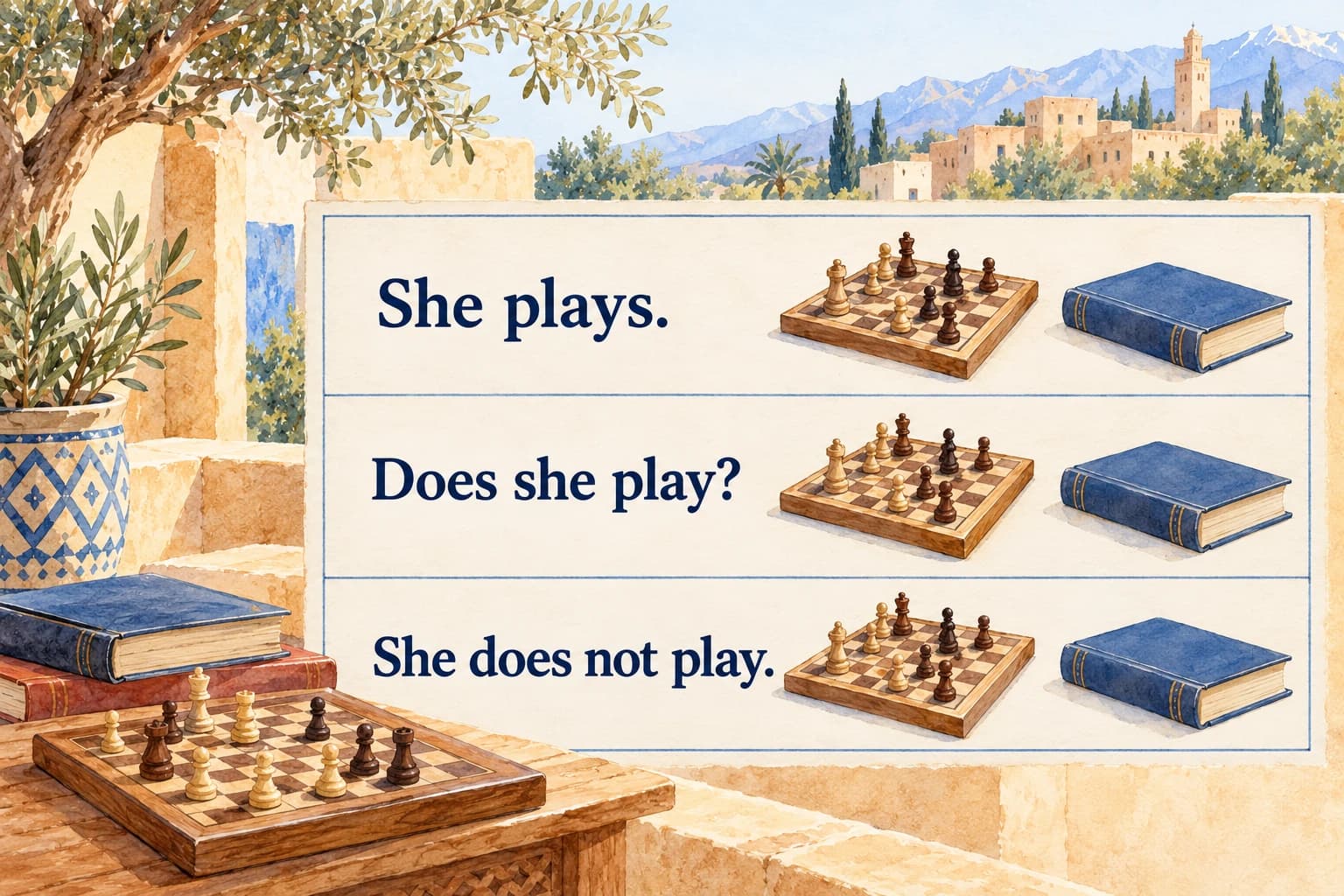
Read and explain this example
Yassine usually walks to school. He studies English on Monday. He doesn't watch TV before school. Does he read after dinner? Yes, he does. He is sometimes tired, but he never forgets his bag.
Place frequency words where they belong
Start with a meaning, not just an ending. She walks to school every day describes a repeated action. To ask about that routine, use Does she walk to school? The s has not disappeared without a reason: does marks the third person, so walk returns to its base form. Usually normally goes before walk, while often goes after be in She is often tired. Never already makes the meaning negative.
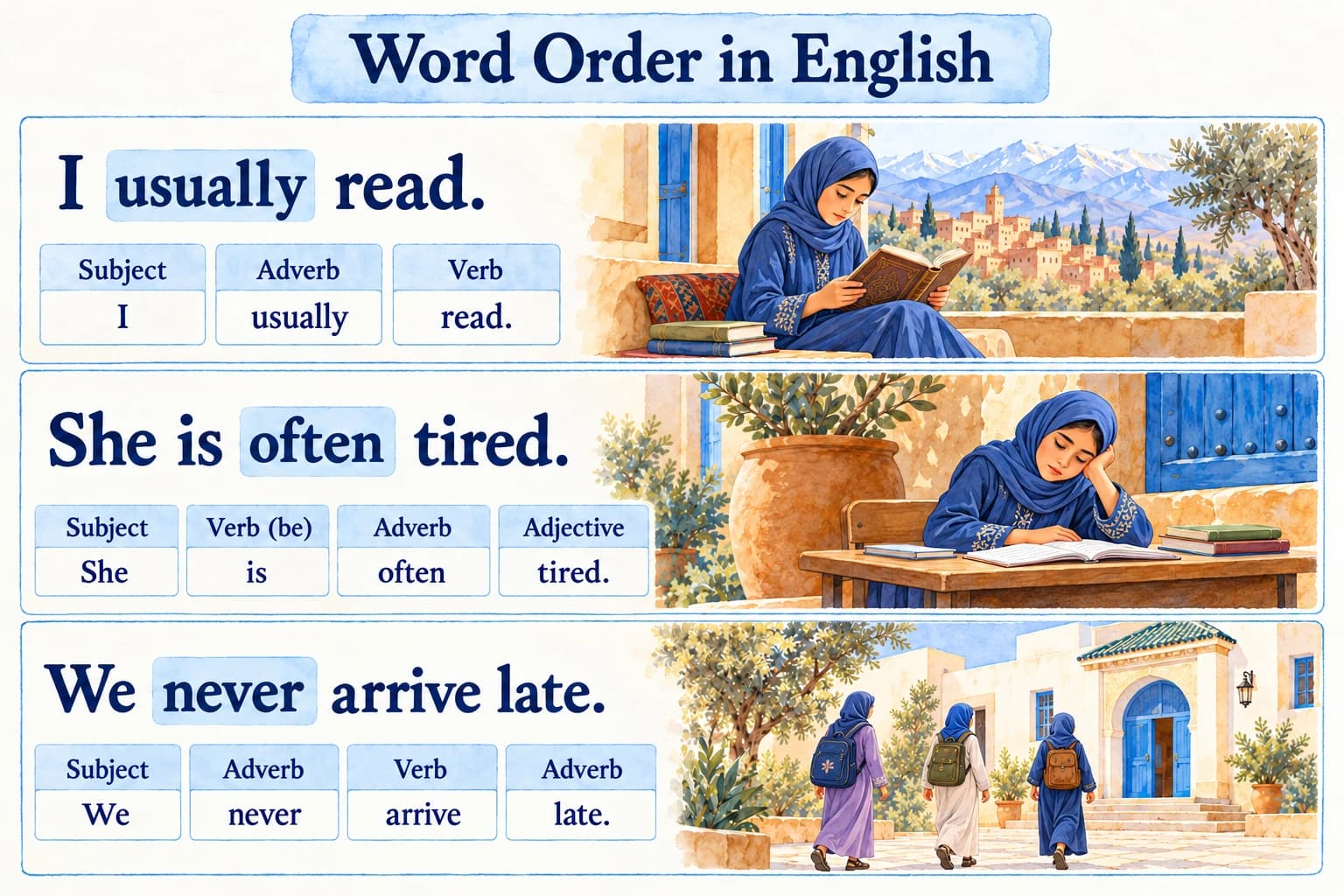
Remember
Does already carries the third-person marker: Does she play?, not Does she plays? Avoid don't never: write I never play on Sunday.
Step by step
Put the idea into practice
- Find the subject and decide whether you are making a statement, negative or question.
- Use the third-person ending only where the structure requires it.
- Place a frequency adverb, then check that you have not added a second negative to never.
Frequently asked questions
How do do and does work in the present simple?
Where do I put usually in a present-simple sentence?
Do I use do to ask questions with be?
Quiz: 1 questions
1 questions are randomly selected from this lesson’s 1-question bank. Choose one answer for each question and get an immediate explanation.
Q1Choose the correct negative.
Incorrect answer
Use doesn't with she, followed by the base verb play.
Correct answer: She doesn't play.
Use doesn't with she, followed by the base verb play.
Your score
0/1
Start with the worked examples
Read the lesson in small sections. Write your own example for each rule and try the Easy exercises before returning to the quiz.
Review: 1 missed question
Choose the correct negative.
Correct answerShe doesn't play.
Use doesn't with she, followed by the base verb play.
Exercises with answers
4 exercises, from easy practice to challenges. Try each one yourself, then reveal the answer and explanation.
Exercise 1
EasyComplete: She (play / plays) chess. Does he (walk / walks)?
Answer and explanation
Plays; walk. Only the positive statement takes s here.
Exercise 2
IntermediatePut often into She reads and He is tired.
Answer and explanation
She often reads. He is often tired. The adverb comes before reads but after is.
Exercise 3
ChallengeWrite four sentences with an affirmative, a negative, a question and never.
Answer and explanation
Example: I study at home. I don't play before homework. Do you read? I never arrive late. Check the subject and the base verb after do.
Exercise 4
IntermediateAmal reads at six. Write a yes/no question, a negative and a sentence with usually.
Answer and explanation
Does Amal read at six? Amal doesn't read at six. Amal usually reads at six. After does or doesn't, use read; the positive statement takes reads.