



Comprehension 2 : A talented humorist
A text about a talented humorist can reveal skill through details such as pauses, gestures and an audience’s reaction. This English 2 Bac reading follows a fictional school performer who learns to use one familiar sound to make a whole room laugh.
By the end of this lesson, you can
- Identify the turning point in a short profile.
- Infer a personality trait from actions.
- Explain unfamiliar vocabulary using nearby clues.
Un bon cours, ça se partage.
Reading passage: Karim and the alarm clock
Karim rarely spoke in front of his class, but he collected sounds in a small notebook. On his way to school he heard bicycles, shop shutters and an alarm that rang long after its owner had left. He could imitate them all. For the school culture evening, his friends asked him to turn one of the sounds into a two-minute performance. At the first rehearsal he put all three sounds in the sketch. A friend laughed at the alarm but could not explain why the bicycle was there. Karim went home and drew a large clock on a piece of cardboard.
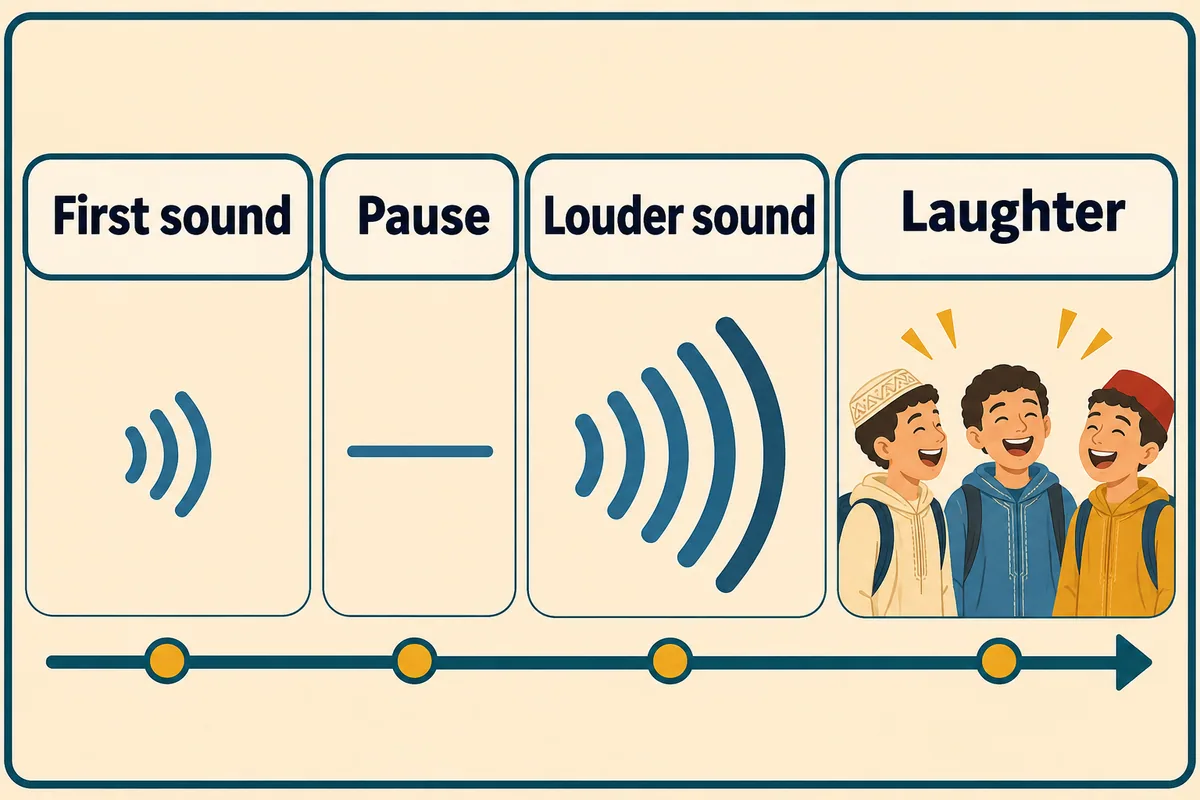
Karim began his act with a life-sized picture of an alarm clock. He pretended to press a button. The room was silent. For a moment, the boys in the front row thought he had forgotten his lines. Then Karim imitated the distant buzz of the alarm, stopped halfway through and gave the picture a puzzled look. The second burst was so loud and sudden that even the sound technician laughed.
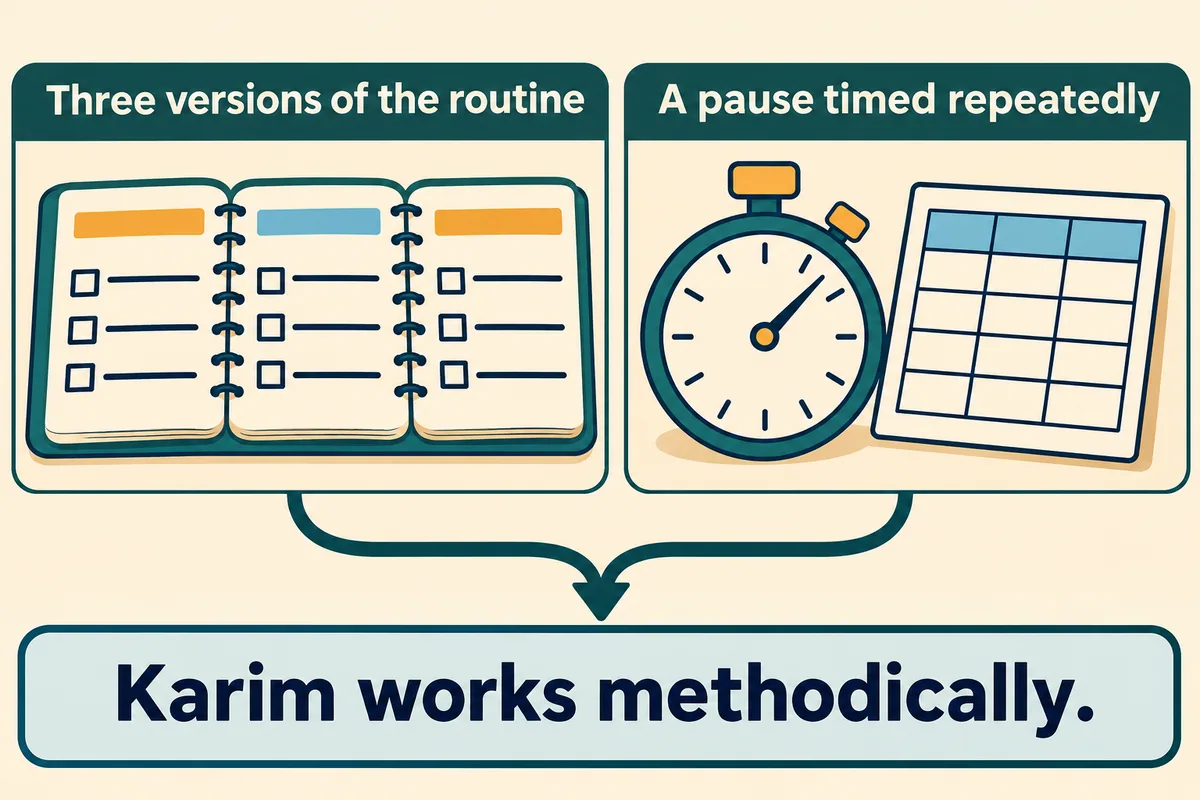
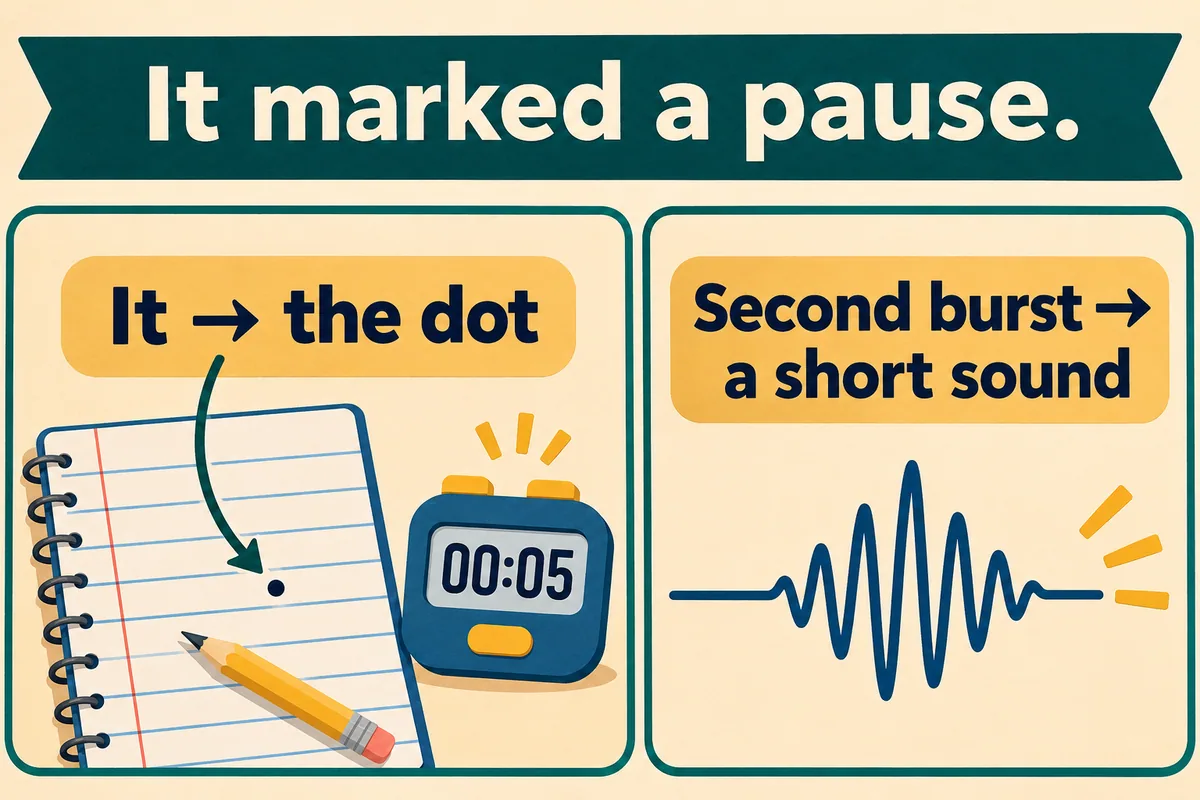
After the show, a classmate asked how he had learned to be so funny. Karim opened his notebook and showed him three different versions of the routine. In the shortest version, there was a small dot before the second burst. It marked a pause he had timed again and again. He had also crossed out the bicycle and the shutters. The classmate tried performing the sketch without the pause. His imitation was accurate, but it no longer surprised anyone. He looked back at the small dot and asked Karim to show him exactly where to wait.
The main idea and the turning point
The first paragraph sets up Karim’s talent for noticing sounds. The room’s first reaction is silence. When he interrupts the imitation and then makes a louder sound, the silence makes the surprise stronger. The last paragraph reveals that this timing was planned.
How a detail supports an inference
| Reading skill | Evidence and explanation |
|---|---|
| Infer a trait | The three versions and repeated timing suggest Karim is methodical. The text shows him planning instead of directly naming the trait. |
| Guess a meaning | The phrase second burst follows a short stop, and the burst is loud. It is a sudden short sound. |
| Track a reference | In « It marked a pause », It refers to the dot in the notebook. |
| Identify tone | The narrator admires Karim’s preparation. The repeated timing matters as much as the audience’s reaction. |
A supported answer
« Karim’s success came partly from practice. His notebook contained three versions of the routine, and he rehearsed the pause repeatedly. » The second sentence gives the evidence needed to make the first convincing.
Infer the writer’s point about humour
The audience thinks Karim has forgotten his lines, while his notebook shows a carefully timed pause. That contrast helps explain why the ending changes how readers understand the performance.
Worked examples: reading a story for its turning point
Finding the turning point
At what moment does Karim’s performance change?
- Look for words that mark a contrast or a sudden change: « The room was silent », « For a moment », « Then ».
- The audience believes Karim has forgotten his lines. Then he stops the alarm halfway and makes « the second burst » loud and sudden.
- Answer: the turning point is the second burst of sound after the pause, because it turns the silence into laughter.
Inferring what a character understands
What does the classmate understand at the end of the story?
- Find his action: « He looked back at the small dot and asked Karim to show him exactly where to wait. »
- Connect it to what happened before: his imitation was accurate but surprised nobody.
- Answer with evidence: « He understands that the pause makes the sketch funny, because his accurate imitation without the pause surprised nobody. »
Sources and curriculum
- English Language Guidelines for Secondary Schools (Ministry of Education, 2007)
The 2nd Baccalaureate syllabus describes the ten themes, four skills and language structures. See printed pages 76–84.
- National Baccalaureate Exam Specifications (English, 2025)
Reproduction of the national framework for the reading, language and writing sections, including the science streams.
Frequently asked questions
Why did the audience laugh at Karim’s act?
How do you infer a character trait from a reading text?
What is the main idea of A talented humorist?
Exercises with answers
4 exercises, from easy practice to challenges. Try each one yourself, then reveal the answer and explanation.
Exercise 1
EasySay whether each statement is true or false and quote the passage.
- Karim often spoke in front of his class.
- Karim could imitate the sounds he heard on his way to school.
- The final sketch kept all three sounds.
- Even the sound technician laughed.
Answer and explanation
- False. « Karim rarely spoke in front of his class. »
- True. « He could imitate them all. »
- False. « He had also crossed out the bicycle and the shutters. »
- True. « The second burst was so loud and sudden that even the sound technician laughed. »
Exercise 2
Intermediate- What did Karim collect on his way to school?
- Why did the front row think he had forgotten his lines?
- What does the dot in his notebook represent?
Answer and explanation
- He noticed and recorded everyday sounds such as bicycles, shop shutters and an alarm.
- After he pretended to press the button, the room stayed silent.
- A planned pause before the second burst of sound.
Exercise 3
IntermediateAnswer the questions.
- Find a word in paragraph 1 that means a practice before a performance.
- Find a word in paragraph 2 that means confused.
- Find a word in paragraph 3 that means exact and correct.
- In « He could imitate them all », what does them refer to?
- In « It marked a pause », what does It refer to?
Answer and explanation
- Rehearsal.
- Puzzled.
- Accurate.
- The sounds he heard: bicycles, shop shutters and an alarm.
- The small dot in Karim’s notebook.
Exercise 4
ChallengeAnswer in complete sentences.
- Why was his friend’s reaction at the first rehearsal useful to Karim?
- What does the classmate’s failed imitation prove?
- Suggest another title for the story and justify it.
- Do you think humour can be learned? Answer in about 40 words.
Answer and explanation
- The friend laughed at the alarm but could not explain the bicycle, so Karim kept the funniest sound and removed the others.
- It proves that timing, not accuracy, makes the sketch funny.
- One answer is « The Dot Before the Laugh », because the small dot marks the planned pause that creates the surprise.
- One answer is « Partly. Some people notice funny details naturally, but Karim’s three versions show that timing and choosing the right material can be practised. A good joke usually needs rehearsal as well as talent. »