



Comprehension 4 : Civil society in Morocco
Civil society includes independent groups and associations that act on shared public concerns. This fictional neighbourhood case study shows how volunteers in Morocco can work with a school and a municipal service. The English 2 Bac reading focuses on the evidence for what the project achieved.
By the end of this lesson, you can
- Explain civil society using evidence from a local case study.
- Identify a stated aim, an action and a result.
- Distinguish a limited observation from a broader conclusion.
Un bon cours, ça se partage.
Reading passage: Counting what we collect
A neighbourhood association in Salé noticed that plastic bottles often collected near a public sports ground. Every Saturday, volunteers filled bags and left them for the municipal collection service. By the following week, the ground was covered with bottles again. The association wanted to understand where the waste came from before putting more time into clean-ups. At first, some volunteers thought selling drinks near the gate was the main cause. Other members pointed out that people often brought their own bottles. The group decided to gather evidence before suggesting a change.
Two secondary students suggested counting the objects instead of only weighing the bags. On three Saturdays, the group wrote down how many bottles, cups and food wrappers they found. Bottles made up the largest group each time. The students marked where they found the most litter on a simple map. The volunteers asked the sports ground manager to try a clearly labelled container near the drinking tap. They also explained the idea to teams when matches ended.
During the following three Saturdays, the group found fewer bottles on the ground. They could not tell what happened every day because they visited only once a week. The association shared its findings with the manager and suggested a second container near the entrance. The proposal included a plan for checking the results again after one month. The students kept the same tally sheet so that the next group of volunteers could compare the new counts with the original ones.
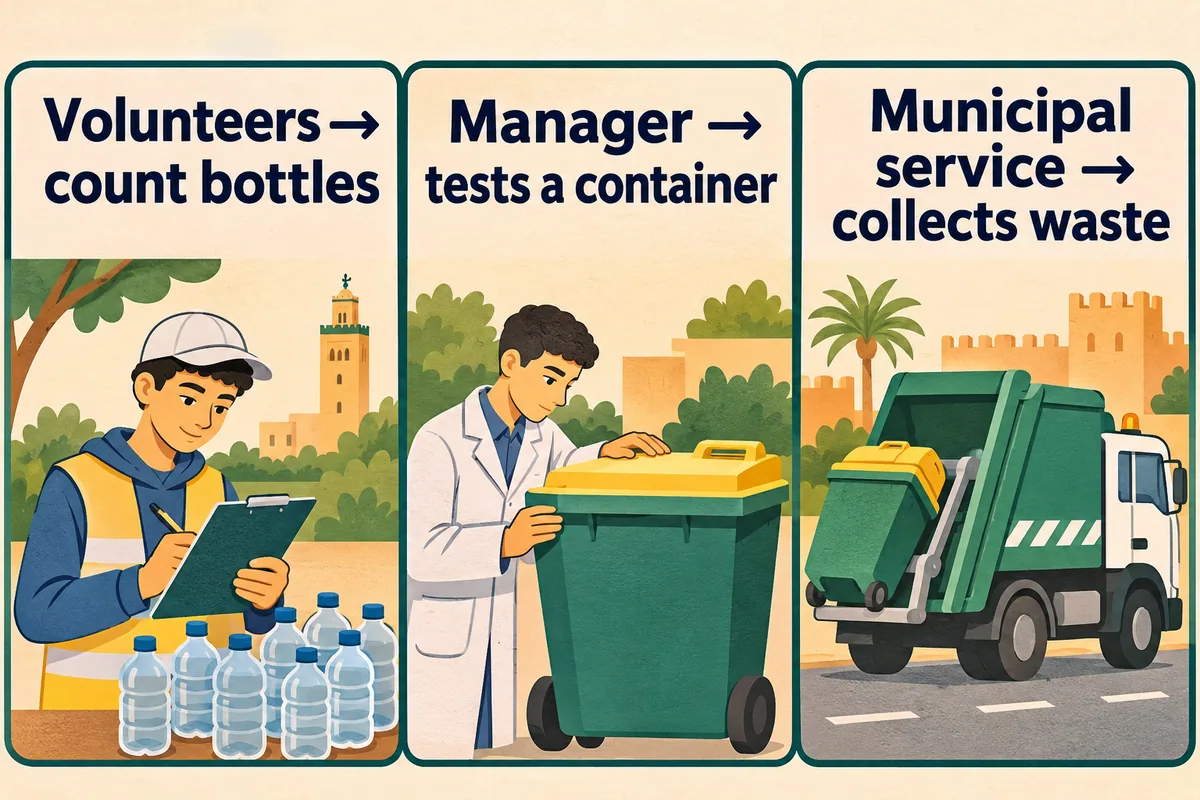
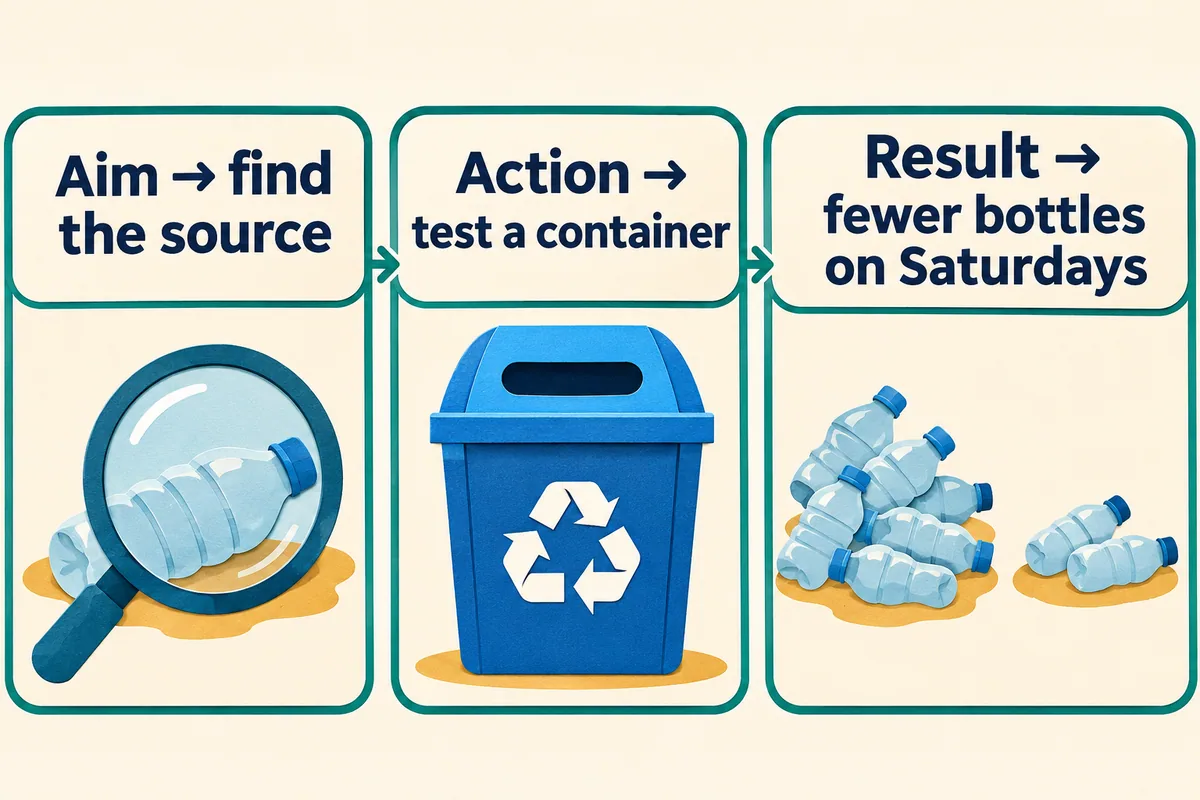
Aim, action and result in the passage
| Part of the project | Evidence in the text |
|---|---|
| Aim | The association wanted to understand why the same waste kept appearing. |
| Action | Volunteers counted items by type and tested a labelled container near the tap. |
| Observed result | They found fewer bottles on the ground during the three Saturdays after the change. |
| Limit | The group visited only on Saturdays, so the result describes those visits. |
How do you judge the strength of a reading answer?
The paragraph supports the claim that fewer bottles were found on the observation days. It gives no total for every day of the week. In a reading answer, keep the same limits as the original text. A useful paraphrase is « The Saturday count fell after the container was installed ».
Reference and inference
In « They could not tell what happened every day », they refers to the volunteers. The plan to check again suggests the association wanted evidence before recommending a wider change.
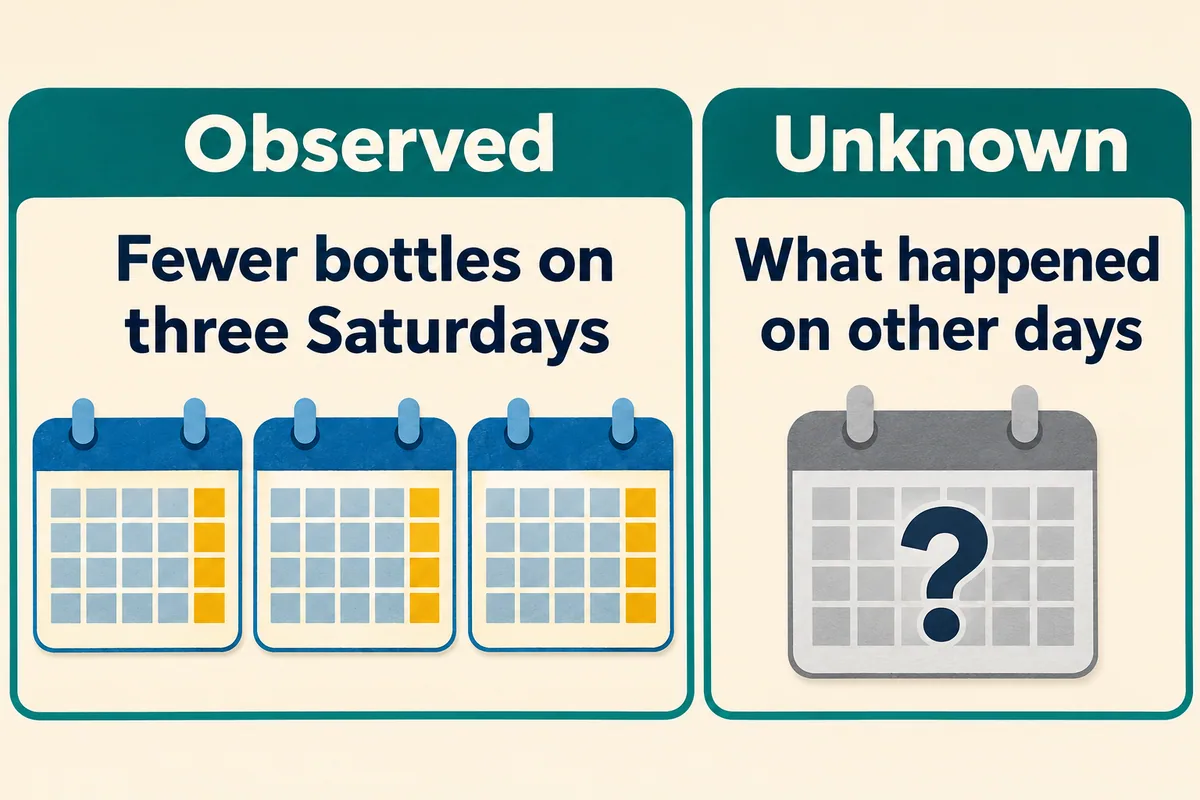
Use details to explain the role of civil society
A neighbourhood association can organise volunteers, collect evidence and make a proposal to a public service or facility manager. Locate the evidence for each role before you answer. The trial measures bottles found during visits, so any conclusion should respect when and where the visits took place.
Worked examples: answering questions on Counting what we collect
Reporting a result without exaggerating
Summarise the result of the container trial in one sentence.
- Find the result in paragraph 3: « During the following three Saturdays, the group found fewer bottles on the ground. »
- Note the limit in the next sentence: they visited only once a week.
- Avoid « The container solved the problem », which goes further than the evidence.
- Answer: « During the three Saturdays after the container was installed, the volunteers found fewer bottles on the ground. »
Recognising different opinions
What did the volunteers disagree about, and how did they solve the disagreement?
- Paragraph 1 gives two views: some thought drinks sold near the gate were the main cause, while others said people brought their own bottles.
- Find the decision that follows: « The group decided to gather evidence before suggesting a change. »
- Answer: « They disagreed about where the bottles came from, so they decided to collect evidence before acting. »
Sources and curriculum
- English Language Guidelines for Secondary Schools (Ministry of Education, 2007)
The 2nd Baccalaureate syllabus describes the ten themes, four skills and language structures. See printed pages 76–84.
- National Baccalaureate Exam Specifications (English, 2025)
Reproduction of the national framework for the reading, language and writing sections, including the science streams.
Frequently asked questions
What does civil society mean in this reading lesson?
Did the new bin solve the waste problem every day?
What are examples of civil society organisations in Morocco?
Exercises with answers
4 exercises, from easy practice to challenges. Try each one yourself, then reveal the answer and explanation.
Exercise 1
EasyAnswer each question with a short phrase from the passage.
- In which town is the sports ground?
- On which day did the volunteers visit the ground?
- Which three kinds of objects did they count?
- Who suggested counting the objects?
- Where did the association suggest a second container?
Answer and explanation
- Salé.
- On Saturdays.
- Bottles, cups and food wrappers.
- Two secondary students.
- Near the entrance.
Exercise 2
Intermediate- Why did the group count different objects instead of only weighing the bags?
- Where did they place the first labelled container?
- True or false? The association knew the number of bottles left every day. Justify.
Answer and explanation
- Counting categories showed that bottles were the largest group and helped the volunteers choose what to target.
- Near the drinking tap.
- False. They visited once a week and could not tell what happened every day.
Exercise 3
IntermediateAnswer the questions.
- Find a word in paragraph 1 that means belonging to the town or city administration.
- Find a word in paragraph 1 that means facts or information that show whether something is true.
- Find a word in paragraph 3 that means a plan or suggestion put forward for others to consider.
- In « They also explained the idea to teams », who are They?
- In the last sentence, what does the original ones refer to?
Answer and explanation
- Municipal.
- Evidence.
- Proposal.
- The volunteers.
- The original counts made before the change.
Exercise 4
ChallengeAnswer in complete sentences.
- Why did the association want to know where the waste came from before doing more clean-ups?
- Quote the sentence that shows the volunteers were careful about the limits of their data.
- Why did the students keep the same tally sheet?
- In about 40 words, describe a civil society action you have seen in your town or would like to start.
Answer and explanation
- Because the ground was covered with bottles again every week, so clean-ups alone did not solve the cause of the problem.
- « They could not tell what happened every day because they visited only once a week. »
- So that the next group of volunteers could compare new counts with the original ones.
- One answer is « I would like to start a book-exchange box at our youth centre. Students could leave books they have finished and take new ones. A volunteer would check the box each week and count how many books were borrowed. »