



Comprehension 5 : The woman behind Harry Potter
The woman behind Harry Potter is a reading lesson about J.K. Rowling’s work as an author. The original English 2 Bac passage starts with the idea for the book and follows its path to publication. The dates help you reconstruct that process and explain what the writer emphasises.
By the end of this lesson, you can
- Sequence the events in a biographical passage.
- Use a detail to explain a writer’s emphasis.
- Recognise what a passive sentence tells you about publication.
Un bon cours, ça se partage.
Reading passage: From a train journey to a book
In 1990, J.K. Rowling was travelling from Manchester to London when she began imagining a boy at a school for magic. The train was delayed, which gave her time to think about the idea. The journey helped set the story in motion. The book itself still had to be developed, written and revised.
Rowling moved to Portugal in 1991 and taught English there. She continued working on the story while she lived in Porto. She later moved to Edinburgh, where she completed the manuscript and sent some chapters to literary agents. One agent asked to read the rest, and several publishers declined it before Bloomsbury agreed to publish it. The first book was published in the United Kingdom by Bloomsbury. It appeared in June 1997 under the title Harry Potter and the Philosopher’s Stone.
The book appeared under the name J.K. Rowling. According to the author, her publisher thought boys might be less likely to choose the book if they knew it had been written by a woman. She adopted the initials at the publisher’s request. That decision is one example of how assumptions about readers can affect a woman author’s public name. The first publication began a series of seven novels. Although its date makes a clear point on a timeline, the years of writing and the decisions behind publication help explain how the original idea reached readers.
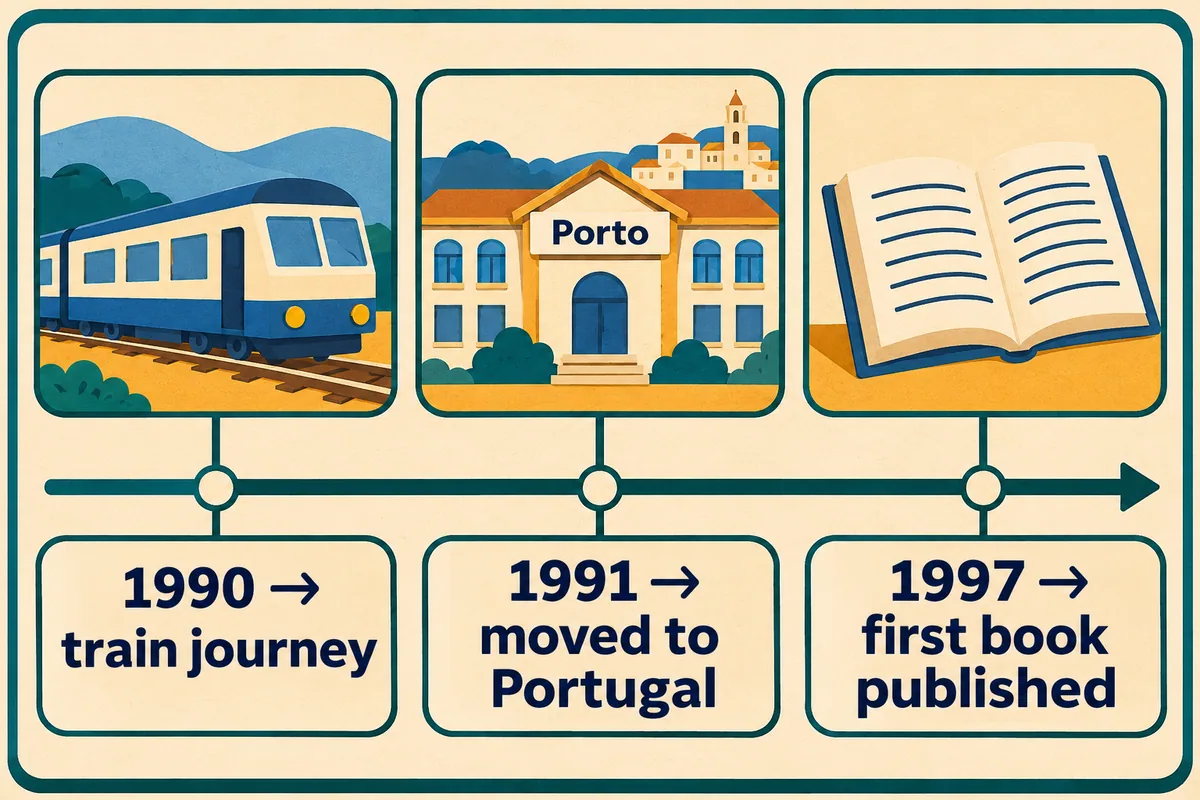
Skim the profile and scan for dates
| Time | Event and its role |
|---|---|
| 1990 | A train journey provides the time in which Rowling develops the initial idea. |
| 1991 and after | She moves to Portugal, teaches English and continues writing. |
| June 1997 | Bloomsbury publishes the first book in the United Kingdom. |
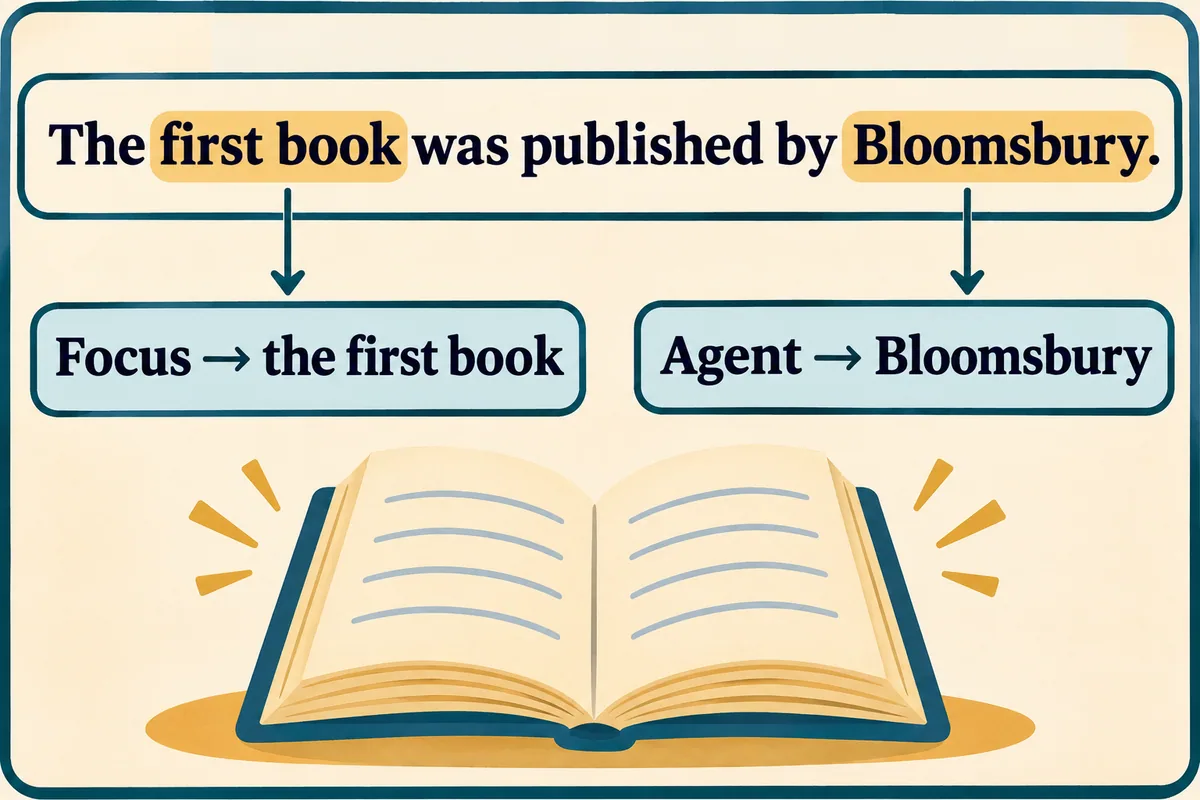
Interpret reference, voice and emphasis
| Reading focus | Model explanation |
|---|---|
| Pronoun reference | In « It appeared in June 1997 », It refers to the first book. |
| Passive voice | In « the first book was published … by Bloomsbury », the book is the focus and Bloomsbury is the publishing agent. |
| Inference | The author of the passage values the work behind a result. The last paragraph contrasts the visible date with the less visible years of writing. |
A concise summary
« J.K. Rowling turned an idea she had on a train in 1990 into a book that was published in 1997, after working on the story in several places. » The sentence connects the idea, the process and the outcome.
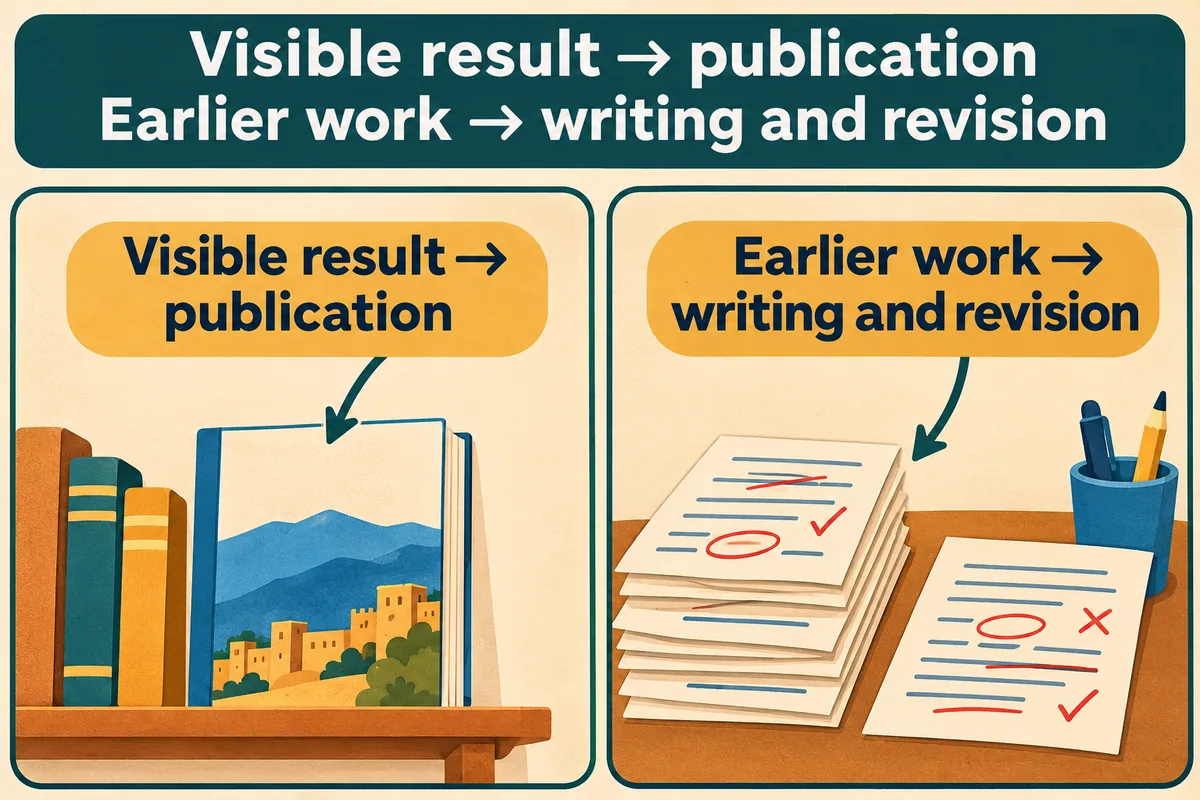
Use dates and sentences to support an inference
Dates help when a question asks you to order events. A question about the writer’s message usually asks for more than a date. Compare the lines about the original idea with those about drafting and publication to explain why the article focuses on years of work.
Worked examples: answering questions on J.K. Rowling’s story
Ordering events with dates
Put in order: Rowling completes the manuscript in Edinburgh, she has the idea on a train, the first book is published, she teaches English in Portugal.
- Scan for dates: 1990 for the train journey, 1991 for the move to Portugal, June 1997 for the publication.
- The Edinburgh manuscript has no date, but the passage says she moved to Edinburgh later, after Portugal, and before publication.
- Order: the idea on the train (1990), teaching in Portugal (from 1991), the manuscript in Edinburgh, publication (1997).
Explaining a decision in the text
Why did the book appear under the name J.K. Rowling?
- Find the paragraph about the name: paragraph 3.
- Read the reason: « her publisher thought boys might be less likely to choose the book if they knew it had been written by a woman ».
- Answer in your own words: « Her publisher feared that boys would avoid a book by a woman, so she used her initials. »
Sources and curriculum
- English Language Guidelines for Secondary Schools (Ministry of Education, 2007)
The 2nd Baccalaureate syllabus describes the ten themes, four skills and language structures. See printed pages 76–84.
- National Baccalaureate Exam Specifications (English, 2025)
Reproduction of the national framework for the reading, language and writing sections, including the science streams.
- J.K. Rowling · About
Documents the writing and publication timeline and the choice to publish under initials.
- J.K. Rowling · My Story
Gives the author’s account of drafting the first novel and finding a publisher.
Frequently asked questions
Who is the woman behind Harry Potter?
What is the main idea of this J.K. Rowling reading?
Why did J.K. Rowling use her initials?
Exercises with answers
4 exercises, from easy practice to challenges. Try each one yourself, then reveal the answer and explanation.
Exercise 1
EasyAnswer each question with a short phrase from the passage.
- In which year did Rowling begin imagining the story?
- Between which two cities was her train travelling?
- What job did she do in Portugal?
- Which publisher accepted the first book?
- How many novels are there in the series?
Answer and explanation
- In 1990.
- Manchester and London.
- She taught English.
- Bloomsbury.
- Seven.
Exercise 2
Intermediate- Where did Rowling teach English?
- Put these in order: publication in the UK, the train journey, working on the story in Porto.
- What does « It » in « It appeared in June 1997 » refer to?
Answer and explanation
- In Portugal.
- The train journey, working on the story in Porto, publication in the UK.
- The first book, Harry Potter and the Philosopher’s Stone.
Exercise 3
IntermediateAnswer the questions.
- Find a word in paragraph 1 that means late or not on time.
- Find a word in paragraph 2 that means refused.
- Find a word in paragraph 2 that means the text of a book before it is published.
- In « One agent asked to read the rest », the rest of what?
- In « She adopted the initials », which initials does the text mean?
Answer and explanation
- Delayed.
- Declined.
- Manuscript.
- The rest of the manuscript. She had sent only some chapters.
- J.K.
Exercise 4
ChallengeAnswer in complete sentences.
- Why does the writer say that the publication date « makes a clear point on a timeline »?
- What assumption about readers does the passage mention?
- Is this assumption a stereotype? Explain with vocabulary from Unit 5.
- In about 40 words, explain what Rowling’s story teaches about perseverance.
Answer and explanation
- Because 1997 is easy to see and remember, while the years of writing and revising behind it are less visible.
- That boys might be less likely to choose a book written by a woman.
- Yes. It is an oversimplified idea about a whole group of readers, and it affected how a woman author presented her name.
- One answer is « Rowling worked on her story for seven years, in three different places, and several publishers declined it. Her success shows that a good idea needs years of effort and the courage to keep trying after a refusal. »