



Functions 4 : Expressing cause and effect
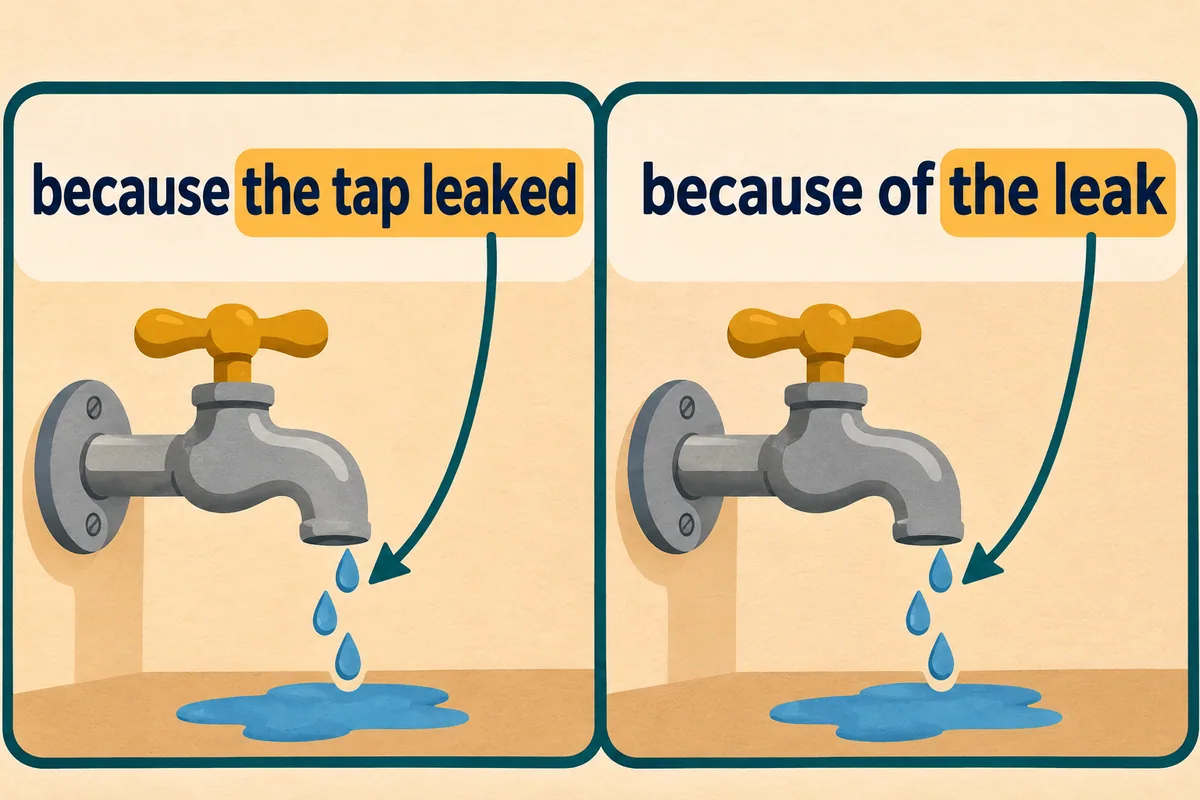
Cause explains why something happens. Effect is what follows. In English 2 Bac, use because before a clause, because of before a noun phrase and so or therefore to introduce a result. The connector determines which part of the explanation comes next.
By the end of this lesson, you can
- Identify a cause and the effect it produces.
- Choose because or because of according to the words that follow.
- Use a result connector with appropriate punctuation.
Un bon cours, ça se partage.
Listen to the text
Listen before opening the transcript. This original English practice text is read by a synthetic voice.
Show the transcript
Our school’s garden used to need a lot of tap water because the soil dried out in the afternoon. The students covered the soil with dry leaves, and as a result it stayed damp for longer. After two weeks, the team was able to water the plants less often. They plan to keep recording water use because the weather may change next month.
Which connectors introduce a cause or effect?
| Use | Connector and pattern | Example |
|---|---|---|
| cause | because / since / as + subject + verb | The tank emptied because the tap was leaking. |
| cause | because of / due to / owing to + noun phrase | The tank emptied because of a leak. |
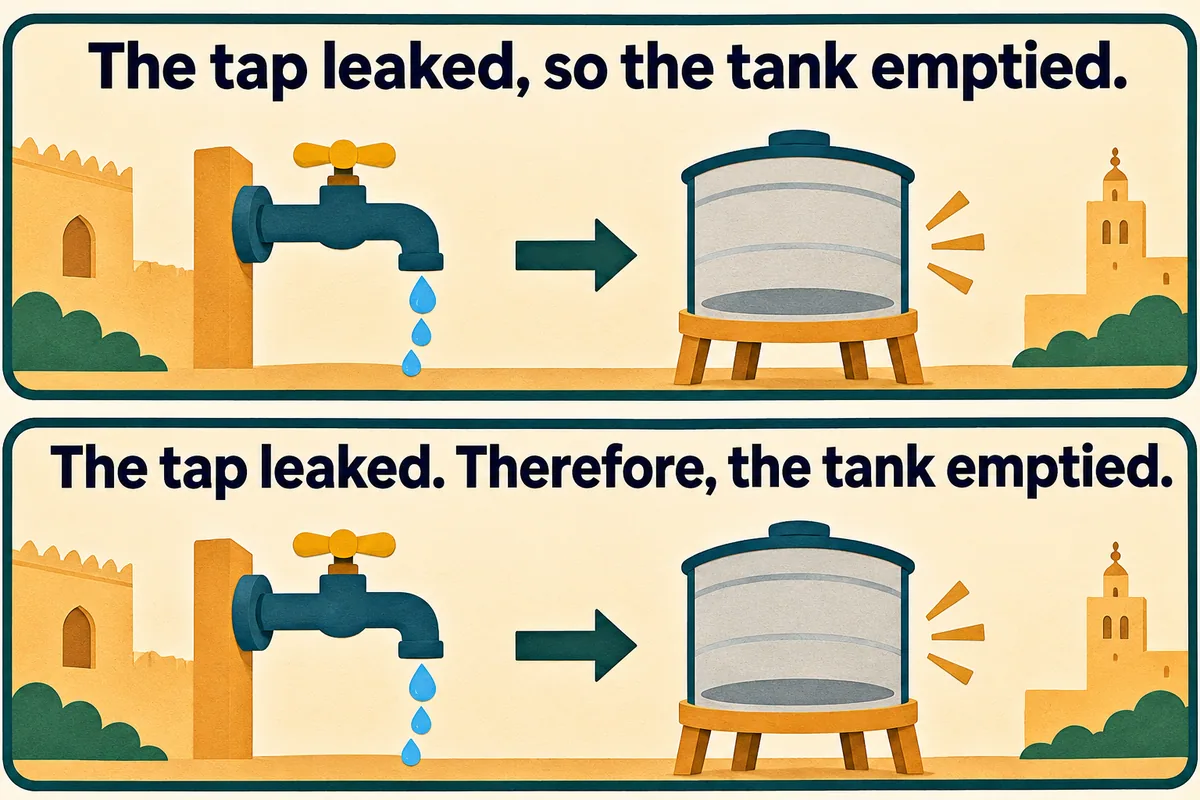
| effect | cause clause, so + effect clause | The tap was leaking, so the tank emptied. |
| effect | new sentence with therefore, consequently or as a result | The tap was leaking. Consequently, the tank emptied. |
Because, since and as can introduce a reason at the beginning. In « Because the tap was leaking, the tank emptied », the comma separates the opening reason from the main clause. Since can also mark time, so because is often clearer when both meanings are possible.
Say it with a verb instead of a connector
| Pattern | Example |
|---|---|
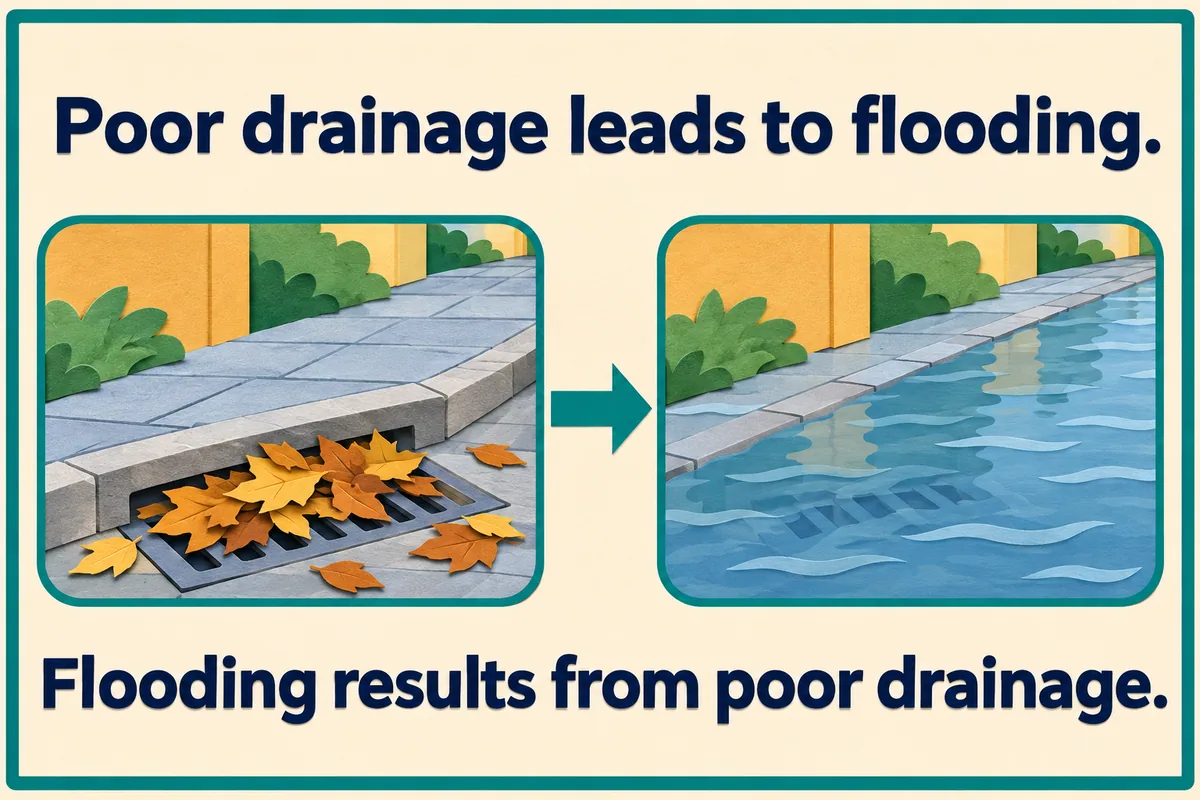
| cause + lead to / result in + effect | Poor drainage can lead to flooding. |
| effect + result from + cause | The flooding resulted from poor drainage. |
| effect + be caused by + cause | The flooding was caused by poor drainage. |
Show the relationship in a paragraph
The school garden
« The school garden needed frequent watering because the soil dried quickly. The eco-club added a layer of mulch. As a result, the soil stayed moist for longer. » Because looks back to the reason for watering. As a result moves forward from the change to its consequence.
Remember
Use a full stop before therefore when it joins two full ideas in separate sentences. A comma alone cannot join « The tap leaked » and « the tank emptied » with therefore.
Because, due to, therefore and consequently
Because, since and as can introduce a reason clause. Because of and due to generally take a noun phrase. For a result that begins a new sentence, write « The bins were full. Consequently, bottles collected beside them. » With lead to, put the cause first. With result from, put the effect first.
Worked examples: rewriting cause and effect
Because or because of?
Rewrite « Many fish died because the river was polluted » with because of.
- Because is followed by a clause with a subject and a verb: « the river was polluted ».
- Because of is followed by a noun phrase, so turn the clause into a noun: « the pollution of the river » or « river pollution ».
- Final sentence: « Many fish died because of the pollution of the river. »
Starting with the cause or the effect
Express « Deforestation causes soil erosion » in three ways.
- Cause first with lead to: « Deforestation leads to soil erosion. »
- Effect first with result from: « Soil erosion results from deforestation. »
- Effect first in the passive: « Soil erosion is caused by deforestation. »
- In each sentence, check that the cause and the effect are still in the right place.
Listening and speaking practice
Listen to the recording and answer this question. What did the students change, and what result did they observe?
Describe one problem in your neighbourhood and explain one cause and one consequence using different connectors.
Sources and curriculum
- English Language Guidelines for Secondary Schools (Ministry of Education, 2007)
The 2nd Baccalaureate syllabus describes the ten themes, four skills and language structures. See printed pages 76–84.
- National Baccalaureate Exam Specifications (English, 2025)
Reproduction of the national framework for the reading, language and writing sections, including the science streams.
Frequently asked questions
What is the difference between because and because of?
What is the difference between so and therefore?
What is the difference between lead to and result from?
Exercises with answers
5 exercises, from easy practice to challenges. Try each one yourself, then reveal the answer and explanation.
Exercise 1
EasyWrite the cause and the effect in each sentence.
- The streets flooded because the drains were blocked.
- Due to the drought, the harvest failed.
- The factory closed. As a result, 200 people lost their jobs.
- Plastic bags in the sea lead to the death of many turtles.
Answer and explanation
- Cause: the drains were blocked. Effect: the streets flooded.
- Cause: the drought. Effect: the harvest failed.
- Cause: the factory closed. Effect: 200 people lost their jobs.
- Cause: plastic bags in the sea. Effect: the death of many turtles.
Exercise 2
Intermediate- The bins were unlabelled, so students put paper in the wrong bin. Rewrite using because of.
- The path flooded because the drain was blocked. Rewrite using result from.
Answer and explanation
- Students put paper in the wrong bin because of the lack of labels.
- The flooding resulted from a blocked drain. The effect comes before resulted from.
Exercise 3
IntermediateJoin the two ideas with the word in brackets. Make any change needed.
- The match was cancelled. It rained heavily. (because)
- The match was cancelled. The heavy rain. (due to)
- It rained heavily. The match was cancelled. (so)
- It rained heavily. The match was cancelled. (Consequently)
- The heavy rain. The cancellation of the match. (led to)
Answer and explanation
- The match was cancelled because it rained heavily.
- The match was cancelled due to the heavy rain.
- It rained heavily, so the match was cancelled.
- It rained heavily. Consequently, the match was cancelled.
- The heavy rain led to the cancellation of the match.
Exercise 4
Intermediate- What did the students change, and what result did they observe?
Answer and explanation
- They covered the soil with leaves. The soil stayed damp longer, and the team watered the plants less often.
Exercise 5
ChallengeEach sentence contains one mistake. Correct it and explain.
- Because of the river was dirty, the fish died.
- The farmers lost their crops, therefore, they moved to the city.
- Heavy traffic results from air pollution.
- Due to it was very hot, we stayed inside.
- The flood was caused from heavy rain.
Answer and explanation
- Because the river was dirty, the fish died. Because of needs a noun phrase, as in « because of the dirty river ».
- The farmers lost their crops. Therefore, they moved to the city. Therefore needs a full stop or a semicolon before it.
- Air pollution results from heavy traffic. The traffic is the cause, so it comes after result from.
- Because it was very hot, we stayed inside. Due to needs a noun phrase, as in « due to the heat ».
- The flood was caused by heavy rain. The passive takes by before the cause.