



Asking for and Giving Advice
Ask for advice with « What should I do? » or « What would you recommend? » Give advice with should plus a base verb, « If I were you, I would … » or another expression that fits the urgency of the issue.
By the end of this lesson, you can
- Ask, give and respond to advice in a realistic situation.
- Use the correct form after common advice expressions.
Un bon cours, ça se partage.
Listen to the text
Listen before opening the transcript. This original English practice text is read by a synthetic voice.
Show the transcript
The student council wanted to find a way to make its meetings more accessible. A member suggested keeping the same day and inviting students to submit ideas in writing. Another advised the group to try a lunchtime meeting, because some students could not stay after school. The council decided to test both suggestions for a month before choosing a regular schedule.
What can you say to ask for or give advice?
| Expression | Form and strength | Example |
|---|---|---|
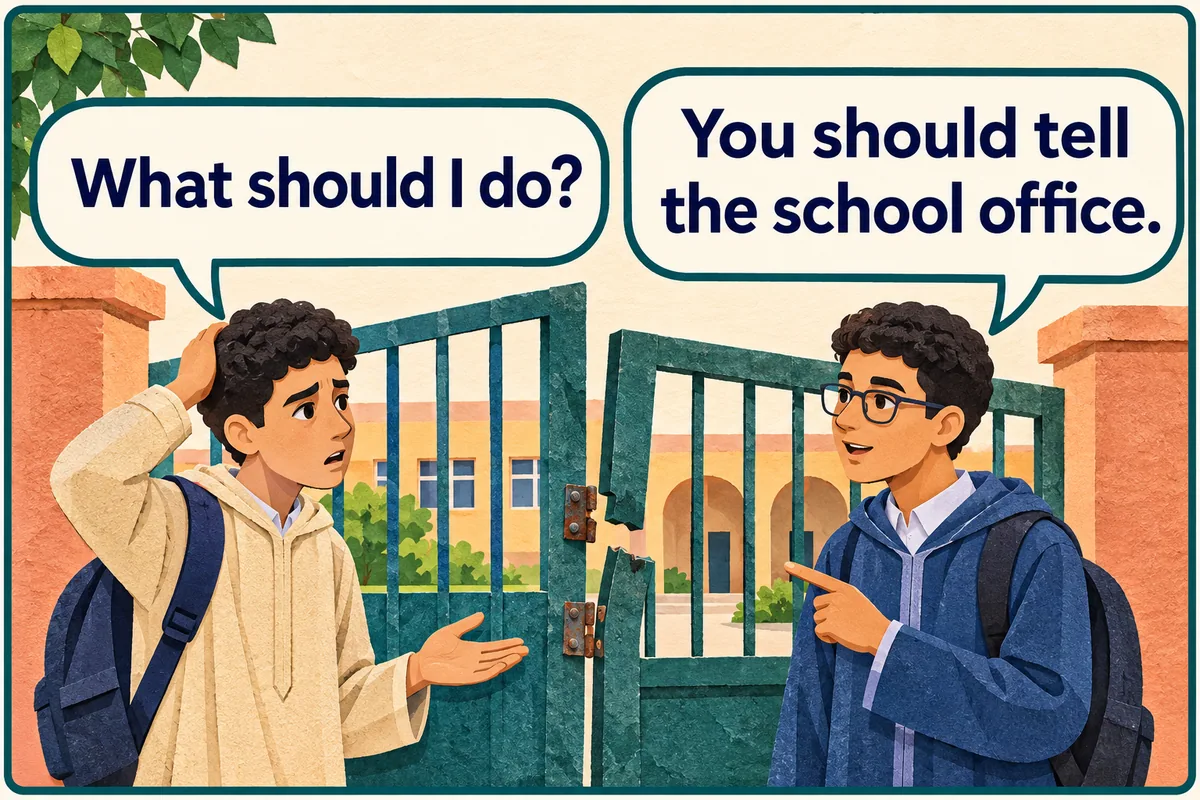
| What do you think I should do? | ask for a recommendation | What do you think I should do about the broken gate? |
| should / shouldn’t + base verb | common recommendation | You should tell the school office. |
| ought to + base verb | recommendation or sense of duty | We ought to inform the council too. |
| If I were you, I would + base verb | personal recommendation | If I were you, I’d ask the caretaker first. |
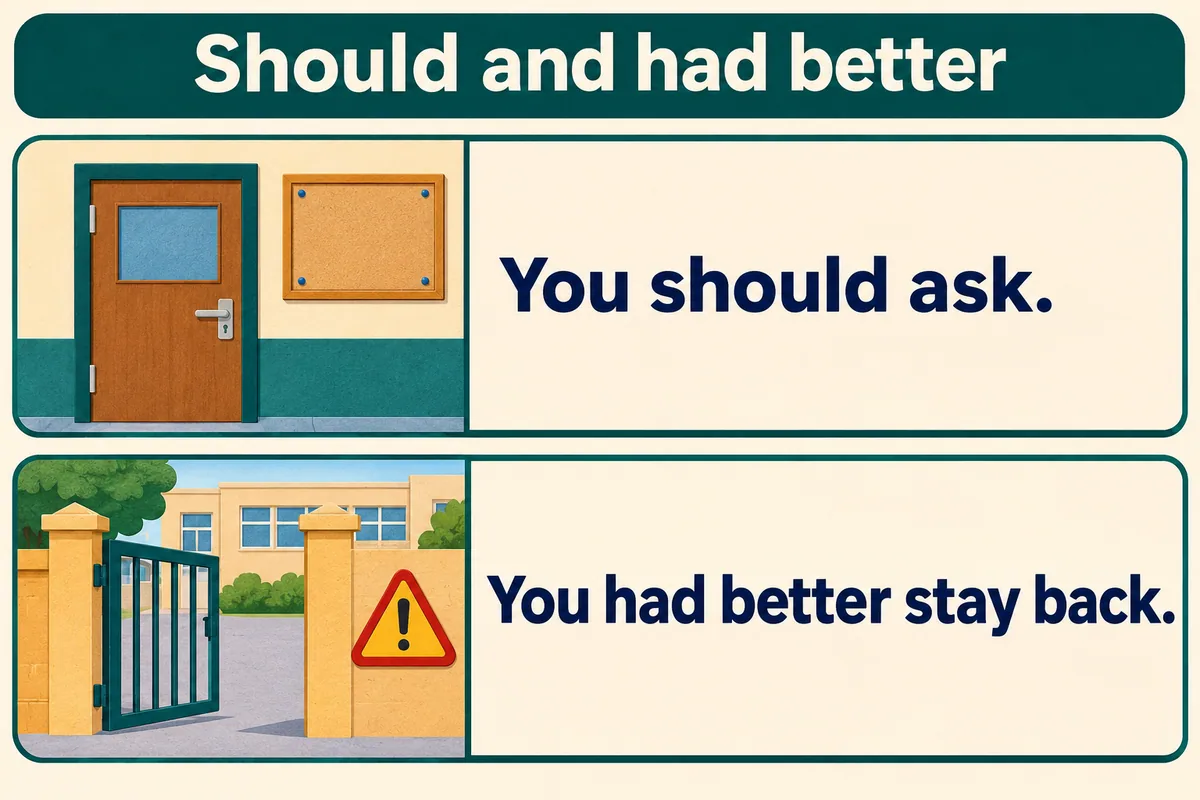
| had better (not) + base verb | strong advice with possible consequences | You’d better keep people away until it is repaired. |
| Why don’t you + base verb? | friendly suggestion | Why don’t you ask the council to put up a notice? |
Give a reason and respond to the advice
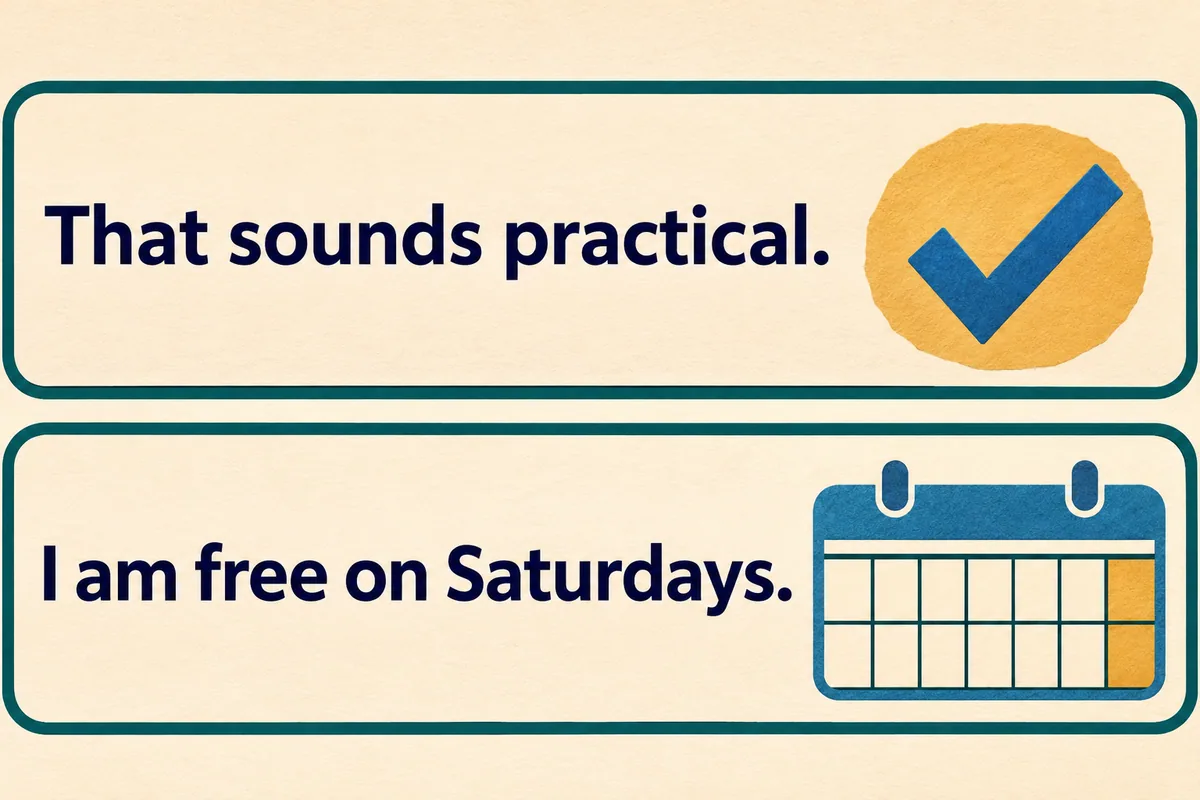
Hiba asks how to get more people to a student council meeting. Omar replies, « You could ask students to choose the meeting time, because some have to catch an early bus. » Hiba answers, « That sounds practical. I’ll send out a short survey. » To decline, she could say, « Thanks for the idea. I can’t reach everyone through a survey, so I’ll also ask in class. »
Practise a short consultation
Step by step
Speak with a partner
- Explain a problem in your school and ask for advice.
- Give two options and explain which is easier to try first.
- Respond by accepting or declining one suggestion and saying why.
Remember
Advice is uncountable. Say « some advice » or « a piece of advice ». The verb is advise.
Worked examples: giving advice that fits the situation
Matching the strength of the advice
Your friend has an exam tomorrow morning and is still revising at 1 a.m. Another friend wants to revise better in general. Give advice to each.
- The first situation is urgent and has a clear risk, so use had better: « You’d better go to bed now, or you’ll be too tired tomorrow. »
- The second situation is general, so should or a suggestion is enough: « You should make a revision timetable » or « Why don’t you revise with a partner? »
- Add a reason each time. Advice without a reason is easy to ignore.
Correcting If I were you
Correct « If I was you, I will talk to the coach. »
- In this fixed expression, use were with I: « If I were you ».
- The result clause is hypothetical, so use would, not will: « I would talk » or « I’d talk ».
- Final sentence: « If I were you, I’d talk to the coach. »
Listening and speaking practice
Listen to the recording and answer this question. What two suggestions does the speaker report?
Ask a partner for advice about increasing participation in a school activity. Report their recommendation to a third person.
Sources and curriculum
- English Language Guidelines for Secondary Schools (Ministry of Education, 2007)
The 2nd Baccalaureate syllabus describes the ten themes, four skills and language structures. See printed pages 76–84.
- National Baccalaureate Exam Specifications (English, 2025)
Reproduction of the national framework for the reading, language and writing sections, including the science streams.
Frequently asked questions
What is the difference between should and had better?
What is the difference between advice and advise?
Exercises with answers
5 exercises, from easy practice to challenges. Try each one yourself, then reveal the answer and explanation.
Exercise 1
EasySay whether each sentence asks for advice, gives advice, accepts advice or declines advice.
- « What would you do in my situation? »
- « You ought to apologise to her. »
- « That’s a good idea. I’ll try it. »
- « Thanks, but I don’t think that would work for me. »
- « Do you think I should change my course? »
Answer and explanation
- It asks for advice.
- It gives advice.
- It accepts advice.
- It declines advice politely.
- It asks for advice.
Exercise 2
Intermediate- A classmate wants to join a volunteer group but is only free on Saturdays. Give advice and a reason.
- Correct « You had better to speak to the organiser ».
Answer and explanation
- One answer is « You could ask about Saturday shifts, so volunteering won’t clash with school. »
- You had better speak to the organiser. Use the base form without to.
Exercise 3
IntermediateRespond to each problem with the expression given.
- « My phone battery runs out quickly. » (should)
- « I feel stressed before exams. » (If I were you)
- « I want to improve my spoken English. » (Why don’t you)
- « The road to the village is icy tonight. » (had better not)
- « I can’t decide which university to apply to. » (ought to)
Answer and explanation
- One answer is « You should close the apps you aren’t using. »
- One answer is « If I were you, I’d go for a walk before revising. »
- One answer is « Why don’t you join the English club at the youth centre? »
- One answer is « You’d better not drive tonight. »
- One answer is « You ought to compare the programmes and talk to students who study there. »
Exercise 4
Intermediate- What two suggestions does the speaker report?
Answer and explanation
- Let students submit ideas in writing and try holding one meeting at lunchtime.
Exercise 5
ChallengeEach sentence contains one mistake. Correct it and explain.
- You should to see a doctor.
- If I were you, I will apologise.
- You had better to leave now.
- She gave me an advice about my project.
- Why you don’t talk to the coach?
- He advised me going to the library.
Answer and explanation
- You should see a doctor. Should is followed by the base verb.
- If I were you, I would apologise. The hypothetical result takes would.
- You had better leave now. Had better is followed by the base verb.
- She gave me some advice (or a piece of advice) about my project. Advice is uncountable.
- Why don’t you talk to the coach? The question takes the auxiliary before the subject.
- He advised me to go to the library. Advise + object takes to + base verb.