



Cultural Values Reading · Two Families, One Celebration
In this English 2 Bac reading lesson, two families plan a wedding with different customs. Read for each family’s priorities, then use clues in the passage to explain how their plan changes.
By the end of this lesson, you can
- Identify attitudes and changes in a narrative.
- Support inferences with details from the passage.
Un bon cours, ça se partage.
Reading passage · Two families, one celebration
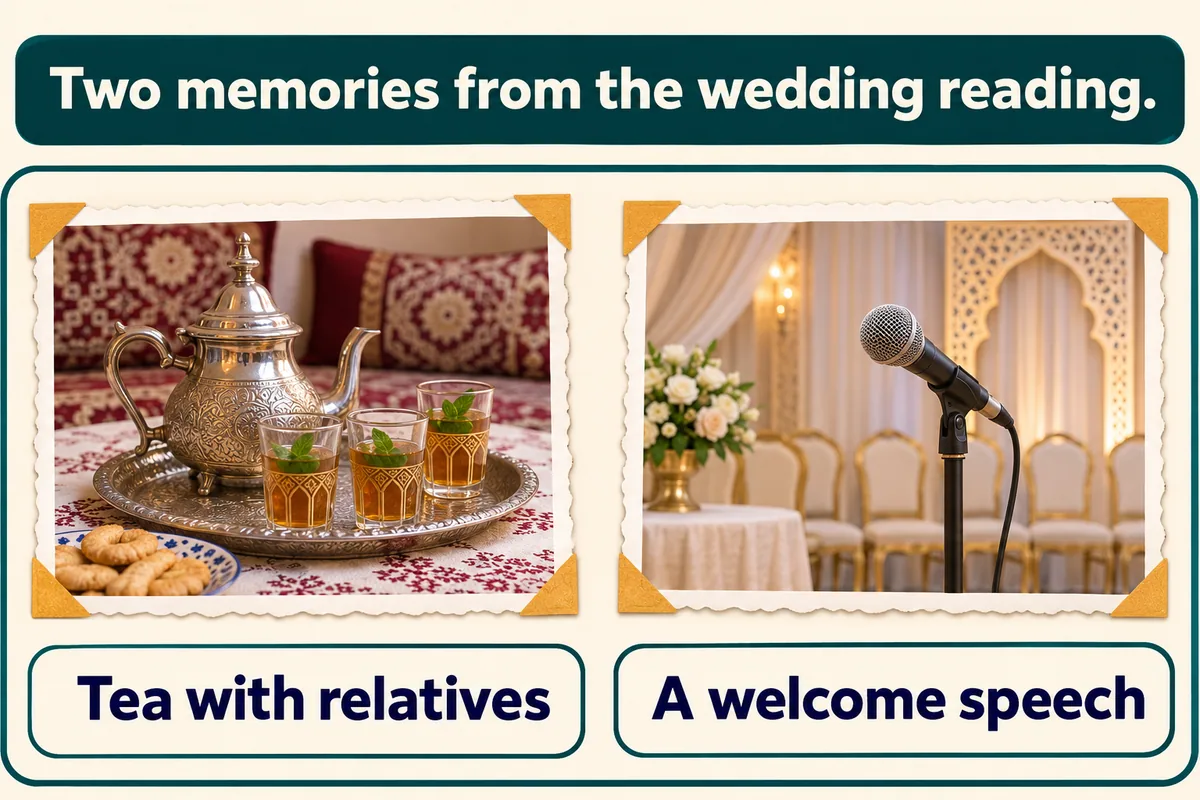
[1] When Salma and Daniel began planning their wedding in Rabat, they asked each family to bring one photograph of a celebration they remembered. Salma’s aunt brought a picture of guests sharing tea late in the evening. Daniel’s father showed a photograph of his brother making a short speech. They expected a disagreement about the schedule, but the photographs started a different conversation.
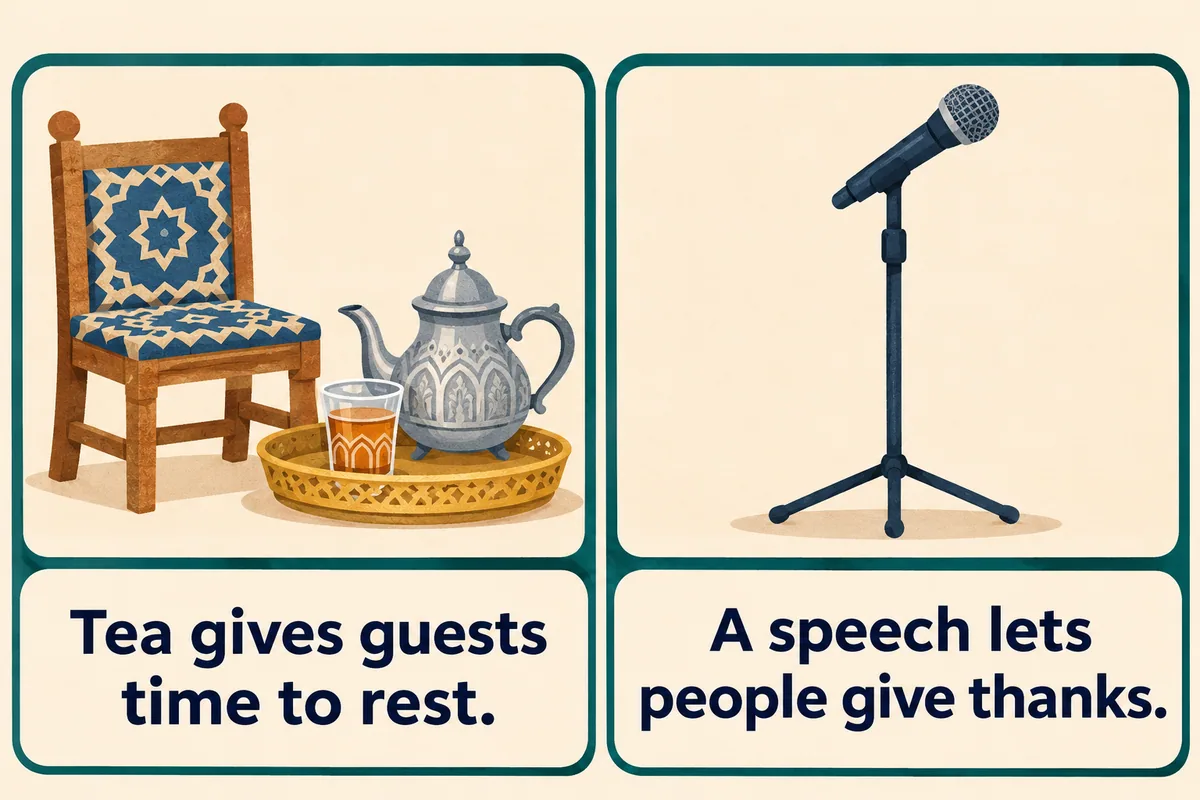
[2] Salma’s aunt explained that tea mattered because older relatives could sit together after a long journey. Daniel’s father said the speech mattered because people rarely had a chance to thank the families in public. Salma wrote two words on a sheet of paper: rest and thanks. The group stopped asking which custom should come first. Instead, they looked for a way to meet both needs.
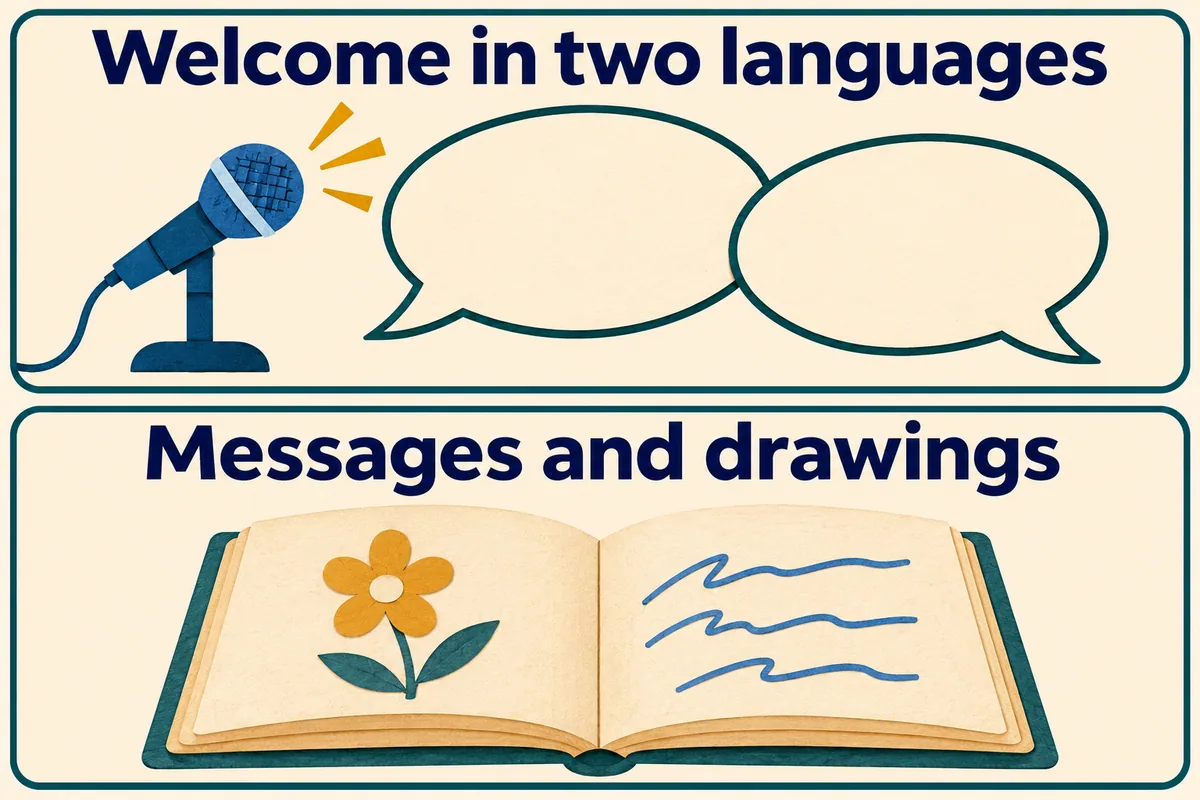
[3] On the day, there was a quiet table for visitors near the entrance. After tea, two cousins gave a short welcome: one read a line in Arabic, and the other explained its meaning in English. The pair invited guests to add a message to a book beside the door. By the end of the evening, several people had drawn pictures alongside their notes.
[4] A younger cousin later asked why the wedding had followed so many rules. Salma showed him the original sheet of paper. She pointed out that the plan had changed three times, while the two words had stayed the same. Then she handed him the message book. He spent the bus ride home reading what the guests had written.
Recognise the reason behind an action
In paragraph 2, serving tea gives older relatives time to recover. The speech lets people thank the families. When an exam question asks why, look for the purpose rather than simply naming the action.
Infer a message from the ending
The plan changes, but the same priorities guide it. That contrast supports the idea that families can adapt the way they celebrate while keeping the values that matter to them.
Worked examples: answering questions on Two Families, One Celebration
Finding the message in the ending
What does the last paragraph suggest about customs and values?
- Find the contrast: « the plan had changed three times, while the two words had stayed the same ».
- The plan is the practice (the customs on the day), and the two words, rest and thanks, are the values.
- Answer: « The way the families celebrate can change, but the values behind the celebration stay the same. »
Explaining what an action shows
What does Salma’s decision to write two words on a sheet of paper show?
- Read what she writes: rest and thanks, the two needs behind the tea and the speech.
- Read what follows: the group stopped asking which custom should come first.
- Answer: « It shows that Salma turned a choice between two customs into two shared goals, which ended the competition between the families. »
Sources and curriculum
- English Language Guidelines for Secondary Schools (Ministry of Education, 2007)
The 2nd Baccalaureate syllabus describes the ten themes, four skills and language structures. See printed pages 76–84.
- National Baccalaureate Exam Specifications (English, 2025)
Reproduction of the national framework for the reading, language and writing sections, including the science streams.
Frequently asked questions
How do I answer an inference question about a character’s attitude?
What is the main idea of Two Families, One Celebration?
Exercises with answers
4 exercises, from easy practice to challenges. Try each one yourself, then reveal the answer and explanation.
Exercise 1
EasySay whether each statement is true or false and quote the passage.
- Salma and Daniel planned their wedding in Rabat.
- Daniel’s father brought a photograph of guests sharing tea.
- The welcome was given in Arabic and English.
- The younger cousin read the message book on the way home.
Answer and explanation
- True. « When Salma and Daniel began planning their wedding in Rabat … »
- False. « Salma’s aunt brought a picture of guests sharing tea late in the evening. »
- True. « one read a line in Arabic, and the other explained its meaning in English ».
- True. « He spent the bus ride home reading what the guests had written. »
Exercise 2
Intermediate- Why did the aunt want to keep the tea break?
- What does « the pair » in paragraph 3 refer to?
- Which detail shows that guests could participate even if they used different languages?
Answer and explanation
- It gave older relatives a quiet place to rest together after travelling.
- The two cousins who gave the welcome.
- The cousins used Arabic and English in the welcome. Guests also added drawings alongside written messages.
Exercise 3
IntermediateAnswer the questions.
- Find a word in paragraph 1 that means an argument or a difference of opinion.
- In « They expected a disagreement », who are They?
- In paragraph 3, what does its in « explained its meaning » refer to?
- Find a word in paragraph 4 that means first or earliest.
- Find the phrase in paragraph 2 that names the people who needed to rest after a long journey.
Answer and explanation
- Disagreement.
- Salma and Daniel.
- The line read in Arabic.
- Original (« the original sheet of paper »).
- Older relatives.
Exercise 4
ChallengeAnswer in complete sentences.
- Why did the photographs start « a different conversation »?
- How did the cousins’ welcome and the message book include guests from both families?
- Suggest another title for the passage and justify it.
- In about 40 words, describe a custom from your family that you would like to keep one day, and the value behind it.
Answer and explanation
- Instead of arguing about the schedule, each family explained why its memory mattered, so they talked about needs rather than rules.
- The welcome used both families’ languages, and guests who did not share a language could still take part by writing or drawing in the book.
- One answer is « Rest and Thanks », because these two words guide every change in the plan.
- One answer is « I would keep the custom of serving tea and pastries to every guest who arrives, even late. It shows hospitality and tells each visitor that they are welcome, whoever they are. »