



Citizenship Vocabulary
Citizenship can mean legal membership of a country. Active citizenship means taking an informed part in community life. Unit 7 of English 2 Bac uses these ideas to discuss rights, responsibilities and ways to contribute.
By the end of this lesson, you can
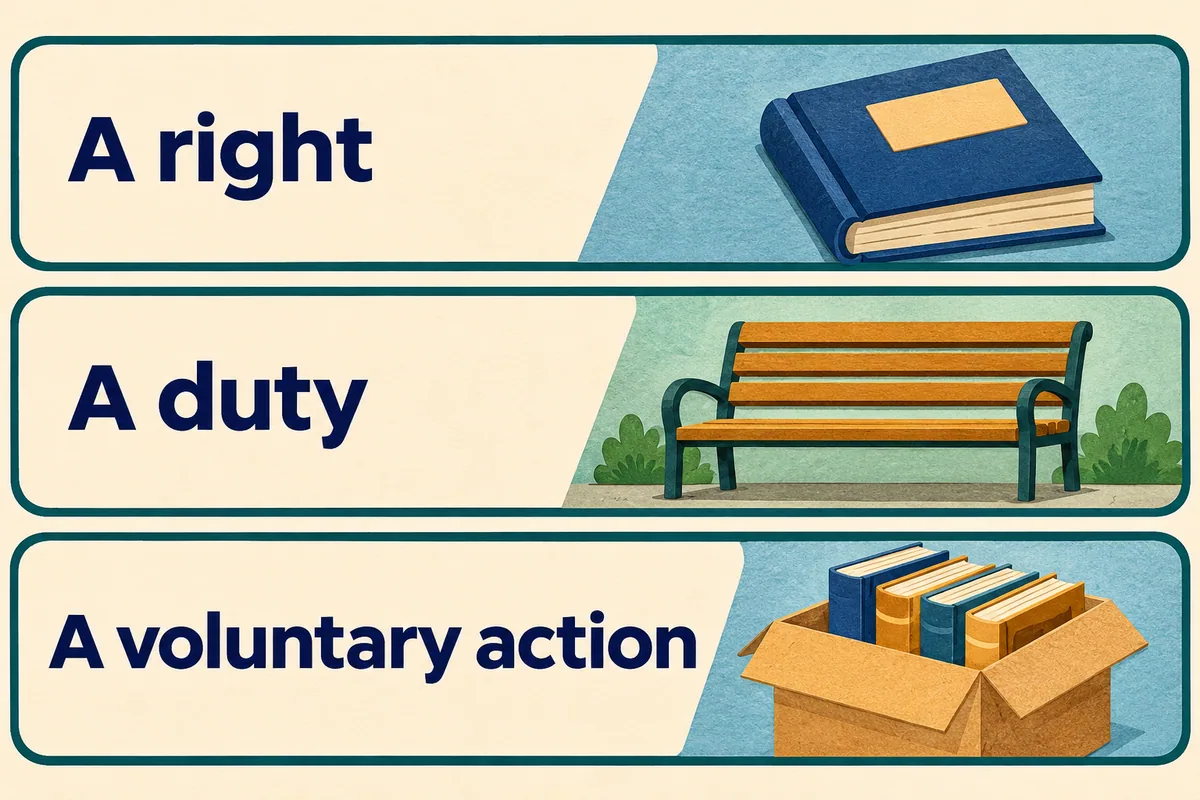
- Distinguish rights, duties and voluntary actions.
- Use word families and collocations about citizenship.
Un bon cours, ça se partage.
Rights, duties and community engagement
| Term | Meaning | Useful expression |
|---|---|---|
| right | a freedom or entitlement a person has | protect a right |
| duty | an obligation to act | fulfil a duty |
| responsibility | something a person is expected to take care of | take responsibility for |
| volunteer | a person who freely offers to help, or the act of offering | volunteer at a community centre |
| civic engagement | participation in community or public life | encourage civic engagement |
| public property | property intended for public use or owned by a public body | respect public property |
Word families for English 2 Bac
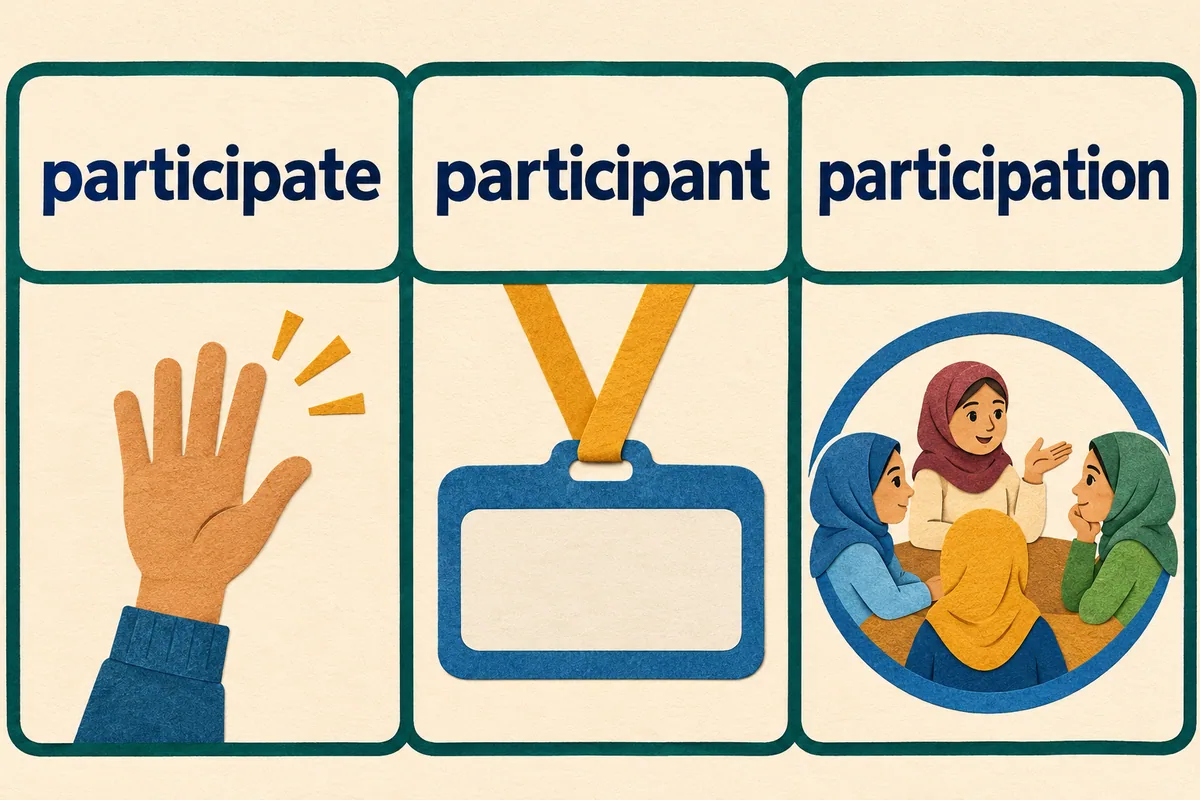
A citizen can exercise citizenship by participating in a public discussion. Participate is a verb, participant names the person and participation names the activity. A responsible student acts responsibly and takes responsibility for a decision.
Use the vocabulary to explain an action
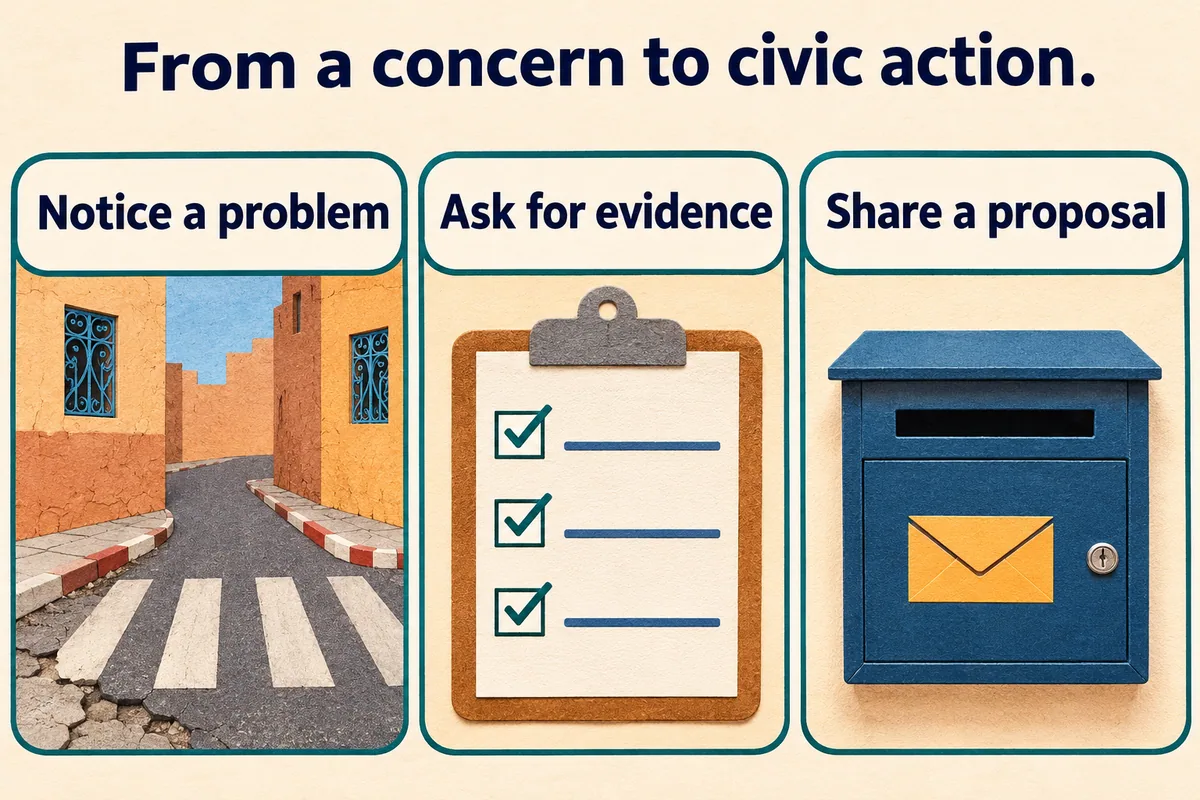
« Our school council wanted safer crossings near the gate. It asked students where they had trouble crossing and shared the results with the local authorities. » The consultation encourages participation. Sharing clear evidence is a way of taking responsibility for the proposal.
Worked examples: rights, duties and civic action
Right, duty or voluntary action?
Classify: free education, paying taxes, volunteering at a blood donation day, respecting traffic laws, freedom of expression.
- A right is something every citizen is entitled to: free education and freedom of expression.
- A duty is something citizens are expected or obliged to do: paying taxes and respecting traffic laws.
- A voluntary action is chosen freely and is not required: volunteering at a blood donation day.
- Notice that active citizenship often combines the three: you use your rights, respect your duties and choose to do more.
Choosing the right word in the family
Complete « Every ___ (citizenship) can take part in public life, and ___ (volunteer) work is one form of active ___ (citizen). »
- After every, use a singular countable noun for a person: citizen.
- Before work, the gap describes the kind of work, so use the word that works as an adjective here: voluntary. Volunteer work is also common.
- After active, the gap names the idea, not the person: citizenship.
- Final sentence: « Every citizen can take part in public life, and voluntary work is one form of active citizenship. »
Sources and curriculum
- English Language Guidelines for Secondary Schools (Ministry of Education, 2007)
The 2nd Baccalaureate syllabus describes the ten themes, four skills and language structures. See printed pages 76–84.
- National Baccalaureate Exam Specifications (English, 2025)
Reproduction of the national framework for the reading, language and writing sections, including the science streams.
Frequently asked questions
What are examples of active citizenship for English 2 Bac?
What is the difference between a right and a duty?
Exercises with answers
4 exercises, from easy practice to challenges. Try each one yourself, then reveal the answer and explanation.
Exercise 1
EasyClassify each item.
- the right to vote at eighteen
- obeying the law
- joining a beach clean-up on a Sunday
- access to health care
- keeping public places clean
Answer and explanation
- A right.
- A duty.
- A voluntary action.
- A right.
- A duty. It is also a responsibility that every citizen shares.
Exercise 2
Intermediate- Complete « Student ___ (participate) rose after the council changed its meeting time. »
- Give an example of a civic action and use the collocation take responsibility for.
Answer and explanation
- Participation. The gap needs a noun that names the activity.
- One answer is « Club members take responsibility for checking that collected books reach the community library. »
Exercise 3
IntermediateChoose the verb that forms a natural combination.
- (exercise / make) your rights
- (fulfil / fill) a duty
- (cast / throw) a vote
- (raise / rise) an issue at a meeting
- (take / make) part in community life
Answer and explanation
- Exercise.
- Fulfil.
- Cast.
- Raise.
- Take.
Exercise 4
ChallengeComplete the paragraph with the words from the box: participate, responsibility, volunteers, rights, community. Then answer the last question.
« Citizens enjoy (1) ___ such as education and free expression, but they also share the (2) ___ of keeping their neighbourhood safe and clean. Young people can (3) ___ in public life in many ways. In our town, twenty high school (4) ___ give free maths lessons every Saturday, and the whole (5) ___ benefits from their work. »
- Gap 1
- Gap 2
- Gap 3
- Gap 4
- Gap 5
- In two sentences, explain how a young person can be a responsible citizen online.
Answer and explanation
- Rights.
- Responsibility.
- Participate.
- Volunteers.
- Community.
- One answer is « A responsible digital citizen checks information before sharing it and respects other people’s privacy. They can also use social media to support local causes, such as a book collection. »