



Brain Drain Reading · Skilled Migration
This English 2 Bac case study follows an engineer who trains abroad and works with students in Morocco. Identify the reasons for leaving, the benefits for each group and the limits of the arrangement.
By the end of this lesson, you can
- Trace causes, actions and effects in a case study.
- Infer a writer’s point from details and qualifications.
Un bon cours, ça se partage.
Reading passage · Two laboratories
[1] After finishing an engineering degree in Morocco, Mariam wanted to work on machines that test water quality. She found a one-year laboratory post abroad that would let her train on equipment she had only seen in diagrams. Before leaving, she asked a former teacher to send her examples of the measurement problems his students faced.
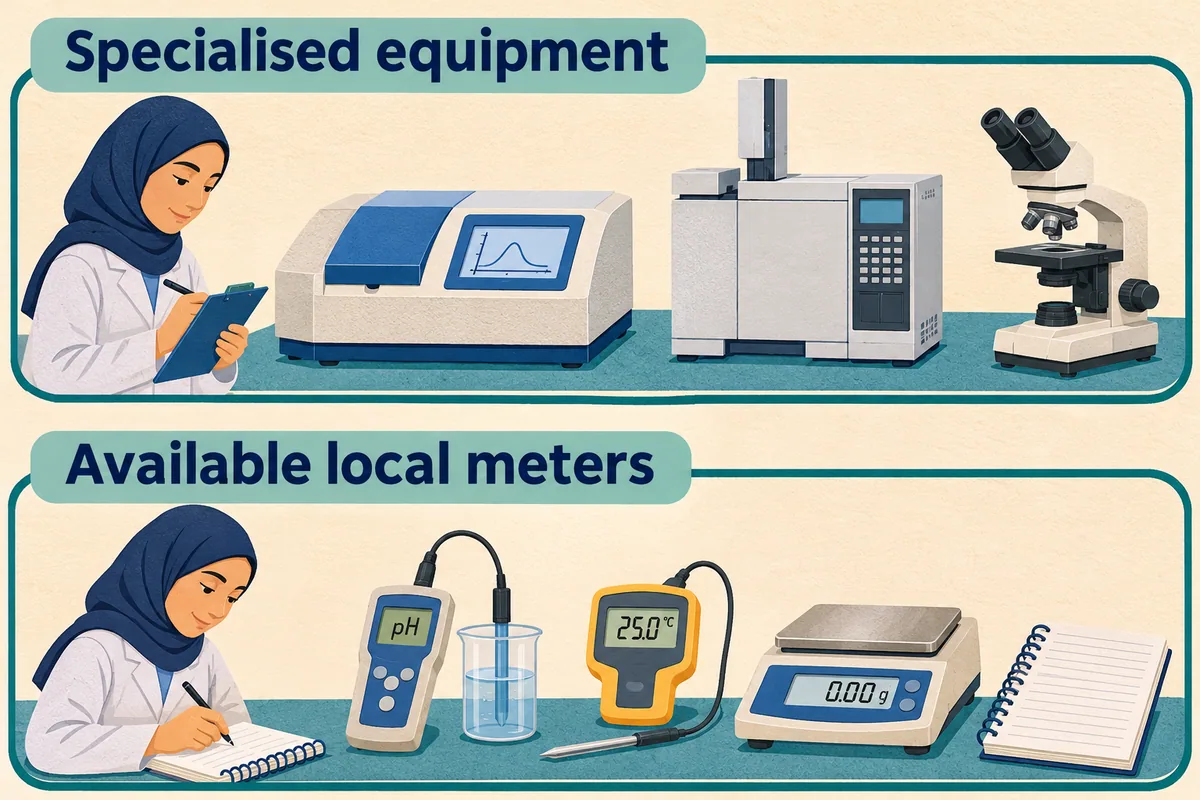
[2] In the new laboratory, Mariam learned how to check whether a result came from the water sample or from the equipment itself. She shared practice data with the students in Morocco. At first the group tried to follow the foreign laboratory’s procedure exactly. Some steps were too expensive for their equipment, so the students proposed a shorter procedure they could carry out with their own meters.
[3] Mariam returned for a week to discuss the revised procedure. The local laboratory tested it with a set of samples and compared the results with readings taken the previous month. A few measurements were still inconsistent. Together they wrote a list of steps to repeat and arranged another meeting for the following term.
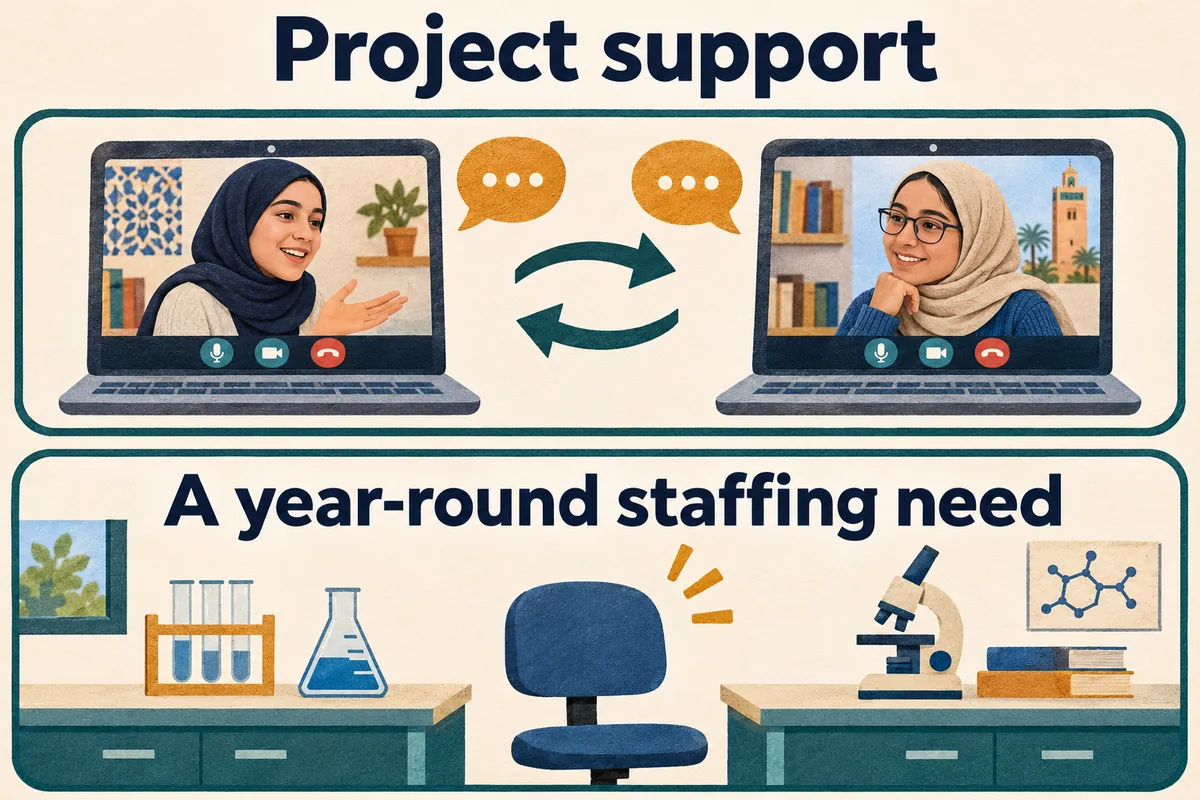
[4] The students said the partnership gave them practice interpreting real data. The teacher pointed out that a visit and a few calls could help with one project, but the laboratory still needed a trained member of staff throughout the year. Mariam decided to apply for a permanent position closer to home. The team wrote down what they had learnt so they could keep working while she considered her options.
Follow the reasons and the limits
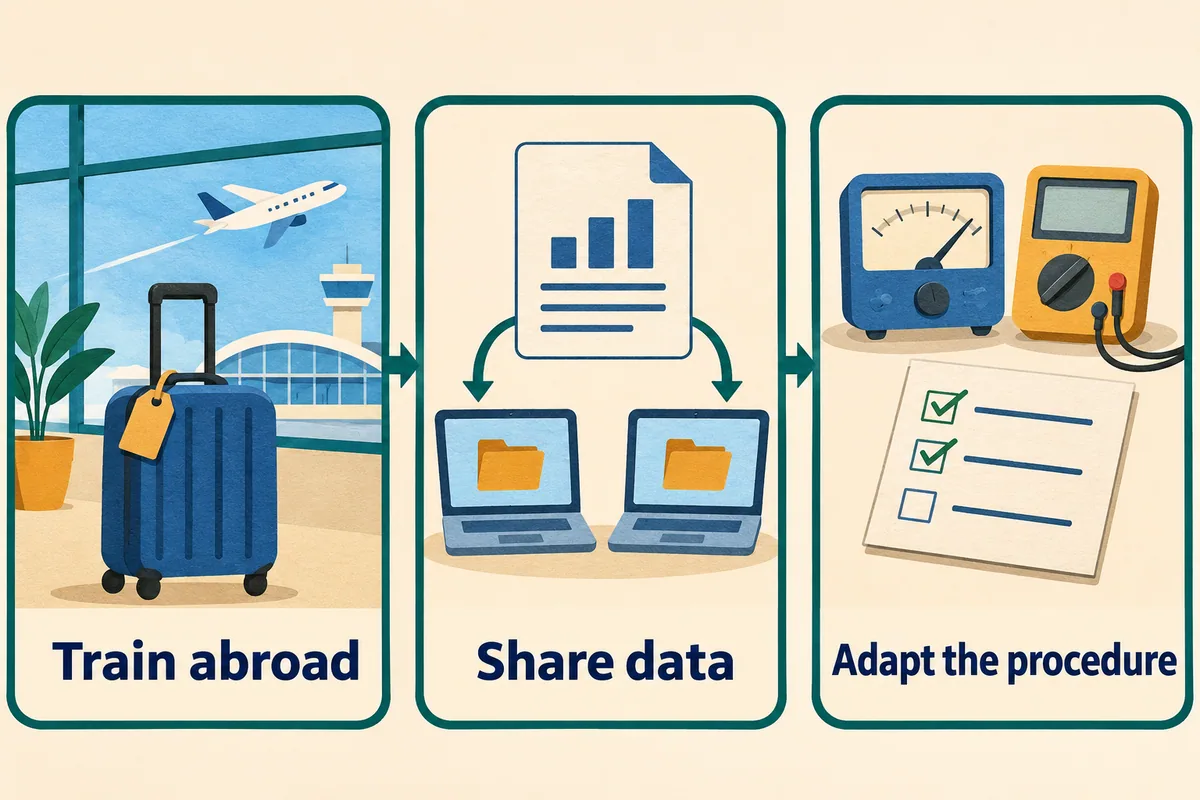
The laboratory post gives Mariam training she could not access locally. Later, the students contribute a procedure suited to their own equipment. Paragraph 4 explains that occasional help cannot fill a permanent staffing need.
Check what each source of evidence can show
The reported benefit comes from what the students say about their practice. The remaining inconsistent measurements show why the technical work is still in progress. The passage supports a qualified result rather than a completed success.
Worked examples: answering questions on Two laboratories
Building the timeline
Put the main events of Mariam’s story in order.
- Paragraph 1: she finishes her degree in Morocco and accepts a one-year post abroad.
- Paragraph 2: she learns to check where a result comes from and shares practice data with students at home, who then propose a shorter procedure.
- Paragraph 3: she returns for a week, and the local laboratory tests the revised procedure.
- Paragraph 4: she decides to apply for a permanent position closer to home.
A why question about a decision
Why did the students in Morocco propose a shorter procedure?
- Find the sentence in paragraph 2: « Some steps were too expensive for their equipment ».
- Find the consequence: « the students proposed a shorter procedure they could carry out with their own meters ».
- Answer: « Because some steps of the foreign procedure were too expensive for their equipment, so they adapted it to their own meters. »
Sources and curriculum
- English Language Guidelines for Secondary Schools (Ministry of Education, 2007)
The 2nd Baccalaureate syllabus describes the ten themes, four skills and language structures. See printed pages 76–84.
- National Baccalaureate Exam Specifications (English, 2025)
Reproduction of the national framework for the reading, language and writing sections, including the science streams.
Frequently asked questions
How does the passage illustrate brain circulation?
Why did Mariam go abroad in Two laboratories?
Exercises with answers
4 exercises, from easy practice to challenges. Try each one yourself, then reveal the answer and explanation.
Exercise 1
EasySay whether each statement is true or false and quote the passage.
- Mariam studied engineering abroad.
- Her laboratory post abroad lasted one year.
- The students followed the foreign procedure exactly until the end.
- All the measurements were consistent after Mariam’s visit.
Answer and explanation
- False. « After finishing an engineering degree in Morocco … »
- True. « She found a one-year laboratory post abroad … »
- False. « Some steps were too expensive for their equipment, so the students proposed a shorter procedure … »
- False. « A few measurements were still inconsistent. »
Exercise 2
Intermediate- Why did Mariam accept the post abroad?
- Find a word in paragraph 3 meaning not always giving the same result.
- Does the teacher think occasional visits solve the staffing problem? Justify your answer.
Answer and explanation
- It gave her a chance to train on specialised equipment she had previously seen only in diagrams.
- Inconsistent.
- No. Paragraph 4 says the laboratory still needed a trained member of staff throughout the year.
Exercise 3
IntermediateAnswer the questions.
- Find a word in paragraph 1 that means a job or position.
- Find a word in paragraph 2 that means a series of steps for doing something.
- In « that would let her train on equipment », what does that refer to?
- In « their own meters » in paragraph 2, whose meters are they?
- Find a word in paragraph 4 that means lasting and not temporary.
Answer and explanation
- Post.
- Procedure.
- The one-year laboratory post abroad.
- The students’ meters in Morocco.
- Permanent.
Exercise 4
ChallengeAnswer in complete sentences.
- What did each side gain from the partnership?
- Why does the teacher think the partnership is not enough?
- Does the ending prove that Mariam will return home? Justify carefully.
- In about 40 words, say whether you would like to study abroad and whether you would come back.
Answer and explanation
- Mariam gained training on specialised equipment, and the students gained practice interpreting real data and a procedure adapted to their meters.
- Because occasional visits and calls cannot replace a trained member of staff who is there throughout the year.
- No. She decides to apply for a permanent position closer to home and is still considering her options, so her return is possible but not certain.
- One answer is « I would like to study medicine abroad to train in a large hospital. I would come back afterwards, because my region needs specialists, but I would keep links with my teachers abroad to share new methods. »