



Writing a Formal Email
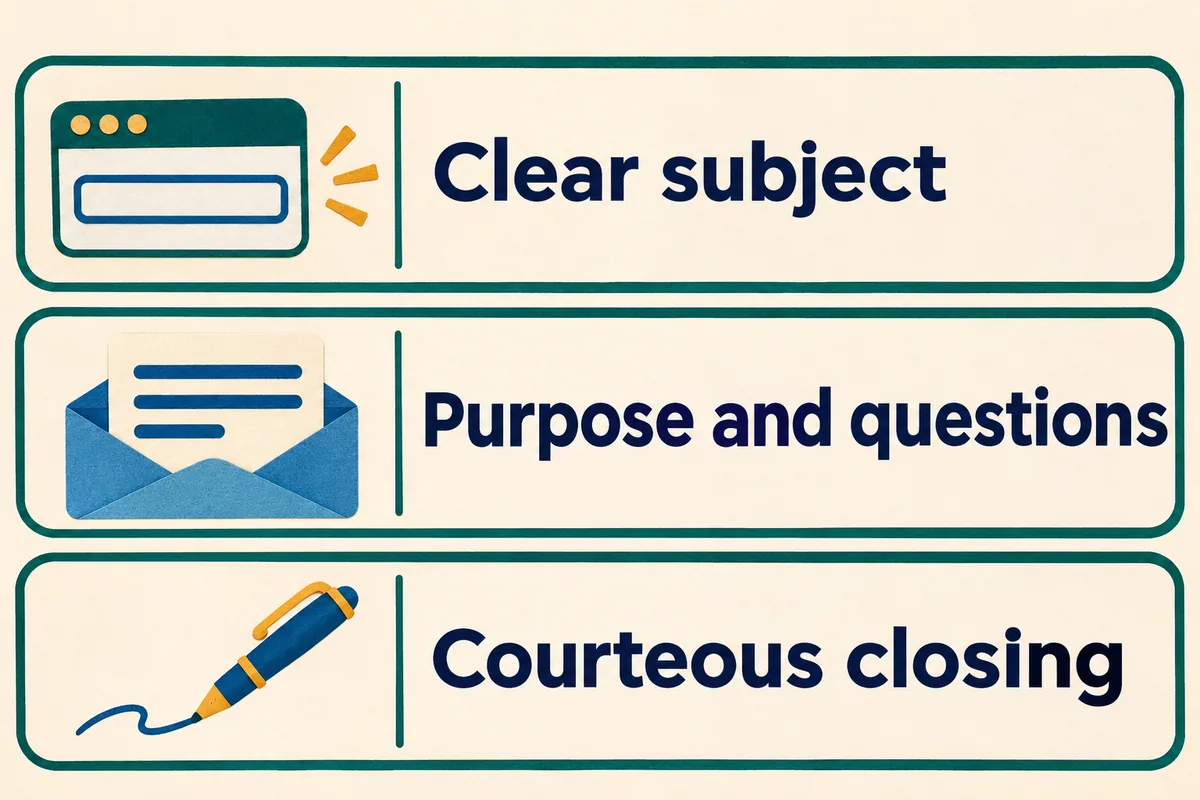
A formal email has a specific subject line, an appropriate greeting, a clear purpose and a polite closing. Include enough detail for the reader to answer or take the action you request.
By the end of this lesson, you can
- Plan and write a formal email requesting information.
- Follow the audience, format and signature instructions in an exam prompt.
Un bon cours, ça se partage.
How do you structure a formal email in English?
Step by step
Write for the recipient
- Use a specific subject such as « Information about the Saturday reading programme » when the format has a subject field.
- Greet the recipient and state your purpose in the first sentence.
- Group related questions and include relevant dates or details.
- Thank the recipient and use a suitable closing. Follow any direction about anonymity.
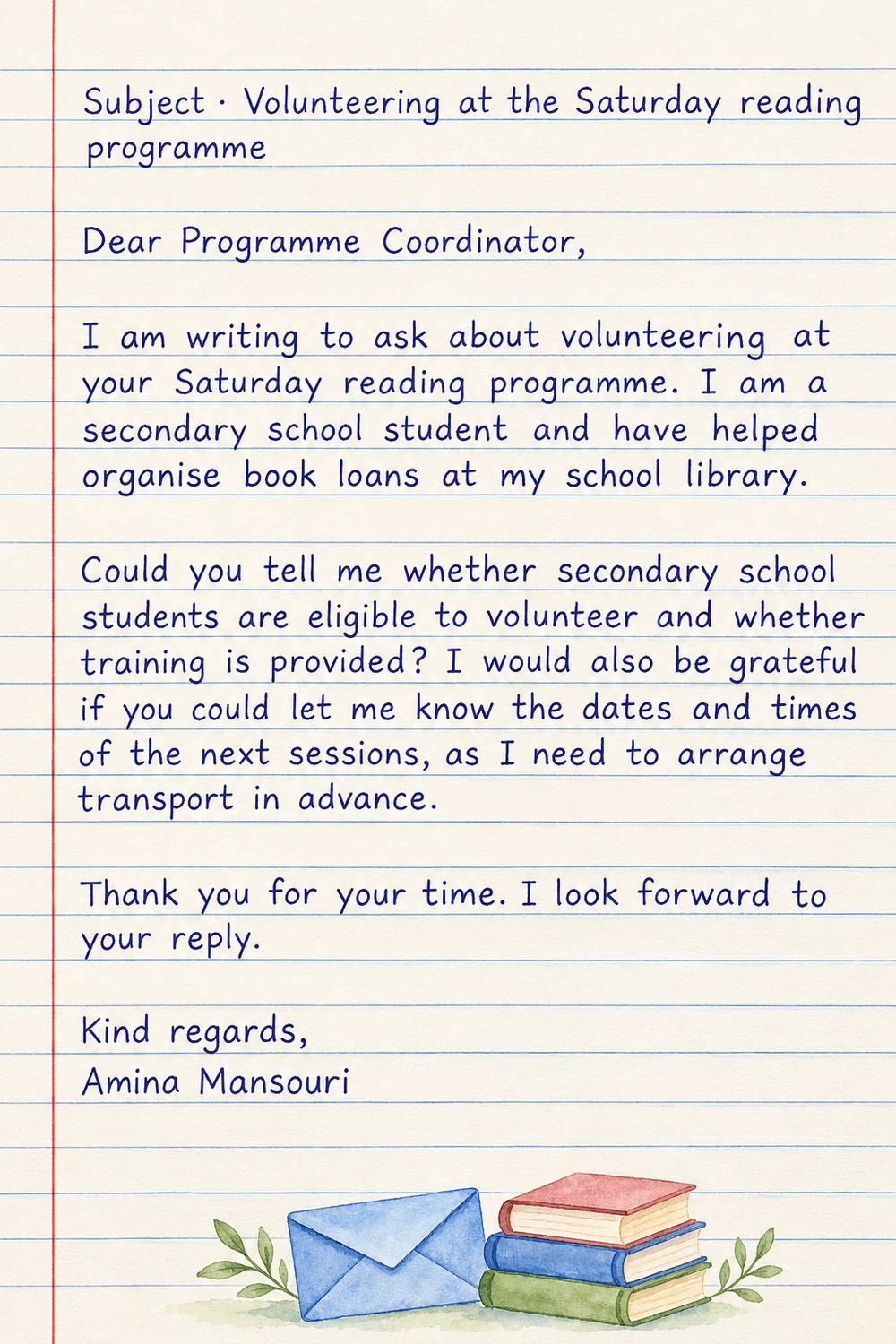
Model · Request for volunteering information
Subject · Volunteering at the Saturday reading programme
Dear Programme Coordinator,
I am writing to ask about volunteering at your Saturday reading programme. I am a secondary school student and have helped organise book loans at my school library.
Could you tell me whether secondary school students are eligible to volunteer and whether training is provided? I would also be grateful if you could let me know the dates and times of the next sessions, as I need to arrange transport in advance.
Thank you for your time. I look forward to your reply.
Kind regards,
Amina Mansouri
Reply to an email in the national exam
Read the incoming message for every question you need to answer. Use the greeting supplied by the prompt if one is already printed. If instructed to omit your name or signature, leave them out. A subject line is useful when the format asks you to write one.
Worked examples: writing a clear formal email
Writing a precise subject line
Improve the subject line « Question ».
- A subject line should tell the reader what the email is about before they open it.
- Name the topic and the type of message: « Request for information ».
- Add the precise object: « Request for information about the summer volunteering programme ».
Turning a list of questions into polite sentences
You want to know the dates, the price and whether accommodation is included.
- Use a different polite structure for each question so the email does not sound repetitive.
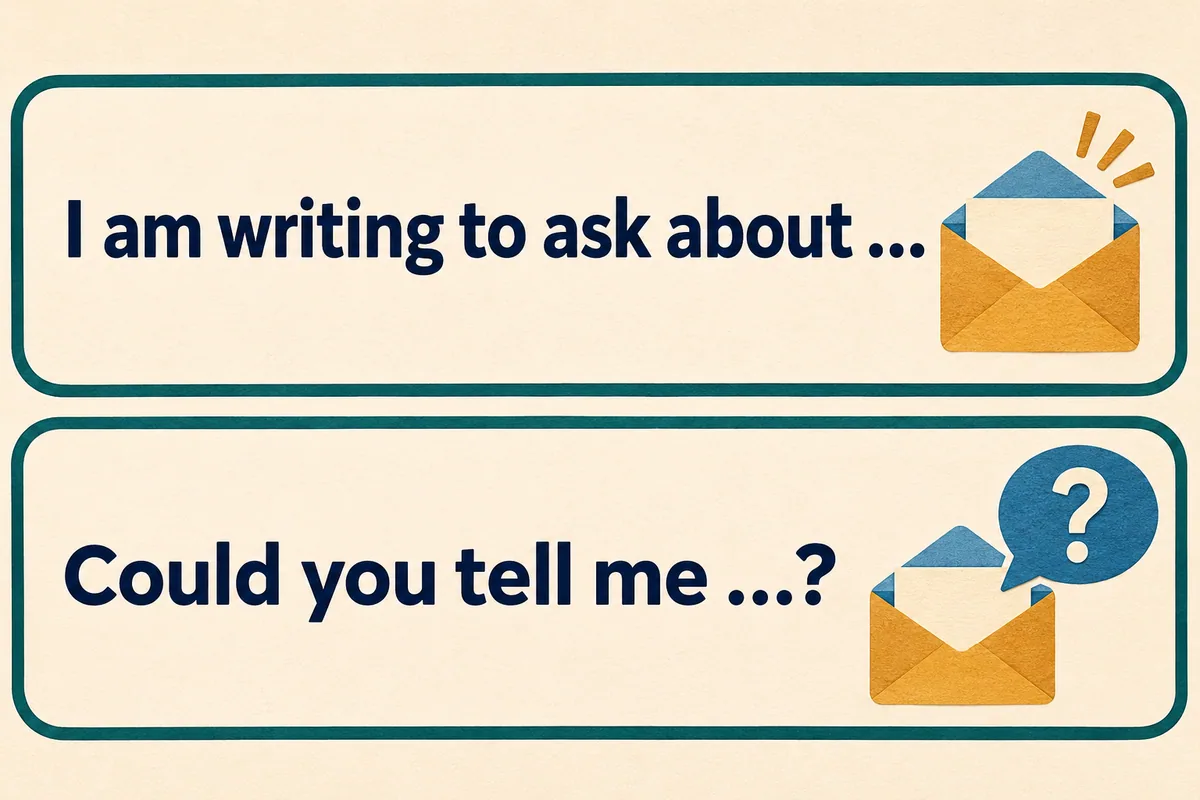
- « Could you tell me when the programme starts and ends? »
- « I would also like to know how much the programme costs. »
- « Finally, I would be grateful if you could confirm whether accommodation is included. »
Sources and curriculum
- English Language Guidelines for Secondary Schools (Ministry of Education, 2007)
The 2nd Baccalaureate syllabus describes the ten themes, four skills and language structures. See printed pages 76–84.
- National Baccalaureate Exam Specifications (English, 2025)
Reproduction of the national framework for the reading, language and writing sections, including the science streams.
Frequently asked questions
What is a good opening sentence for a formal request email?
How do you end a formal email in English?
Exercises with answers
4 exercises, from easy practice to challenges. Try each one yourself, then reveal the answer and explanation.
Exercise 1
EasyPut the parts of a formal email in the right order: closing, subject line, greeting, purpose, questions, signature.
- First part
- Second part
- Third part
- Fourth part
- Fifth part
- Last part
Answer and explanation
- Subject line.
- Greeting.
- Purpose.
- Questions.
- Closing.
- Signature.
Exercise 2
Intermediate- Ask a project coordinator for the application deadline and documents required. Write the opening and two questions.
Answer and explanation
- One answer is « Dear Project Coordinator, I am writing to ask about applying for your youth project. Could you tell me when applications close? I would also be grateful if you could let me know which documents I should submit. Thank you for your help. Kind regards, »
Exercise 3
IntermediateRewrite each expression for a formal email.
- « Hey, »
- « I wanna know the price. »
- « Tell me when it starts. »
- « Thanks! Bye! »
- « Answer ASAP. »
Answer and explanation
- « Dear Ms Alami, » or « Dear Sir or Madam, »
- « I would like to know the price. »
- « Could you tell me when it starts? »
- « Thank you for your help. Kind regards, »
- « I would be grateful for a reply at your earliest convenience. »
Exercise 4
ChallengeYou want to join an international summer camp for young volunteers. Write a formal email of about 120 words to the camp coordinator asking about the dates, the cost and the language requirements.
- Write your email.
Answer and explanation
- Possible answer: « Subject: Request for information about the summer volunteer camp. Dear Sir or Madam, I am a 2 Bac student from Morocco, and I am writing to ask about your international summer camp for young volunteers, which I saw on your website. Could you tell me when the camp starts and how long it lasts? I would also like to know the total cost and whether it includes accommodation and meals. Finally, I would be grateful if you could explain the language requirements. I speak English and French, but I am not sure whether I need a certificate. Thank you for your time. I look forward to your reply. Kind regards, Imane Chraibi »