



Science and Technology Vocabulary
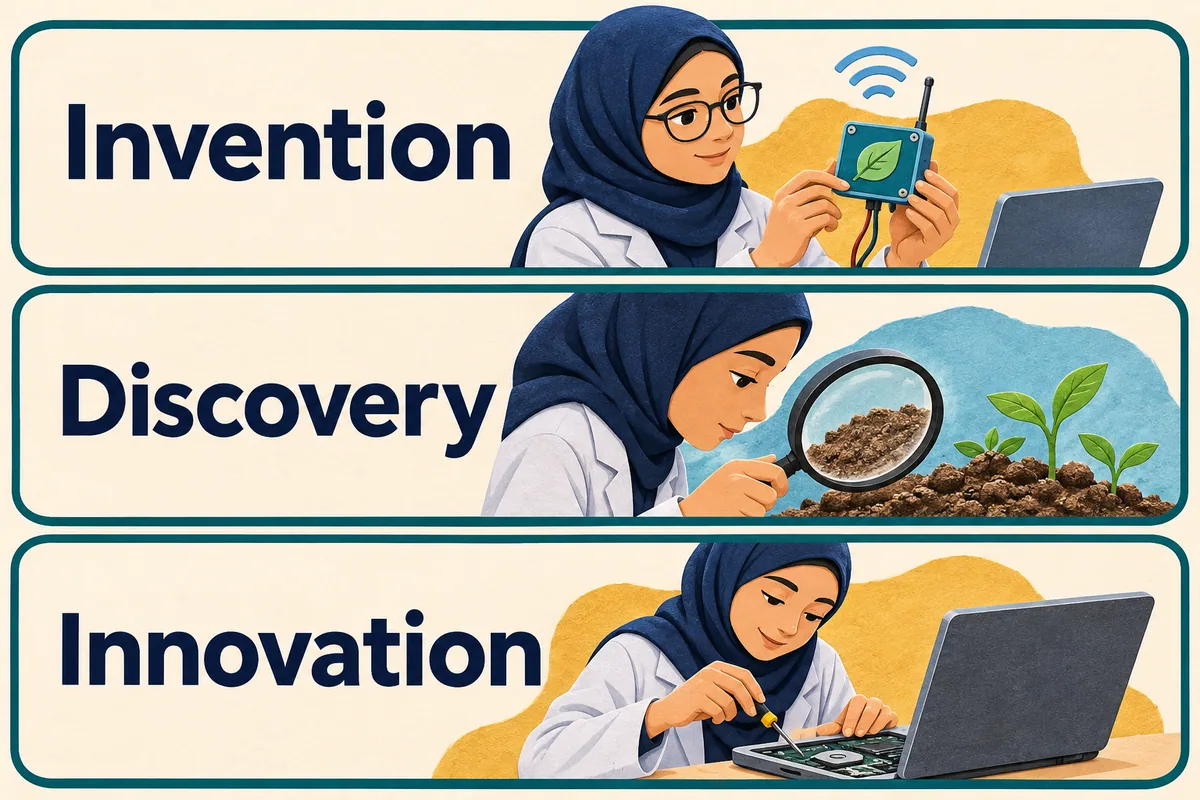
An invention is something people create. A discovery is something they find out about the world. An innovation is a new idea, method or improvement put into use. Unit 9 uses these words to discuss the effects of science and technology.
By the end of this lesson, you can
- Distinguish invention, discovery and innovation.
- Use collocations about research and technology in a balanced explanation.
Un bon cours, ça se partage.
Which words describe scientific and technical advances?
| Word | Useful combination | Example |
|---|---|---|
| discovery | make a discovery | The team made a discovery about the local soil. |
| invention | test an invention | The students tested a device that measures water levels. |
| innovation | introduce an innovation | The workshop introduced a cheaper way to repair old laptops. |
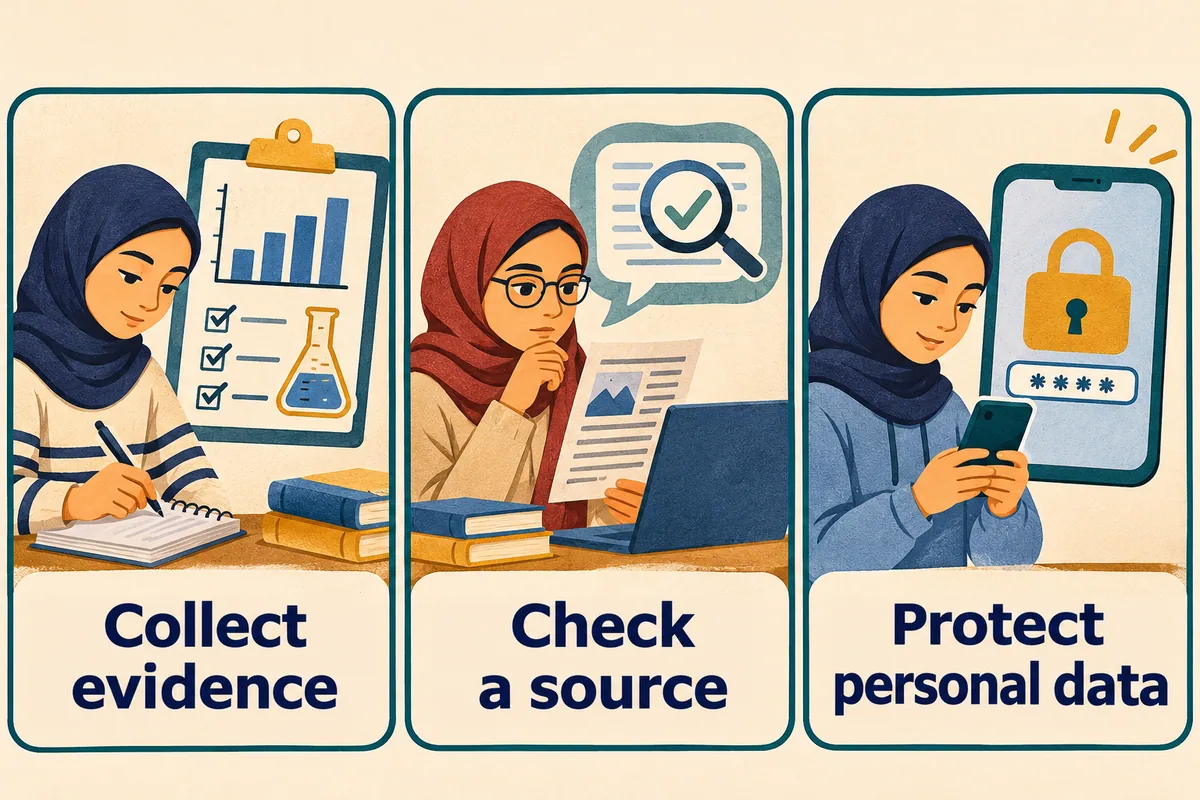
| evidence | collect evidence | The class collected evidence about battery life. |
| reliable | a reliable source | They checked whether the data came from a reliable source. |
| privacy | protect personal data | A password helps protect access to personal data. |
| digital divide | reduce the digital divide | Offline resources may help students with limited internet access. |
Word families and sense relations
A researcher conducts research. An inventor invents something. An innovative design puts a new idea into use. Reliable means dependable and unreliable is its opposite. Evidence is normally uncountable. Use « a piece of evidence » for a single item.
Discuss both an advantage and a limitation
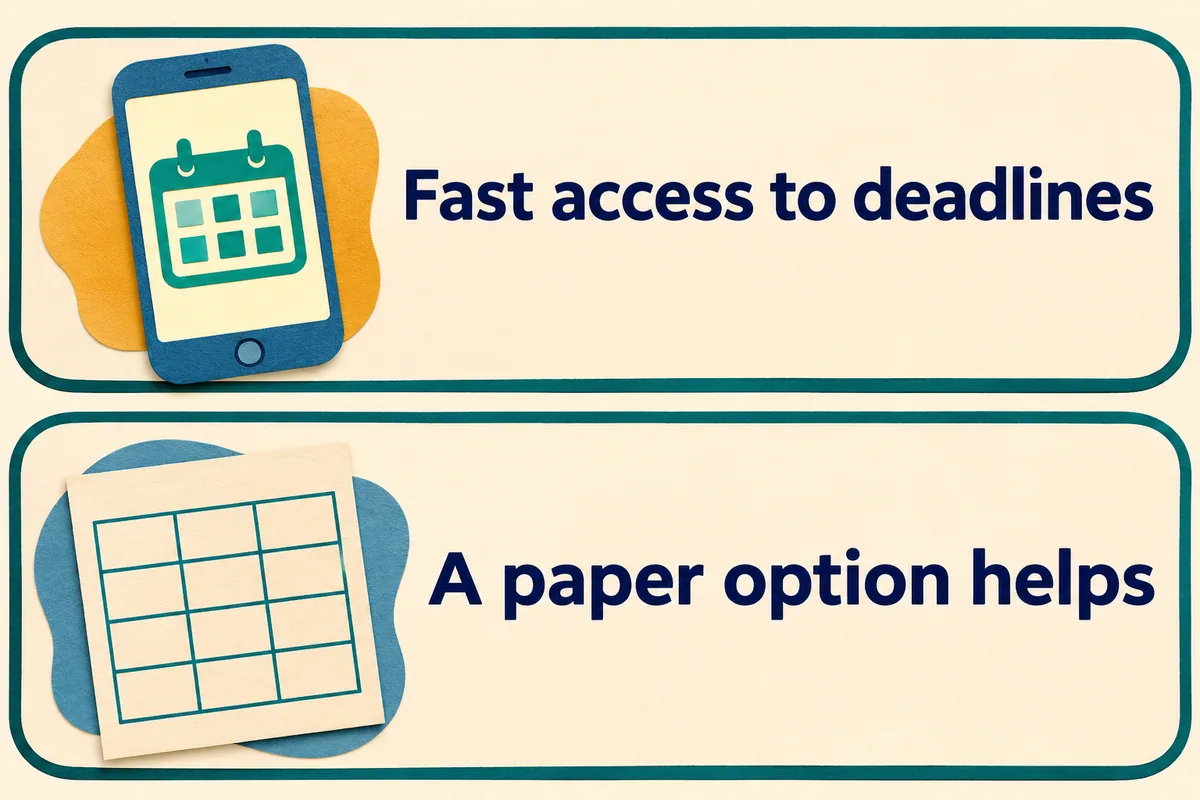
« A school app can help students check deadlines. However, some families have limited access to the internet. A printed schedule gives them another way to find the same information. » The example identifies the tool, a benefit and the conditions that affect its use.
Worked examples: describing scientific progress
Invention, discovery or innovation?
Classify penicillin, the telephone and a mobile banking app.
- Penicillin already existed in a mould. Alexander Fleming found its effect on bacteria in 1928, so it is a discovery.
- The telephone did not exist before people built it, so it is an invention.
- A mobile banking app uses existing technology in a new, useful way, so it is an innovation.
The word family of science
Complete « The ___ (science) published a ___ (science) article about a method that had been ___ (science) tested. »
- After The, the gap names a person: scientist.
- Before article, the gap needs an adjective: scientific.
- Before tested, the gap describes how it was tested, so it needs an adverb: scientifically.
- Final sentence: « The scientist published a scientific article about a method that had been scientifically tested. »
Sources and curriculum
- English Language Guidelines for Secondary Schools (Ministry of Education, 2007)
The 2nd Baccalaureate syllabus describes the ten themes, four skills and language structures. See printed pages 76–84.
- National Baccalaureate Exam Specifications (English, 2025)
Reproduction of the national framework for the reading, language and writing sections, including the science streams.
Frequently asked questions
What is the difference between invention and discovery?
What is the digital divide?
Exercises with answers
4 exercises, from easy practice to challenges. Try each one yourself, then reveal the answer and explanation.
Exercise 1
EasyChoose the term from the box for each definition: artificial intelligence, digital divide, breakthrough, gadget, cyberbullying.
- An important discovery or development that solves a problem.
- A small device with a clever, practical use.
- Using the internet to hurt or threaten someone.
- Computer systems that can do tasks that normally need human intelligence.
- The gap between people who have access to digital technology and people who do not.
Answer and explanation
- A breakthrough.
- A gadget.
- Cyberbullying.
- Artificial intelligence.
- The digital divide.
Exercise 2
Intermediate- Complete with the right form of rely: « The class needs a ___ internet connection. »
- A team designs a new low-cost sensor and later learns that the soil retains more water than expected. Identify the invention and the discovery.
Answer and explanation
- Reliable. The adjective describes the connection.
- The sensor is the invention. The finding about soil and water is the discovery.
Exercise 3
IntermediateGive the correct form of the word in brackets.
- Mobile phones have ___ (revolution) communication.
- The ___ (invent) of the printing press changed education.
- Machines can now ___ (automatic) many repetitive tasks.
- Some health apps are not ___ (rely).
- Online courses have made learning more ___ (access) for people in remote areas.
Answer and explanation
- Revolutionised. After have, use the past participle of the verb.
- Invention. After The, use a noun.
- Automate. After can, use a base verb.
- Reliable. After are not, use an adjective.
- Accessible. After more, use an adjective.
Exercise 4
ChallengeWrite one sentence for each instruction about artificial intelligence in education.
- Give one advantage.
- Give one risk.
- Give one condition for using it well.
- Use breakthrough or innovation in a sentence about your own future studies.
Answer and explanation
- One answer is « AI tools can explain a maths exercise step by step when no teacher is available. »
- One answer is « Students may copy answers without understanding them. »
- One answer is « AI is useful if students check its answers and use it to practise, not to replace their own work. »
- One answer is « I would like to study engineering and work on an innovation that brings clean water to rural villages. »