



International Organizations Vocabulary
International organisations bring countries or institutions together to address shared issues. In English 2 Bac Unit 8, learn to describe their roles using terms such as humanitarian aid, cooperation and partnership.
By the end of this lesson, you can
- Use vocabulary for cooperation, aid and development.
- Explain the difference between an organisation, a programme and its local partners.
Un bon cours, ça se partage.
Which words describe international cooperation?
| Term | Meaning | Common combination |
|---|---|---|
| humanitarian aid | help for people affected by a crisis | provide humanitarian aid |
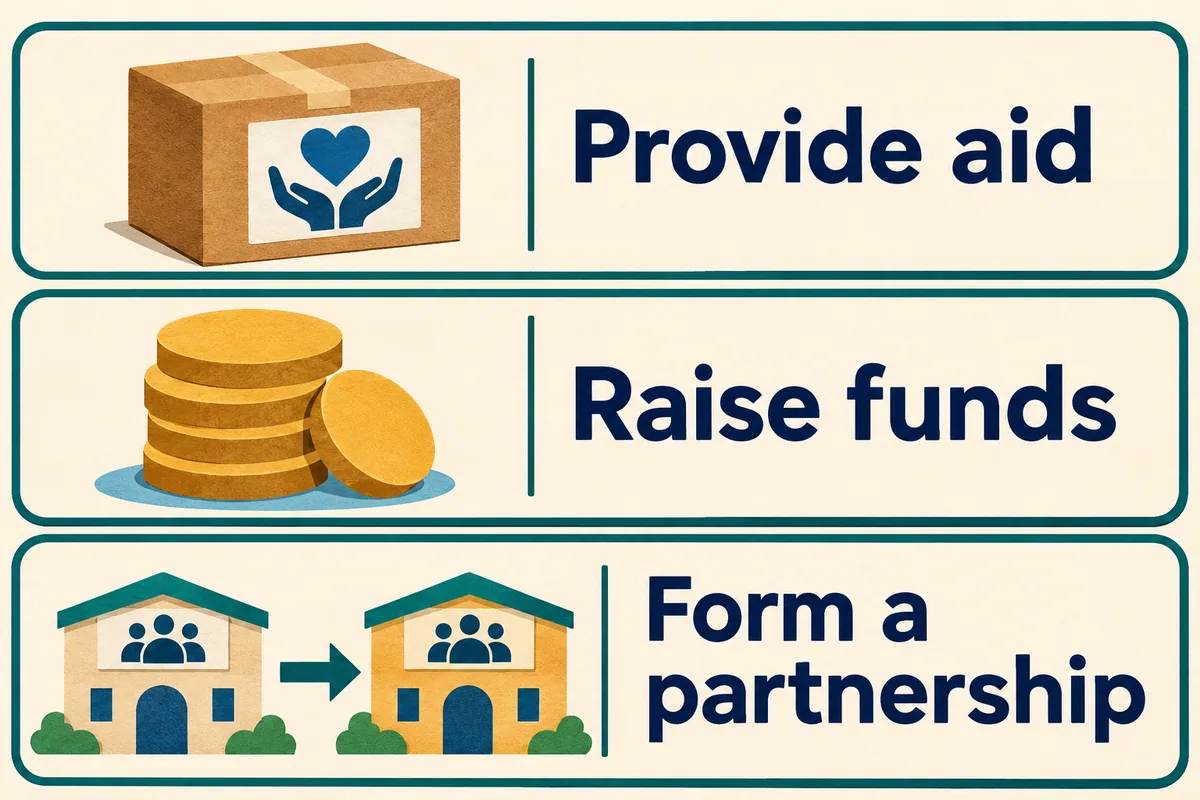
| partnership | an arrangement to work towards a shared goal | form a partnership |
| donation | money or goods given to support an effort | make a donation |
| funding | money available for a project | secure funding |
| outreach | an effort to reach people and involve or support them | run an outreach programme |
| NGO | a non-governmental organisation | work with a local NGO |
UNICEF, UNESCO and WHO
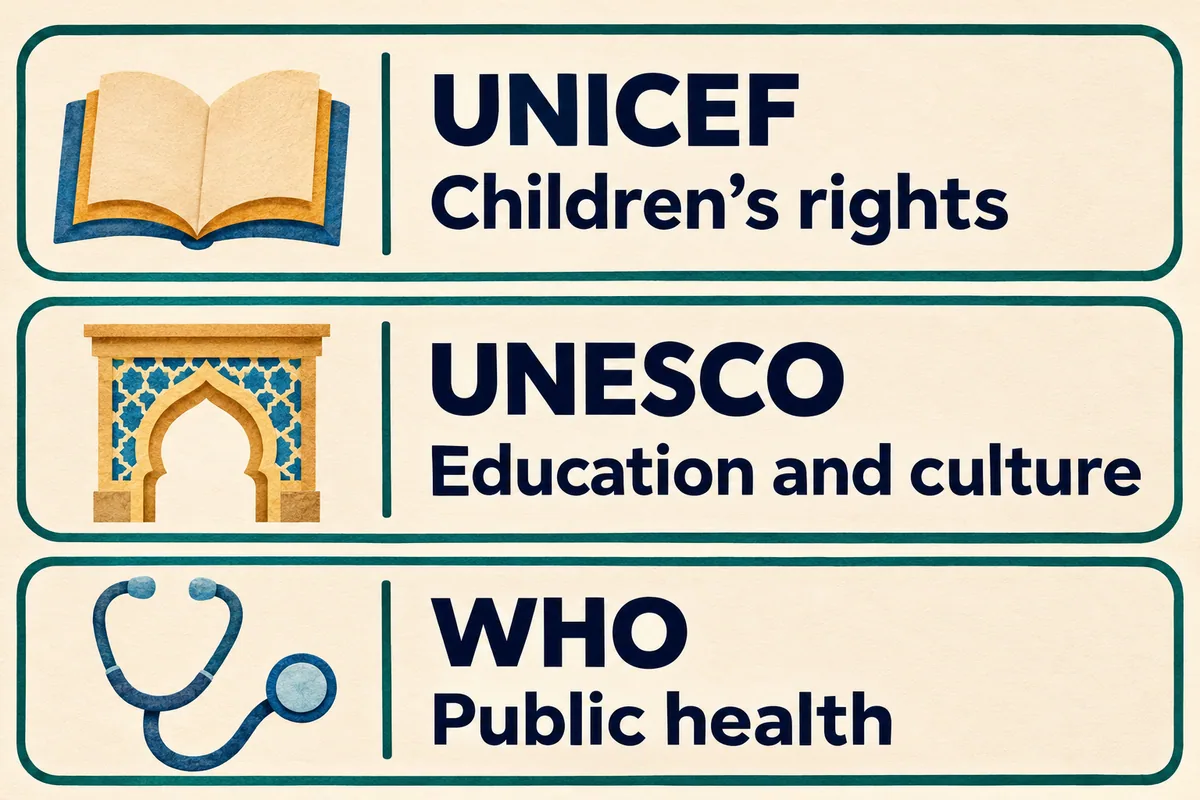
UNICEF is the United Nations Children’s Fund. It works to protect children’s rights and support their well-being. UNESCO is the United Nations Educational, Scientific and Cultural Organization. Its work includes education and cultural heritage. WHO is the World Health Organization and works on public health. A local partner may run a specific activity with support from one of these bodies.
Describe roles and results
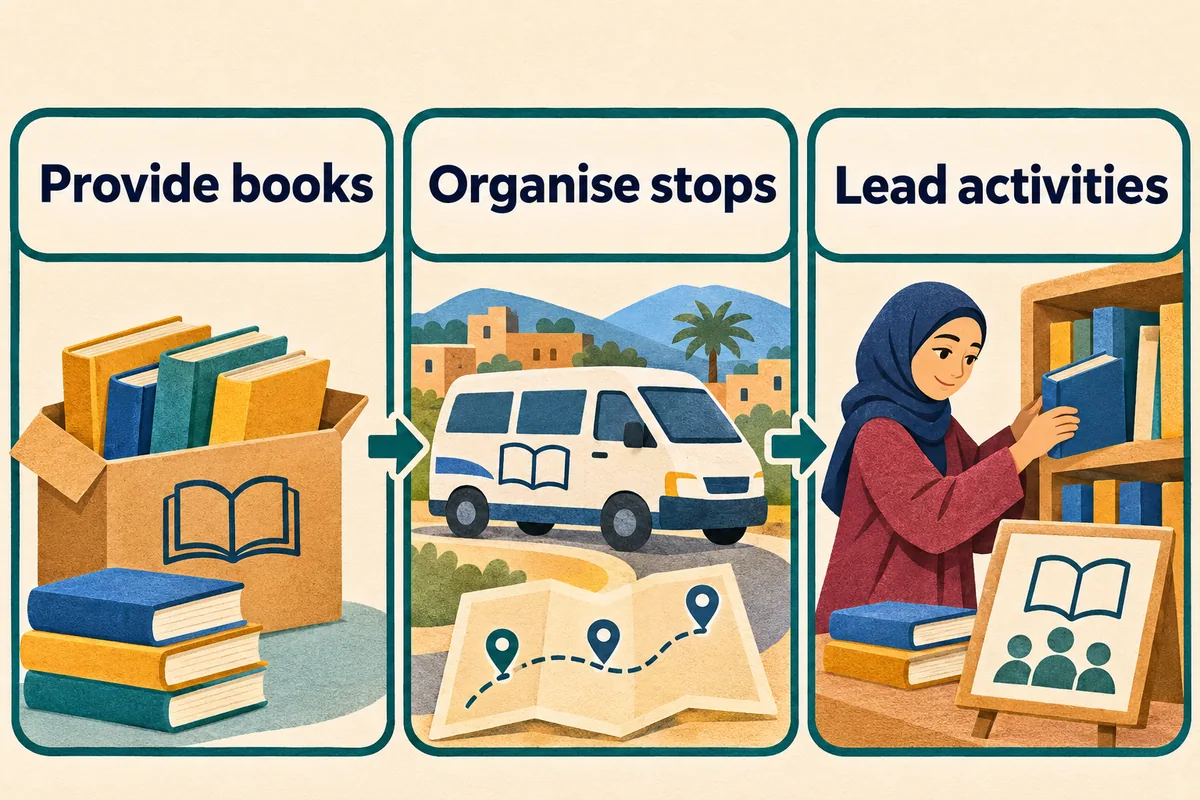
« An aid agency provided materials, a local association organised classes, and trained volunteers led activities. » The verbs provided, organised and led show three different contributions. Use support for assistance and fund when an organisation provides money.
Worked examples: talking about international organisations
Which organisation works on what?
Which organisation would you name for a vaccination campaign, for protecting a historic site, and for children’s access to school?
- A vaccination campaign is a public health action, so the answer is WHO, the World Health Organization.
- A historic site is cultural heritage, so the answer is UNESCO, which keeps the World Heritage List.
- Children’s access to school concerns children’s rights and well-being, so the answer is UNICEF. UNESCO also works on education, so explain your choice with the word children.
Donate, donation, donor
Complete « The ___ (donate) sent 500 books, and the ___ (donate) reached the village in June. »
- The first gap is the subject and refers to a person or an organisation that gives: donor.
- The second gap names the thing that was given: donation.
- Final sentence: « The donor sent 500 books, and the donation reached the village in June. »
Sources and curriculum
- English Language Guidelines for Secondary Schools (Ministry of Education, 2007)
The 2nd Baccalaureate syllabus describes the ten themes, four skills and language structures. See printed pages 76–84.
- National Baccalaureate Exam Specifications (English, 2025)
Reproduction of the national framework for the reading, language and writing sections, including the science streams.
- UNICEF · Frequently Asked Questions
Explains UNICEF’s remit and the origin of its name.
- UNESCO · About us
Describes UNESCO’s work in education, science and culture.
- WHO · About WHO
Describes WHO’s international public health role.
Frequently asked questions
What does UNICEF stand for?
What does an NGO do?
Exercises with answers
4 exercises, from easy practice to challenges. Try each one yourself, then reveal the answer and explanation.
Exercise 1
EasyWrite the full name of each organisation.
- WHO
- UNESCO
- UNICEF
- NGO
- UN
Answer and explanation
- The World Health Organization.
- The United Nations Educational, Scientific and Cultural Organization.
- The United Nations Children’s Fund.
- A non-governmental organisation.
- The United Nations.
Exercise 2
Intermediate- Complete with one word: The appeal helped the charity ___ funds.
- What is the difference between making a donation and volunteering?
Answer and explanation
- Raise. Raise funds means collect money for a purpose.
- A donor gives money or goods. A volunteer gives time or practical help.
Exercise 3
IntermediateChoose the verb that forms a natural combination.
- (provide / make) humanitarian aid
- (raise / rise) funds for a school
- (launch / throw) an awareness campaign
- (sign / write) a partnership agreement
- (meet / fill) the needs of refugees
Answer and explanation
- Provide.
- Raise.
- Launch.
- Sign.
- Meet.
Exercise 4
ChallengeComplete the paragraph with the words from the box: humanitarian, volunteers, funding, partnership, emergency. Then answer the last question.
« After the earthquake, several organisations launched an (1) ___ response. They sent (2) ___ aid such as tents, blankets and medicine. A local association signed a (3) ___ with an international NGO, which provided the (4) ___ for new classrooms. Hundreds of young (5) ___ helped to distribute food. »
- Gap 1
- Gap 2
- Gap 3
- Gap 4
- Gap 5
- What is the difference between a governmental organisation and an NGO?
Answer and explanation
- Emergency.
- Humanitarian.
- Partnership.
- Funding.
- Volunteers.
- A governmental organisation is run or financed by a state. An NGO is independent of governments and usually relies on donations and volunteers.