



Expressing Regret
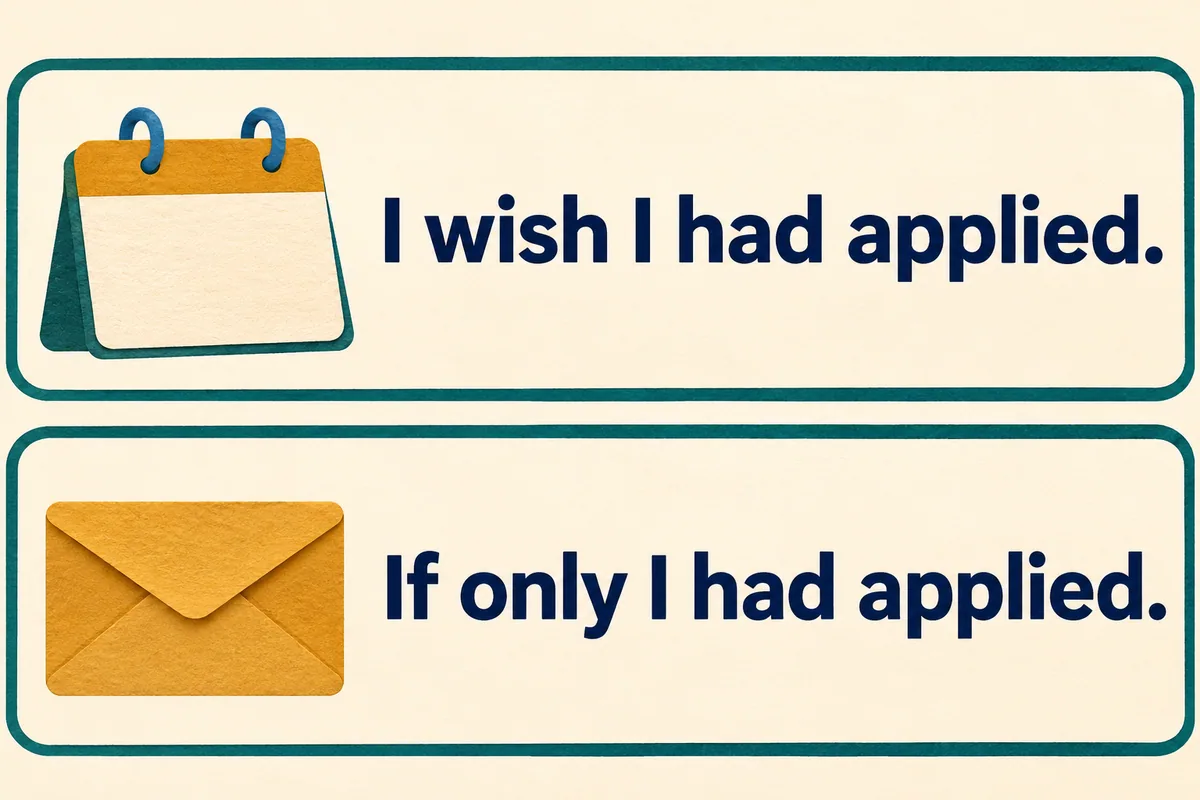
To express regret about a past choice, say « I wish I had … » or « If only I had … ». You can also use « I regret + verb-ing » or « I should have + past participle » depending on the situation.
By the end of this lesson, you can
- Express regret with more than one structure.
- Distinguish regret, apology and a formal announcement of bad news.
Un bon cours, ça se partage.
Listen to the text
Listen before opening the transcript. This original English practice text is read by a synthetic voice.
Show the transcript
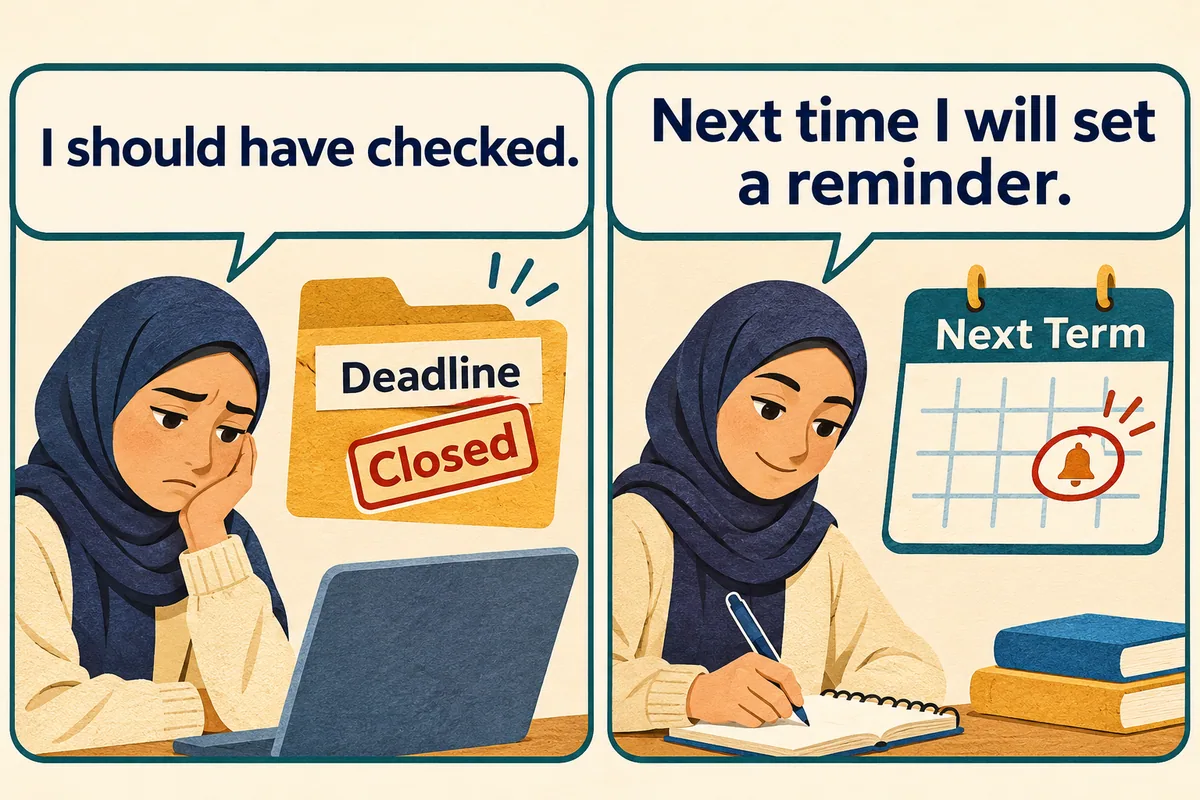
I found the training offer after the deadline had passed. I wish I had checked the university noticeboard sooner. I could have applied to work in a laboratory abroad and brought back ideas for our final project. Next term I’ll ask my teacher about suitable programmes and mark the deadlines in my calendar.
How do you express regret about a past action?
| Expression | Example | What it communicates |
|---|---|---|
| wish + past perfect | I wish I had applied before the deadline. | I would like the past to have been different. |
| if only + past perfect | If only I had asked my mentor earlier. | A strongly felt regret about a past event. |
| regret + verb-ing | I regret turning down the internship. | I feel sorry about the action I took. |
| should have + past participle | I should have checked the requirements. | I now think that was the better thing to do. |
Regret doing, regret to say and apologising
« I regret missing the deadline » expresses a feeling about what happened. « We regret to inform you that registration has closed » formally introduces unwelcome news. « I’m sorry for missing the deadline » is an apology when you address someone affected by the mistake.

Reflect on a choice in conversation
Step by step
Explain and respond
- Imagine that you missed a scholarship deadline. Use wish or if only to say what you regret.
- Ask a partner for advice about what you can do now.
- Repeat the exchange about a decision you took, using regret + verb-ing.
Remember
Use « I wish I hadn’t left it so late » for regret about an action you did. Use « I wish I had applied » for regret about an action you did not do.
Worked examples: expressing regret in several ways
One regret, four structures
Situation: « I didn’t learn German, and now I can’t apply for a job in Berlin. » Express the regret in four ways.
- Wish + past perfect: « I wish I had learnt German. »
- If only + past perfect, which sounds stronger: « If only I had learnt German! »
- Should have + past participle, which judges the choice: « I should have learnt German. »
- Regret + not + -ing: « I regret not learning German. »
Regret or apology?
You missed your friend’s birthday party. What do you say to your friend, and what do you say to yourself?
- To your friend, you apologise because the friend was affected: « I’m sorry I missed your party. »
- To yourself, you express regret about your own choice: « I wish I had gone. »
- You can combine them: « I’m sorry I missed your party. I really wish I had been there. »
Listening and speaking practice
Listen to the recording and answer this question. What does the speaker regret, and which two actions do they plan to take?
Describe a missed academic opportunity, express regret with wish or if only, then explain one action you can take next time.
Sources and curriculum
- English Language Guidelines for Secondary Schools (Ministry of Education, 2007)
The 2nd Baccalaureate syllabus describes the ten themes, four skills and language structures. See printed pages 76–84.
- National Baccalaureate Exam Specifications (English, 2025)
Reproduction of the national framework for the reading, language and writing sections, including the science streams.
Frequently asked questions
What is the difference between I wish I had and I wish I hadn’t?
What is the difference between should have and could have?
Exercises with answers
5 exercises, from easy practice to challenges. Try each one yourself, then reveal the answer and explanation.
Exercise 1
EasySay whether each regret is about an action the speaker did or an action the speaker didn’t do.
- « I wish I hadn’t shouted at him. »
- « If only I had taken the job! »
- « I should have called her. »
- « I regret selling my guitar. »
- « I shouldn’t have stayed up so late. »
Answer and explanation
- Something the speaker did: shouted.
- Something the speaker didn’t do: take the job.
- Something the speaker didn’t do: call her.
- Something the speaker did: sold the guitar.
- Something the speaker did: stayed up late.
Exercise 2
Intermediate- You declined an internship and later realised it suited you. Express regret in two ways.
- A formal email announces that applications have closed. Complete « We regret ___ you that … ».
Answer and explanation
- « I regret declining the internship. » / « I wish I hadn’t declined the internship. »
- To inform. Regret to inform introduces the news.
Exercise 3
IntermediateRewrite each sentence with the words in brackets.
- I didn’t revise for the test. (I wish)
- I spent all my money on the first day. (If only)
- I didn’t apply for the grant. (should have)
- I told her the secret. (I regret)
- We missed the last train. (If only)
Answer and explanation
- I wish I had revised for the test.
- If only I hadn’t spent all my money on the first day!
- I should have applied for the grant.
- I regret telling her the secret.
- If only we hadn’t missed the last train!
Exercise 4
Intermediate- What does the speaker regret, and which two actions do they plan to take?
Answer and explanation
- They regret checking the noticeboard too late. They will ask their teacher about programmes and record deadlines in a calendar.
Exercise 5
ChallengeEach sentence contains one mistake. Correct it and explain.
- I wish I didn’t leave the club last year.
- If only I would have known about the deadline.
- I should went to the meeting.
- I regret to not accept the offer.
- She regrets to have moved abroad so young.
Answer and explanation
- I wish I hadn’t left the club last year. Regret about the past takes the past perfect.
- If only I had known about the deadline. If only + past perfect, not would have.
- I should have gone to the meeting. Should have + past participle.
- I regret not accepting the offer. Regret about an action takes not + -ing.
- She regrets moving (or having moved) abroad so young. Regret + to-infinitive introduces bad news.