



International Organizations Reading Comprehension
This English 2 Bac case study follows a fictional partnership. Track each organisation’s role, the change made after feedback, and the evidence used to assess that change.
By the end of this lesson, you can
- Match paragraphs to their main ideas.
- Identify partners, interpret vocabulary and support answers with the text.
Un bon cours, ça se partage.
Reading passage · A library on the move
[1] Samir’s village library opened only on weekday mornings. The building was near his school, but he could rarely visit it after lessons. His youth group asked a local association for help. The association found a partner abroad that could donate books. The association also offered to lend the youth group a small van, provided that they arranged a regular route and found adults to supervise each stop.
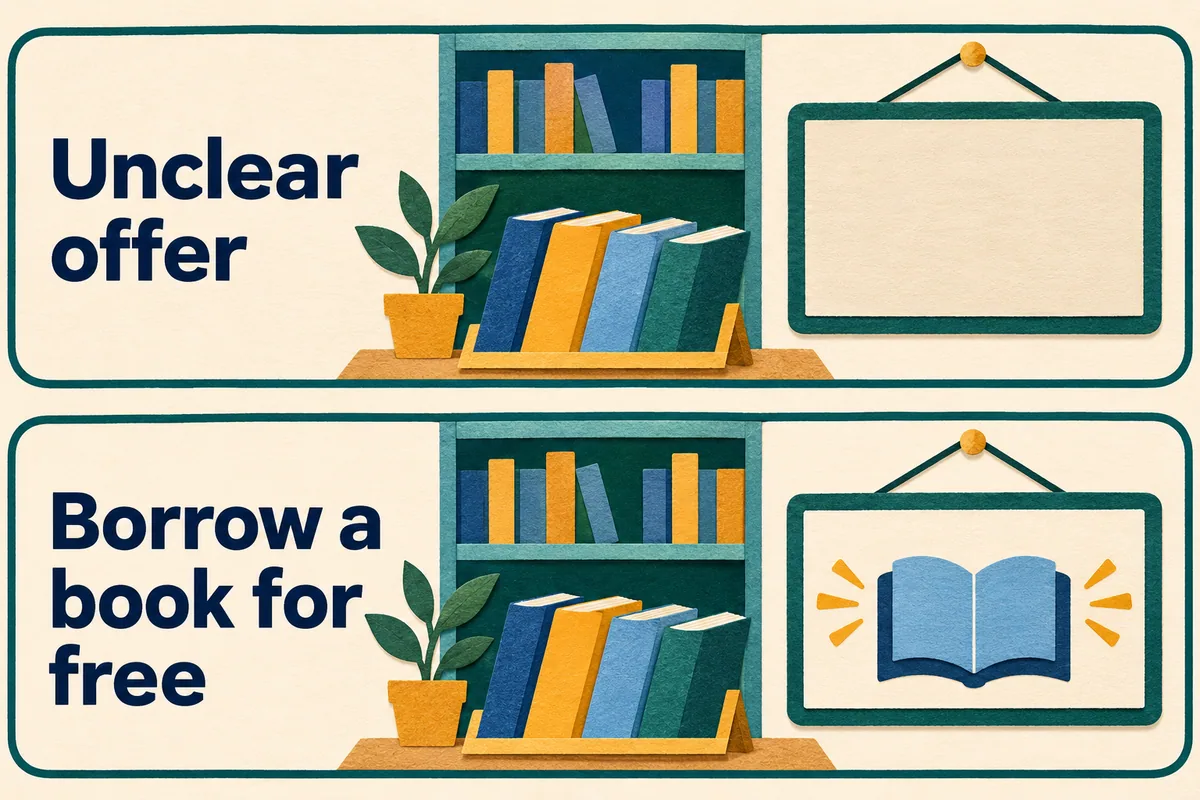
[2] The first Saturday went badly. Volunteers put all the donated books on one table and waited beside the village hall. Several parents thought the books were for sale. One girl came twice, read the list of titles and left without borrowing anything. Samir asked her brother what had happened. He explained that she had not realised she could take a book home for free.
[3] The group replaced the title list at the entrance with a sign explaining how to borrow and return books. They added a reading corner and asked a teacher to suggest books in different languages and at different levels. Rather than publishing photographs of children, the group kept a simple count of visits and loans. The international partner agreed to discuss the figures before choosing its next donation.
[4] A month later, the number of loans was higher at both stops, and the group had received requests for more short novels. The association decided to keep the Saturday route for another term. Samir recorded the changes in a notebook so that new volunteers could run the project without having to learn every detail from the beginning.
Track each partner’s role
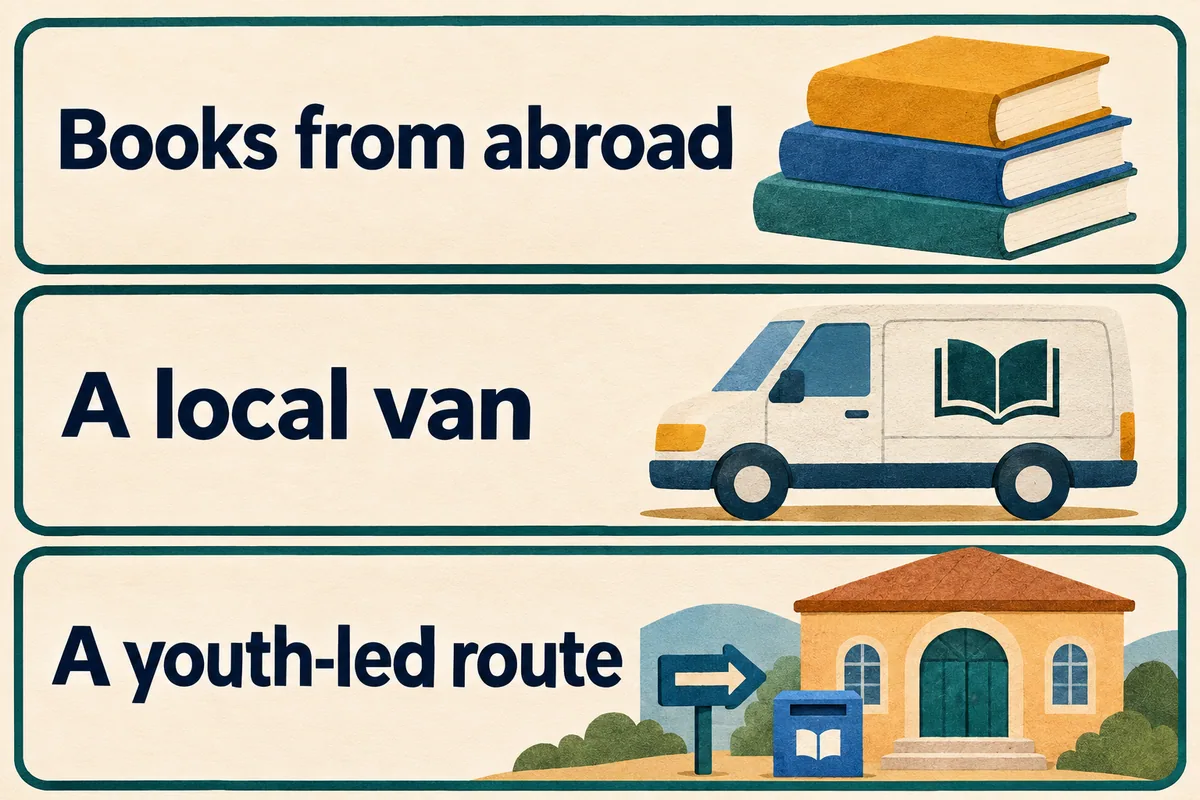
The foreign partner supplies books, the local association offers a van, and the youth group organises the stops. Paragraph 2 explains an access problem that remains even when the materials are available.
Use evidence and infer the condition
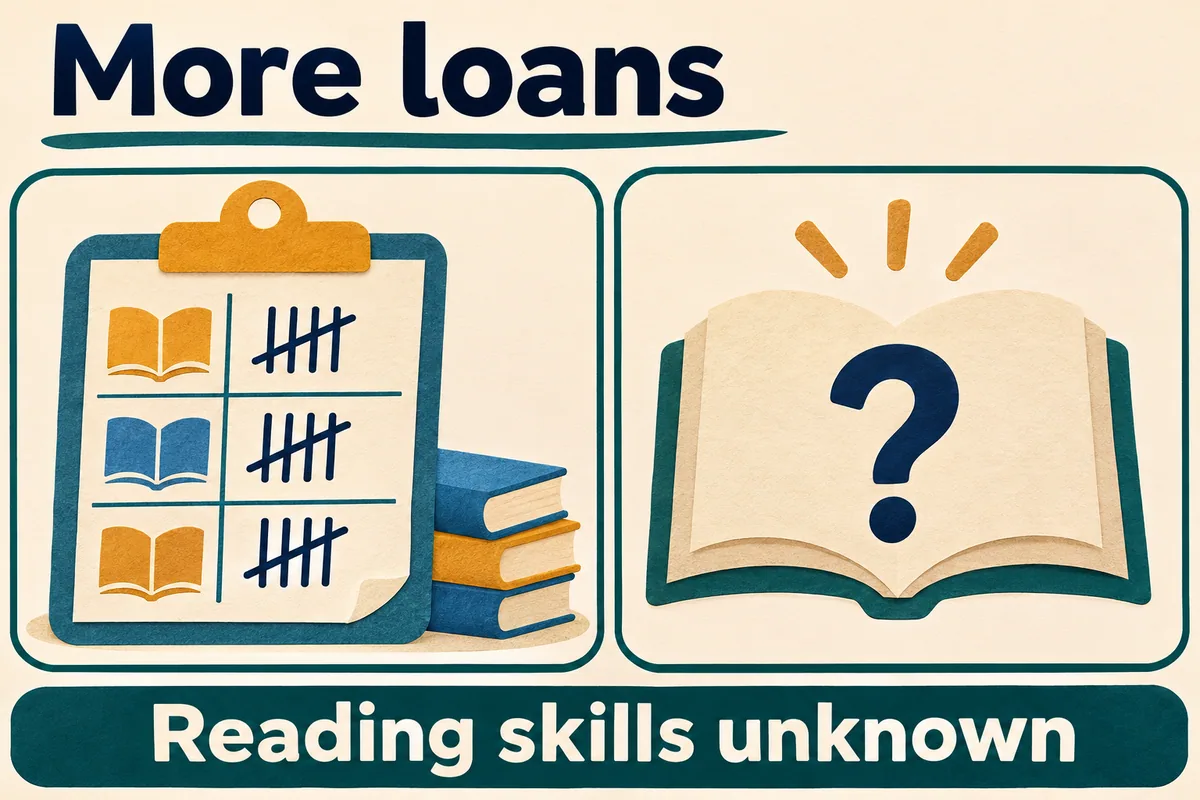
« Provided that » means « on the condition that ». In paragraph 1, the association offers the van only if the group arranges a route and supervision. The higher loan count in paragraph 4 is evidence of use. It does not show whether reading ability improved.
Worked examples: answering questions on A library on the move
Choosing a heading for a paragraph
Choose a heading for paragraph 2.
- Read the first sentence, which often gives the main idea: « The first Saturday went badly. »
- Check the details: parents thought the books were for sale, and a girl left without borrowing anything.
- Choose a heading that covers the whole paragraph, not one detail: « A disappointing first day ».
Inferring the reason for a choice
Why did the group keep a count of visits and loans instead of publishing photographs of children?
- Find the sentence in paragraph 3: « Rather than publishing photographs of children, the group kept a simple count of visits and loans. »
- Think about why photographs could be a problem: children’s privacy needs protecting.
- Think about what the count gives instead: evidence for the partner.
- Answer: « To protect the children’s privacy while still collecting evidence that the library was being used. »
Sources and curriculum
- English Language Guidelines for Secondary Schools (Ministry of Education, 2007)
The 2nd Baccalaureate syllabus describes the ten themes, four skills and language structures. See printed pages 76–84.
- National Baccalaureate Exam Specifications (English, 2025)
Reproduction of the national framework for the reading, language and writing sections, including the science streams.
Frequently asked questions
What does provided that mean in a reading passage?
What is the main idea of A library on the move?
Exercises with answers
4 exercises, from easy practice to challenges. Try each one yourself, then reveal the answer and explanation.
Exercise 1
EasySay whether each statement is true or false and quote the passage.
- The village library was open every afternoon.
- The partner abroad donated books.
- On the first Saturday, many parents borrowed books.
- The association decided to keep the Saturday route for another term.
Answer and explanation
- False. « Samir’s village library opened only on weekday mornings. »
- True. « The association found a partner abroad that could donate books. »
- False. « Several parents thought the books were for sale. »
- True. « The association decided to keep the Saturday route for another term. »
Exercise 2
Intermediate- Why did the girl leave without a book?
- What does « its next donation » in paragraph 3 refer to?
- Choose the best heading for paragraph 3: a failed trial, changes after feedback, or the final results.
Answer and explanation
- She did not understand that she could borrow a book for free.
- The next donation from the international partner.
- Changes after feedback. The volunteers revised the sign, added a reading corner and changed how they tracked use.
Exercise 3
IntermediateAnswer the questions.
- Find a word in paragraph 1 that means give something for free.
- Find a word in paragraph 1 that means watch over and be responsible for.
- Find a word in paragraph 3 that means books that are borrowed.
- In « she had not realised she could take a book home », who is she?
- In « so that new volunteers could run the project », what does the project refer to?
Answer and explanation
- Donate.
- Supervise.
- Loans.
- The girl who came twice without borrowing anything.
- The mobile library and its Saturday route.
Exercise 4
ChallengeAnswer in complete sentences.
- Why did the girl read the list of titles and then leave?
- Which change solved her problem directly?
- Can we conclude that the children’s reading improved? Justify your answer.
- In about 40 words, suggest a partnership between your school and an organisation, and say what each partner would do.
Answer and explanation
- She did not realise that she could borrow a book for free.
- The sign at the entrance explaining how to borrow and return books.
- No. The passage only reports that the number of loans was higher. It gives no evidence about reading ability.
- One answer is « Our school could work with a local NGO on a recycling project. The NGO would provide bins and training, and the students would sort the waste each week and report the amounts collected to the NGO every month. »